Ground School vs. Flight School: What's the Difference?
Ground School vs. Flight School: Understanding the Key Differences
If you're just starting your journey toward a pilot certificate, you've probably heard the terms ground school and flight school used interchangeably — but they're not the same thing. Understanding the difference between ground school and flight school is one of the first and most important steps you can take as a student pilot. Knowing what each one covers, what it costs, and how they work together will help you plan your training more effectively and avoid common pitfalls that slow learners down.
What Is Ground School?
Ground school is the academic, classroom-based (or online) portion of pilot training. It covers the theoretical knowledge you need to understand how and why an aircraft flies, how the aviation system works, and what rules govern the airspace you'll operate in. Think of it as the "why" behind everything you'll do in the cockpit.
Topics typically covered in ground school include:
- Aerodynamics — how lift, thrust, drag, and weight interact
- Aircraft systems — engines, fuel, electrical, and avionics
- Aviation weather — reading METARs, TAFs, and understanding atmospheric conditions
- Navigation — pilotage, dead reckoning, and using navigation aids
- Federal Aviation Regulations (FARs) — the rules that govern flight operations
- Airspace — understanding classes of airspace and their requirements
- Emergency procedures — what to do when things go wrong
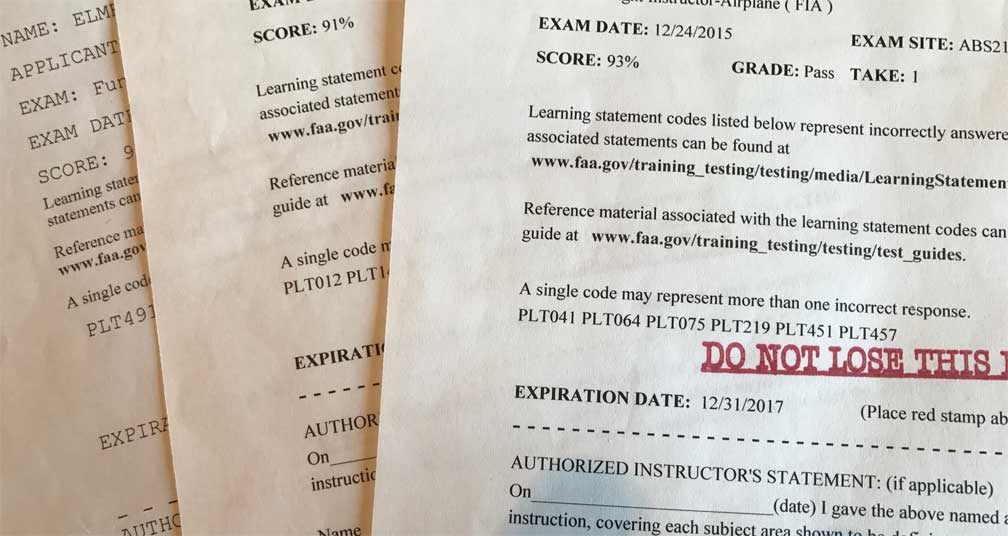
Completing ground school prepares you to pass the FAA Knowledge Test (also called the written test), which is a required milestone on the path to earning a pilot certificate. You must pass this test before you can take your practical exam — the checkride — with an FAA Designated Pilot Examiner.
What Is Flight School?
Flight school refers to the hands-on, in-aircraft portion of your training — the hours you spend actually flying with a certificated instructor or building solo time. This is where you apply everything you've learned in ground school to real-world situations in the cockpit.
Flight training is conducted under the supervision of an FAA-certificated flight instructor and covers maneuvers, procedures, and decision-making that can only be fully understood by actually doing them in an aircraft. Stalls feel very different on paper than they do at altitude. Cross-country navigation makes far more sense when you're actually tracking a course over unfamiliar terrain.
Flight schools typically operate under one of two regulatory frameworks: Part 61 or Part 141. Under Part 61, training is more flexible and self-paced, making it popular for recreational learners. Part 141 schools follow a more structured, FAA-approved curriculum and may allow students to meet requirements with fewer total flight hours. The right choice depends on your goals, schedule, and budget — and it's worth discussing with a qualified instructor before committing.
Do You Need Both Ground School and Flight School?
The short answer is yes — both are required to earn a pilot certificate. The FAA requires student pilots to demonstrate both theoretical knowledge (via the written test) and practical skill (via the checkride). You cannot skip one in favor of the other.
That said, they don't have to happen in a rigid sequence. Many students pursue ground school and flight training concurrently, which can actually accelerate learning. When you study weather theory in the morning and then fly through a broken cloud layer (legally, of course) in the afternoon, the concepts stick differently. The two components reinforce each other.
Ground School Formats: In-Person vs. Online
Traditional ground school was conducted in a classroom setting, often at the flight school itself or a community college. Today, many students choose online ground school programs, which offer greater flexibility and allow you to study at your own pace.
Online ground school has become increasingly popular because it lets you revisit difficult concepts as many times as you need, pause when life gets busy, and study from anywhere. Whether you prefer a structured video course, a textbook-based approach, or an interactive platform, there are options to suit different learning styles.
How Flight Hours Work
The FAA sets minimum aeronautical experience requirements for each certificate and rating — total flight time, solo time, cross-country time, night flight, and instrument time all factor in. These minimums vary by certificate type (Private, Instrument, Commercial, ATP), so it's important to verify the current requirements directly at faa.gov/training_testing/testing or by speaking with your flight instructor, as regulatory details can change.
How to Maximize Your Ground School Studying
Passing the FAA Knowledge Test is a meaningful academic challenge — the test covers a broad range of topics and requires genuine understanding, not just memorization. Here's where smart study habits and the right tools can make a real difference.
At Aviation Test Prep, our platform is built by FAA-certified instructors (including both flight and ground instructors) to help student pilots study efficiently and effectively. Here are a few strategies that work:
- Start with the big picture. Before drilling practice questions, make sure you understand the main topic areas tested. Our ACS code breakdown maps every question to the FAA's Airman Certification Standards so you always know what you're studying and why it matters.
- Use our 5-step study method. We recommend: Read the concept, review the explanation, attempt the question, analyze mistakes, and revisit weak areas before moving on. This cycle builds true understanding rather than rote pattern-matching.
- Practice with ACS-aligned questions. Our platform features ACS-aligned practice questions — not memorized dumps, but carefully reviewed questions that reflect the knowledge and reasoning the FAA expects from certificated pilots.
- Talk to Ace, our AI tutor. Stuck on a tricky weather question or confused about airspace rules? Ace is available anytime to walk you through the concept in plain language, offer alternative explanations, and suggest related topics to review.
- Track your progress. Use your performance data to identify weak spots. Don't just repeat questions you already know — spend your time where it counts most.
Want to see how it works before committing? Try our free practice test right now — no credit card required.
Ground School, Flight School, and Your Career Path
The ground school vs. flight school distinction doesn't disappear after your private pilot certificate. As you progress through additional ratings and certificates — instrument rating, commercial certificate, flight instructor certificate, and beyond — you'll continue to alternate between academic study and practical flying. Each new certificate brings its own written test requirements and its own flight experience standards.
If your goal is an aviation career, the academic rigor only increases. Airline transport pilot (ATP) candidates face one of the most challenging FAA Knowledge Tests in aviation. Building strong study habits early — using structured tools, understanding the ACS, and genuinely mastering the material rather than gaming a question bank — pays dividends for your entire career.
For more tips on how to approach aviation written tests, building a study schedule, and what to expect at each stage of training, visit the Aviation Test Prep blog.
The Bottom Line
Ground school and flight school are two distinct but deeply complementary parts of becoming a pilot. Ground school builds the theoretical foundation you need to pass the FAA Knowledge Test and make informed decisions in the cockpit. Flight school takes that knowledge airborne and turns it into skill. Together, they prepare you for the checkride — and for a lifetime of safe, confident flying.
If you're working through ground school right now and want a smarter way to prepare for the FAA written test, Aviation Test Prep is here to help. Our platform is designed to make complex topics approachable, track your progress, and give you the confidence you need on test day — all built and reviewed by FAA-certified instructors.
Start your free account today and take the first step toward acing your FAA Knowledge Test.
Ready to pass your FAA written exam?