For small unmanned aircraft systems (sUAS) operating under FAA Part 107, the battery is not merely a power source — it is the single most failure-prone component on the aircraft. A lithium polymer (LiPo) or lithium-ion (Li-ion) battery that is improperly stored, overcharged, or physically damaged can fail catastrophically in flight, causing a crash, or catch fire on the ground, causing property damage or injury. Because Part 107 places the remote pilot in command (RPIC) squarely responsible for airworthiness before each flight, understanding battery chemistry, storage protocols, charging discipline, and inspection habits is not optional — it is a legal and safety obligation.
This article covers the complete lifecycle of an sUAS battery: what happens chemically during charge and discharge, how to store batteries safely between flights, best charging practices, how to inspect for damage, and how to dispose of batteries responsibly. Every concept here connects directly to the RPIC's pre-flight and maintenance duties under 14 CFR Part 107.
Understanding LiPo and Li-ion Battery Chemistry
Most consumer and commercial sUAS platforms use lithium polymer (LiPo) batteries because they deliver very high energy density in a lightweight, flexible package. Lithium-ion cells are chemically similar but typically housed in rigid cylindrical or prismatic cases. Both technologies share the same fundamental hazard: lithium is a highly reactive metal, and the organic electrolyte inside these cells is flammable. When cells are stressed — by heat, overcharging, over-discharging, mechanical puncture, or internal short circuits — they can enter a condition called thermal runaway. In thermal runaway, heat generated by a failing cell accelerates chemical reactions in neighboring cells, creating a self-sustaining chain reaction that produces intense heat, toxic gas, and fire that is extremely difficult to extinguish.
LiPo packs are built from individual cells connected in series (to increase voltage) and in parallel (to increase capacity). A single LiPo cell has a nominal voltage of 3.7 V, a fully charged voltage of 4.2 V, and a safe minimum discharge voltage of approximately 3.0–3.5 V per cell. A common sUAS pack may carry 3S (three cells in series, 11.1 V nominal) or 4S (14.8 V nominal) configurations. Understanding cell count is essential because chargers must be matched exactly to pack configuration to avoid overcharging individual cells.
Charging Best Practices
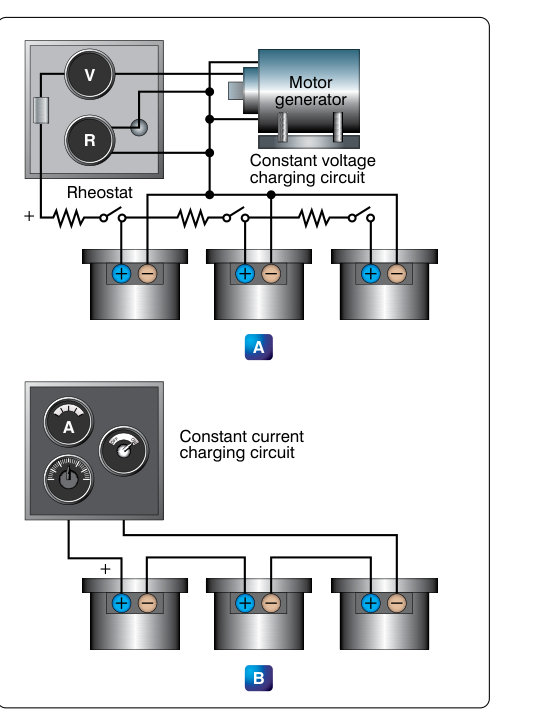
Charging is the moment of highest risk in the battery lifecycle. Follow these practices consistently to minimize danger and maximize battery longevity.
- Use a balance charger. A balance charger monitors and equalizes the voltage of each individual cell within the pack. Without balance charging, small voltage discrepancies between cells accumulate over cycles, ultimately causing one cell to overcharge while another undercharges — both conditions that accelerate degradation and increase fire risk.
- Match charger settings to the battery. Always set the charger to the correct cell count (3S, 4S, etc.) and chemistry (LiPo vs. Li-ion). Charging a LiPo on a NiMH profile, or mis-setting cell count, can cause catastrophic overcharge.
- Charge at the correct rate (C-rating). The C-rating expresses charge or discharge current relative to capacity. A 1C charge rate for a 5,000 mAh battery equals 5 A. Most manufacturers recommend charging at 1C or lower to preserve battery health. Higher rates (2C or more) generate more heat and stress the cells.
- Never leave charging batteries unattended. Remain nearby and able to respond if a pack begins to swell, emit heat, or smell of chemicals. Have a fire-safe container such as a LiPo-safe charging bag or a metal ammunition can available.
- Charge in a fire-safe location. Avoid charging on wood surfaces, in vehicles, or inside buildings where a fire could spread quickly. A concrete floor or non-flammable surface is ideal.
- Do not charge immediately after flight. Batteries discharged under load retain heat internally. Allowing a 15–30 minute cool-down period before charging reduces thermal stress and internal resistance buildup.
- Do not charge a puffy, damaged, or very cold battery. Charging a swollen pack can cause it to rupture. Charging a very cold battery (below approximately 5°C / 41°F) can cause lithium plating on the anode, which creates internal short-circuit hazards.
Storage Best Practices
How you store a battery between flights matters enormously for both safety and longevity. LiPo cells are chemically unstable when held at full charge for extended periods. The internal electrolyte reacts slowly with the electrodes, causing capacity loss, increased internal resistance, and — over time — cell swelling.
- Store at storage voltage, not full charge. Most LiPo manufacturers specify a storage voltage of approximately 3.7–3.85 V per cell, which corresponds to roughly 40–60% state of charge. Many modern balance chargers include a dedicated "storage charge" mode that automatically brings cells to this voltage.
- Store in a cool, dry location. Elevated temperature is one of the fastest ways to degrade lithium battery capacity. A temperature range of approximately 40–70°F (4–21°C) is commonly recommended. Avoid storage in a hot vehicle or direct sunlight.
- Use a LiPo-safe bag or fireproof container. Even during storage, internal defects can cause a slow-onset failure. A LiPo-safe bag contains minor fires and gives you time to react.
- Do not store for extended periods fully charged or fully depleted. Full charge causes ongoing electrolyte oxidation. Full depletion risks pushing cells below the minimum voltage threshold, causing irreversible capacity loss or making them unsafe to charge.
- Inspect stored batteries regularly. Check for swelling, corrosion on connectors, and any unusual odor even during periods when the aircraft is not flying.
Inspection and Maintenance
Before every flight, the RPIC must conduct a pre-flight inspection of the aircraft per 14 CFR §107.49. Battery inspection is a critical element of this check. Look for the following warning signs that indicate a battery should be grounded and not flown:
- Physical swelling or puffiness: Caused by gas buildup from electrolyte decomposition. A swollen pack should be taken out of service immediately and disposed of safely.
- Cracks, punctures, or dents in the casing: Physical damage can expose the internal chemistry to air or moisture, triggering runaway reactions.
- Damaged, frayed, or corroded wiring and connectors: High resistance at a connector can cause localized heating under load, leading to mid-flight power interruption or fire.
- Unusual heat during normal charging: All batteries generate some warmth during charging, but excessive heat indicates elevated internal resistance, a sign of an aging or damaged pack.
- Significant capacity loss: Most sUAS ground-station software logs battery capacity over cycles. A pack that holds notably less charge than its rated capacity should be retired before it causes an in-flight low-battery emergency.
Beyond visual inspection, many modern sUAS platforms log per-cycle data including internal resistance trends. As internal resistance rises, the battery delivers less voltage under load — which can trigger low-voltage cutoffs and uncommanded landings. Monitoring internal resistance through the charger or aircraft software is a professional best practice for any serious RPIC.
Why Battery Management Matters Under Part 107
Under 14 CFR §107.15, no person may operate an sUAS that is not in a safe condition for flight. Under §107.49, the RPIC must ensure the aircraft is in a condition for safe operation before each flight. A battery with degraded capacity, physical damage, or improper storage charge is a direct violation of these airworthiness obligations if the RPIC knowingly flies with it. Beyond regulatory compliance, an in-flight battery failure typically means complete loss of power — resulting in a crash that can injure people, damage property, and expose the RPIC to significant civil and potentially criminal liability.
Fire risk on the ground is equally serious. Fires caused by improperly stored or charged LiPo batteries have destroyed homes, vehicles, and hangars. For lithium-ion and LiPo battery fires, FAA guidance recommends using copious amounts of water or a water-based extinguishing agent to cool the cells and prevent the fire from propagating to neighboring cells — it is lithium metal batteries, not the lithium-ion/polymer cells used in most sUAS, that react dangerously with water and require agents such as dry sand or Class D extinguishers. Having a fireproof container and a plan before a battery incident occurs is far better than improvising during one.
Safe Battery Disposal
A battery that has been retired from flight must be disposed of safely and in compliance with local regulations. Do not place LiPo batteries in ordinary household trash or recycling bins — the cells can be punctured during compaction and cause fires in waste facilities. The accepted disposal method is to fully discharge the pack to 0 V (using a dedicated discharge device or a simple light-bulb discharge circuit), then take the pack to an authorized electronics recycling facility or a retailer that accepts lithium battery recycling. Some municipalities have household hazardous waste collection events that accept lithium cells. Check local regulations, as requirements vary by jurisdiction.
Key Numbers and Rules
- Nominal LiPo cell voltage: 3.7 V; fully charged: 4.2 V; minimum safe discharge: approximately 3.0–3.5 V
- Recommended storage voltage: approximately 3.7–3.85 V per cell (40–60% charge)
- Recommended charge rate for longevity: 1C or lower
- Ideal storage temperature: approximately 40–70°F (4–21°C)
- Avoid charging below approximately 5°C (41°F) to prevent lithium plating
- Regulatory basis for airworthiness: 14 CFR §§107.15 and 107.49
- A swollen, cracked, or punctured pack: must be removed from service immediately
Common Test Traps
- Confusing storage voltage with full charge. The FAA knowledge test may present a scenario where a battery left at full charge for weeks is ready for flight — it is not ideal. Batteries left fully charged for extended periods degrade faster and carry elevated thermal risk.
- Assuming a puffed battery is still airworthy. Physical swelling is an automatic disqualifier. No amount of remaining capacity makes a swollen pack safe to fly.
- Ignoring cool-down time after flight. Charging a hot battery immediately after landing stresses cells and can accelerate thermal runaway risk. The correct answer is always to allow the pack to cool first.
- Misidentifying the RPIC's responsibility. Battery maintenance is not the aircraft manufacturer's in-field responsibility — it is the RPIC's duty under §107.49. The RPIC is accountable for the pre-flight inspection every time.
- Thinking water should never be used on a LiPo fire. For lithium-ion/LiPo battery fires, large quantities of water are actually the recommended cooling agent to slow thermal runaway propagation between cells — water reacts dangerously with lithium metal batteries, not the lithium-ion/polymer chemistry found in most sUAS packs.