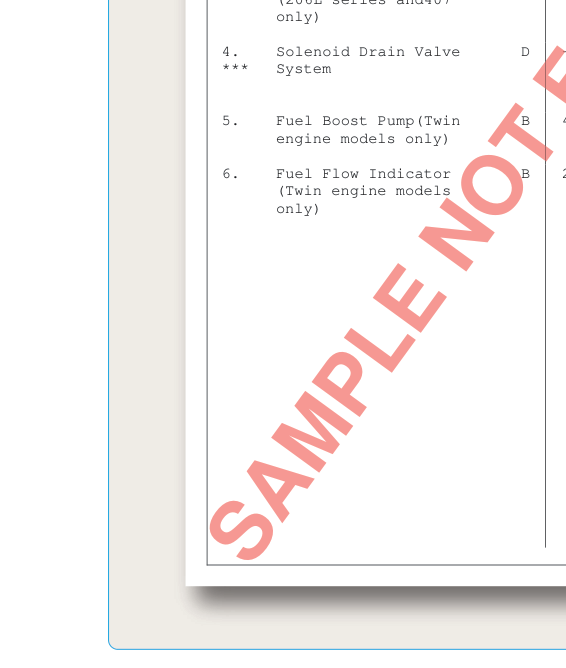
When an aircraft system or component fails before departure, the flight does not automatically cancel. The Minimum Equipment List (MEL) is a carefully constructed regulatory document that permits an air carrier to dispatch—or continue the operation of—an aircraft with specific items inoperative, provided that defined conditions, crew procedures, and operational limitations are satisfied. For an Aircraft Dispatcher, the MEL is not a formality to rubber-stamp; it is a binding operational and legal document that carries the same regulatory weight as the aircraft's type certificate and the airline's operations specifications.
Understanding how to read an MEL entry and apply it correctly at dispatch is one of the most practical and heavily tested skills in the dispatcher certification world. A misapplication can result in an illegal dispatch, an unsafe flight, or both. This article walks through the regulatory framework, the anatomy of an MEL entry, the dispatcher's specific responsibilities, and the traps that catch candidates on the written and oral examinations.
Regulatory Foundation
The authority for MEL operations in Part 121 air carrier service flows directly from 14 CFR 121.628. That regulation prohibits a certificate holder from dispatching an aircraft with inoperative instruments or equipment unless: (1) the inoperative item is identified in the MEL approved for that aircraft type and registration; (2) the aircraft is operated under all conditions and limitations in the MEL; and (3) the inoperative item is placarded as required. The MEL itself must be developed in accordance with the Master Minimum Equipment List (MMEL) for that aircraft type, which is published by the FAA. The MMEL sets the outer boundary of what can be inoperative; an individual air carrier's MEL may be more restrictive than the MMEL but never less restrictive.
Advisory Circular 120-77 (Maintenance and Operational Policies, Procedures, and Measurements for Operators of Aircraft with MELs) provides detailed guidance on how certificate holders should structure their MEL programs, the responsibilities of maintenance and operations personnel, and how dispatch release documentation must reflect MEL deferrals. Together, 14 CFR 121.628 and AC 120-77 form the backbone of every MEL conversation at dispatch.
The MMEL-to-MEL Relationship
The FAA produces an MMEL for each aircraft type through a Flight Standardization Board (FSB) or equivalent process. The MMEL lists every item for which relief from full airworthiness is available, along with the category of the deferral and any conditions. The air carrier then takes the MMEL and crafts its own MEL, which is incorporated into the airline's operations specifications (OpSpecs). The MEL is approved by the airline's Principal Operations Inspector (POI) on behalf of the FAA. This approval is critical: once the MEL is part of the OpSpecs, it has the force of a regulatory requirement. A dispatcher who deviates from an approved MEL entry is not merely violating a company policy—they are violating the carrier's OpSpecs and, by extension, 14 CFR Part 121.
Anatomy of an MEL Entry
Every MEL is organized by ATA chapter (the Air Transport Association numbering system that categorizes aircraft systems). Each entry contains several standardized components that the dispatcher must read carefully:
- Item number and name: Identifies the specific system, subsystem, or component (e.g., ATA 29 — Hydraulic System, Item 29-1, Hydraulic Quantity Indicator).
- Number installed / number required: States how many of that item are installed on the aircraft and how many must be operative for dispatch. For example, an entry might show 2 installed, 1 required, meaning one may be inoperative.
- Dispatch category (A, B, C, or D): This is the repair interval. Category A items have a specific time limit defined in the remarks column (often 1 flight or a defined number of calendar days). Category B items must be repaired within 3 consecutive calendar days, excluding the day of discovery. Category C items must be repaired within 10 consecutive calendar days, excluding the day of discovery. Category D items must be repaired within 120 consecutive calendar days, excluding the day of discovery.
- Remarks and exceptions (O and M columns): The (O) symbol indicates an Operational procedure is required—a crew action, a limitation, or a specific flight condition that must be satisfied. The (M) symbol indicates a Maintenance procedure is required before flight—typically an action to deactivate, cap, collar, or otherwise secure the inoperative component. Both symbols may appear simultaneously, requiring coordination between maintenance and the flight crew before the dispatcher can legally issue a release.
- Placard requirement: Most MEL items require a placard in the cockpit or cabin identifying the component as inoperative, ensuring crew awareness on every subsequent leg.
The Dispatcher's Step-by-Step Application
When a maintenance or flight crew report identifies a potentially inoperative item, the dispatcher's workflow should be systematic and documented:
- Confirm the item is in the MEL. If the item is not listed in the MEL, dispatch with that item inoperative is not permitted under the MEL program. The carrier must either repair the item before dispatch or seek a special authorization. This is a critical distinction—the MEL authorizes only what it explicitly covers.
- Check the number installed versus number required. Confirm that the remaining operative units meet the minimum required number. If two autopilot channels are installed and two are required, a single inoperative channel grounds the aircraft under that entry.
- Read and apply all (O) procedures. If an operational procedure is listed, the dispatcher must ensure it will be completed. This typically involves coordinating with the captain, annotating the flight release to reference the MEL item, and confirming that the crew is briefed. Some (O) procedures impose route or altitude limitations (e.g., no ETOPS, no flight into known icing, VFR only) that must be cross-checked against the planned flight.
- Confirm (M) procedures are complete. The dispatcher must receive confirmation from maintenance that all required maintenance procedures have been accomplished and logged in the aircraft maintenance record before releasing the flight. The dispatcher cannot waive an (M) procedure.
- Verify the repair interval. Calculate the deadline by which the item must be repaired. Document the day of discovery and ensure the dispatch system or MEL log reflects the expiration date. Dispatching a flight after the category interval has expired is a regulatory violation regardless of whether the component is still needed for the flight.
- Issue and annotate the dispatch release. The dispatch release must reference the deferred MEL item. This creates the paper trail that connects the maintenance deferral to the operational approval, satisfying AC 120-77 documentation standards.
Interaction with the Configuration Deviation List (CDL)
The CDL is a separate but related document covering missing external components—fairings, access panels, antennas—that affect aerodynamic performance. Unlike the MEL, the CDL is part of the aircraft's Airplane Flight Manual (AFM). If a CDL item is missing, there is usually a performance penalty (increased drag, increased fuel burn, or a speed limitation) that the dispatcher must account for in fuel and performance planning. MEL and CDL items can exist simultaneously; both must be tracked and applied independently.
Why This Matters for Dispatch Authority
Under 14 CFR 121.533, the dispatcher shares joint operational control of the flight with the captain. This means the dispatcher is equally responsible for ensuring the aircraft is airworthy for the planned operation. Issuing a release for an aircraft that does not comply with its MEL is not a captain's problem to solve—it is a dispatcher violation. The dispatcher must have the technical knowledge to read the MEL independently, not rely solely on the captain's or maintenance controller's judgment. In practice, this means dispatchers must be trained on the specific MELs for every aircraft type in their fleet and must have access to current, approved MEL documents during dispatch duties.
Key Numbers and Rules
- Category A: Interval specified in the remarks (could be 1 flight, 1 day, etc.).
- Category B: Must be repaired within 3 consecutive calendar days, excluding day of discovery.
- Category C: Must be repaired within 10 consecutive calendar days, excluding day of discovery.
- Category D: Must be repaired within 120 consecutive calendar days, excluding day of discovery.
- The carrier MEL may be more restrictive than the MMEL; it may never be less restrictive.
- Items not listed in the MEL cannot be deferred under the MEL program.
- A placard is required for virtually all MEL deferrals.
- Dispatch after an expired category interval is a regulatory violation even if the item is not needed for that specific leg.
Common Test Traps
- Confusing the day-of-discovery rule: Category B, C, and D repair intervals begin the day after discovery, not on the day the problem is found. A Category C item found on May 1 must be repaired no later than May 11.
- Assuming the MEL is optional: The MEL is part of the carrier's OpSpecs. Departing from it is a violation of 14 CFR Part 121, not merely a company policy deviation.
- Forgetting (M) procedure confirmation: An (M) symbol means maintenance must act before dispatch. The dispatcher cannot release the aircraft simply because the item is on the MEL—the maintenance action must be completed and documented first.
- Mixing up MEL and CDL: The MEL covers inoperative equipment; the CDL covers missing structural or aerodynamic components. Both require separate tracking and may require performance adjustments.
- Believing the captain can override the MEL: The MEL is an FAA-approved document within the OpSpecs. Neither the captain nor the dispatcher alone can authorize a deviation. If the MEL doesn't cover it, the aircraft must be repaired or a special authorization obtained from the FAA.