Aircraft Maintenance: What Every Pilot Should Know
Why Aircraft Maintenance Knowledge Matters for Pilots
Aircraft maintenance is not just a mechanic's concern — it is a core part of every pilot's responsibility. Whether you are preparing for your private pilot written exam or brushing up on your aviation knowledge before a checkride, understanding how aircraft are maintained, inspected, and kept airworthy is essential knowledge every pilot must carry into the cockpit. The FAA expects pilots to understand maintenance requirements, recognize airworthiness issues, and know exactly where the legal lines are drawn between what a pilot can fix and what requires a certificated mechanic.
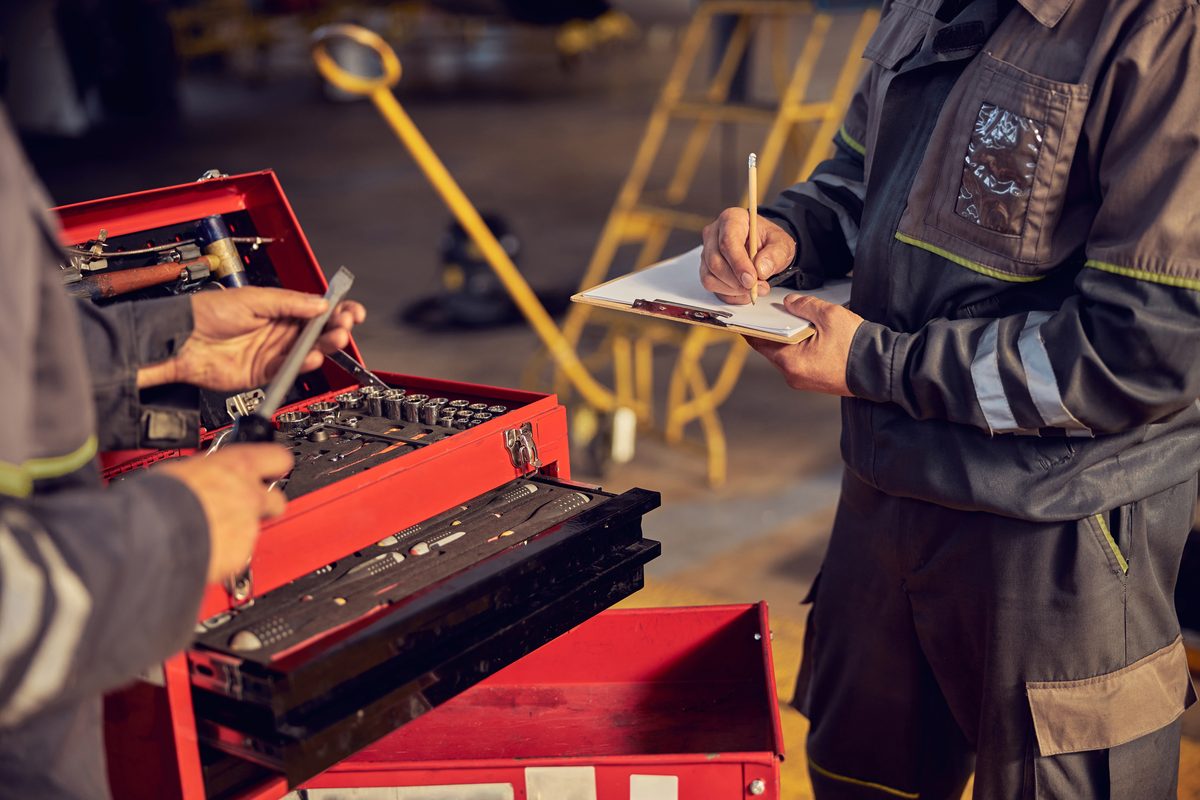
In this guide, we break down the key aircraft maintenance concepts pilots need to know — from required inspections to preventive maintenance — and show you how to study these topics effectively using ACS-aligned practice questions.
Who Is Responsible for Aircraft Airworthiness?
One of the most important concepts in aircraft maintenance is understanding who bears the legal responsibility for ensuring an aircraft is airworthy before a flight. The answer surprises many student pilots: the pilot in command (PIC) is ultimately responsible for determining that an aircraft is in an airworthy condition prior to flight.
This does not mean the pilot must perform every inspection or repair. It means the pilot must understand what records, documents, and inspections are required — and must verify that they are current before the wheels leave the ground. Ignorance of a lapsed inspection or a missing airworthiness directive is not a valid defense.
Required Aircraft Documents
Before a flight, pilots are expected to confirm that the aircraft carries the necessary documentation. A commonly used memory aid covers four key documents, often remembered by the acronym AROW:
- Airworthiness certificate — must be displayed in the aircraft
- Registration certificate — must be on board
- Operating limitations — includes the Pilot's Operating Handbook (POH) and approved flight manual
- Weight and balance data — specific to the aircraft
Verify the exact requirements for your aircraft type and operation in the current FARs or on faa.gov/mechanics, as interpretations can vary by aircraft category and operation type.
Understanding Required Inspections
Aircraft maintenance is governed by a schedule of required inspections designed to catch problems before they become emergencies. Pilots need to understand what these inspections are, how often they occur, and what aircraft operations they affect.
The Annual Inspection
Most general aviation aircraft operating under standard airworthiness certificates are required to undergo an annual inspection. This thorough examination must be performed by a certificated Airframe and Powerplant (A&P) mechanic who holds an Inspection Authorization (IA). An aircraft that has not had a current annual inspection may not be legally operated — except in specific circumstances such as flying to a maintenance facility under a ferry permit.
The 100-Hour Inspection
Aircraft used for hire — such as those used in flight training operations or commercial air tours — typically must also receive a 100-hour inspection in addition to the annual. This inspection must be completed within a small tolerance window and is performed by a certificated A&P mechanic (an IA is not required for the 100-hour inspection itself). Understanding the difference between an annual and a 100-hour inspection is a frequent topic on FAA written exams.
Airworthiness Directives (ADs)
Airworthiness Directives are legally enforceable regulations issued by the FAA that apply when an unsafe condition is found in an aircraft, engine, propeller, or appliance. ADs come in two main forms:
- One-time compliance ADs — must be completed once and then documented
- Recurring ADs — must be complied with at specified intervals
Pilots should understand that an aircraft is not considered airworthy if a required AD has not been complied with, regardless of how recently the annual inspection was completed. Always check the maintenance records for AD compliance before flying an unfamiliar aircraft.
Transponder and ELT Inspections
Specific avionics components also have their own inspection requirements. Transponders used in controlled airspace and Emergency Locator Transmitters (ELTs) must be inspected at intervals specified by the FAA. Check current regulations or the aircraft's maintenance logbook to confirm these intervals, and always verify the details at faa.gov/mechanics for the most up-to-date requirements.
What Pilots Can Do: Preventive Maintenance
One area that catches many student pilots off guard is the concept of preventive maintenance. The FAA does allow certificated pilots — specifically, pilots holding at least a private pilot certificate — to perform certain simple or minor preservation tasks on aircraft they own or operate.
Examples of preventive maintenance tasks typically permitted include:
- Replacing or servicing landing gear tires
- Servicing and replenishing hydraulic fluid
- Replacing safety wire or cotter pins
- Cleaning fuel and oil strainers
- Replacing bulbs, reflectors, and lenses in position and landing lights
- Replacing or cleaning spark plugs and setting gap clearance
However, this list is not unlimited. Any work that involves complex assembly operations, major repairs, or anything affecting the primary structure of the aircraft must be performed by a certificated mechanic. It is also important to note that student pilots are not authorized to perform preventive maintenance. Always consult the current FARs or your aviation knowledge resources to confirm what is and is not permitted.
Recording Maintenance and Preventive Maintenance
All maintenance — including preventive maintenance performed by pilots — must be properly recorded. Entries in the aircraft maintenance logbook must include the date, a description of the work, and the pilot's certificate number and signature. Incomplete or missing logbook entries can create legal and airworthiness complications, so accurate record-keeping is not optional.
Major vs. Minor Repairs and Alterations
The FAA draws a clear distinction between major repairs and minor repairs, as well as between major and minor alterations. This distinction determines who is qualified to perform the work and what paperwork must be filed afterward.
- Minor repairs and alterations can be performed by a certificated A&P mechanic and recorded in the aircraft logbooks.
- Major repairs and alterations require an IA or FAA approval and must typically be documented on an FAA Form 337, which becomes a permanent part of the aircraft's records.
Understanding this distinction is critical not only for the written exam but also for any pilot who ever finds themselves in conversation with a mechanic about their aircraft's condition.
How Aircraft Maintenance Topics Appear on FAA Written Exams
Aircraft maintenance concepts appear across multiple FAA knowledge tests, including the Private Pilot, Instrument Rating, Commercial Pilot, and even the Flight Instructor exams. The FAA's Airman Certification Standards (ACS) for each certificate spell out exactly what knowledge is expected, making ACS alignment a critical feature of any quality study resource.
Common exam question topics include:
- Who is responsible for airworthiness before flight
- Required aircraft documents and their display requirements
- Differences between annual and 100-hour inspections
- What constitutes an Airworthiness Directive and how compliance is tracked
- What preventive maintenance a pilot may legally perform
- How major and minor repairs are differentiated and documented
At Aviation Test Prep, our ACS-aligned practice questions map directly to these knowledge areas, so you can study with confidence that you are covering the right material. Our AI tutor, Ace, provides detailed per-question explanations so you understand the reasoning behind each answer — not just the answer itself. This is especially useful for maintenance topics, where context and nuance matter as much as memorization.
A Smart Approach to Studying Aircraft Maintenance
Aviation Test Prep uses a 5-step study method designed to build genuine understanding rather than rote memorization:
- Assess your current knowledge with a diagnostic practice test
- Study the concepts behind each question category
- Practice with ACS-aligned questions in focused topic sessions
- Review incorrect answers using Ace's AI-enhanced explanations
- Test yourself under realistic, timed exam conditions
This method is particularly effective for aircraft maintenance topics, where understanding the why behind a regulation helps you handle unfamiliar question variations on exam day.
Putting It All Together
Aircraft maintenance knowledge is far more than trivia for the written exam. It is the foundation of safe, legal flight operations. As a pilot, knowing your responsibilities, understanding inspection requirements, recognizing the limits of what you can do yourself, and reading maintenance records accurately are all part of being a competent, confident aviator.
Our FAA-certified instructors have built Aviation Test Prep to help you master these concepts thoroughly. Whether you are just starting your training or getting ready for a checkride, exploring the full range of practice exams available on our platform is a great first step.
Ready to test your aircraft maintenance knowledge right now? Take a free practice test at Aviation Test Prep and see where you stand — no registration required to get started.
Ready to pass your FAA written exam?