What to Bring to Your FAA Knowledge Test: A Checklist
What to Bring to Your FAA Knowledge Test: A Complete Checklist
You've put in the study hours, worked through hundreds of ACS-aligned practice questions, and you feel ready. But knowing what to bring to your FAA knowledge test is just as important as knowing the material. Showing up without the right documents or authorizations can mean you're turned away at the testing center — no refund, no exceptions. Use this checklist to make sure test day goes smoothly from the moment you walk through the door.
Required Items: What Every Applicant Must Bring
Testing centers operated by PSI (formerly CATS) and Pearson VUE follow strict FAA and testing-center policies. The items below are generally required for all FAA knowledge tests. Always confirm the latest requirements directly with your testing center and at faa.gov/training_testing/testing before your appointment, as policies can change.
1. Valid Government-Issued Photo ID
You must present a current, government-issued photo ID. Acceptable forms typically include:
- Driver's license (not expired)
- U.S. passport or passport card
- Military ID
- State-issued ID card
The name on your ID must match the name used when you registered for the test. Double-check this well in advance — a name mismatch can result in being turned away.
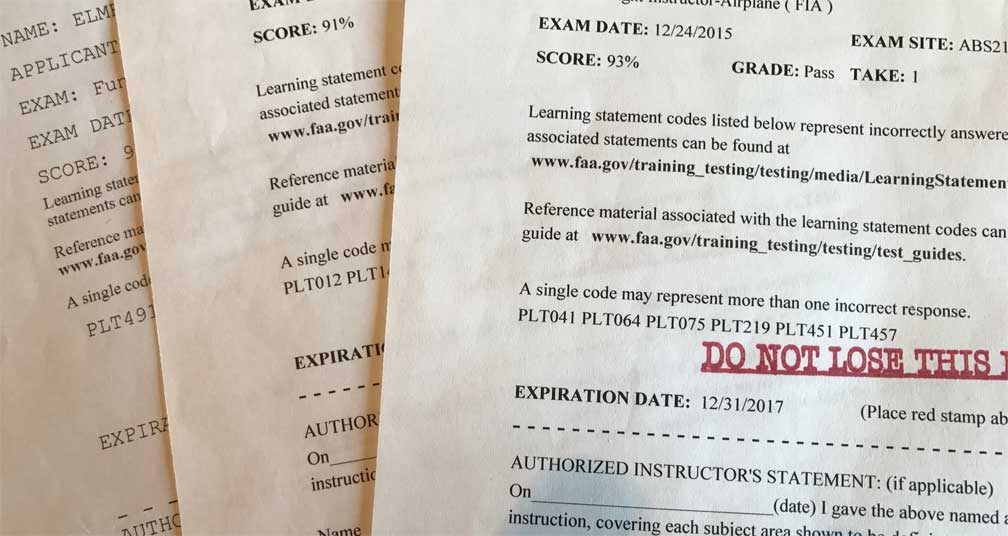
2. An Airman Knowledge Test Authorization (if required)
Depending on which certificate or rating you're testing for, you may need a sign-off from a certificated flight instructor (CFI) or an endorsement code proving you've completed an approved ground school or home-study course. Specifically:
- Student pilots and recreational pilots typically need a CFI logbook endorsement or a completion certificate from an FAA-approved course.
- Sport pilot applicants need similar documentation.
- Some tests (such as the ATP knowledge test) have specific eligibility requirements — verify yours at faa.gov or with your CFI.
Your CFI or ground school will usually provide a printed or digital authorization. Bring it in the format the testing center accepts — and confirm that format ahead of time.
3. Your FTN (FAA Tracking Number)
Before scheduling your knowledge test, you must create an account in the FAA's Integrated Airman Certification and Rating Application (IACRA) system and obtain your FAA Tracking Number (FTN). You'll be asked to provide this number when you register and when you check in. Keep it written down or saved somewhere accessible.
Approved Test Aids You're Allowed to Bring
The FAA permits certain aids during the knowledge test. What's allowed varies by exam, so always verify the current list with your testing center. Common approved items include:
- Flight computers: Both mechanical (the classic E6B whiz wheel) and electronic flight computers are generally permitted. However, electronic devices with the ability to store and retrieve text — including some advanced calculators — may be prohibited. Check with the testing center.
- Plotter: A standard aviation plotter is typically allowed for practical navigation questions.
- Sectional charts: For some exams (such as the Private Pilot written test), the testing center may provide the chart supplements, or you may be able to bring specific FAA publications. Confirm what's provided versus what you supply.
- FAA-provided supplements: Many testing centers provide a printed or on-screen Airman Knowledge Testing Supplement (e.g., FAA-CT-8080 series). Ask whether you need to bring a copy or whether one is supplied.
Leave any personal electronic devices — phones, smartwatches, tablets — in your car or a locker. Most testing centers will not allow them in the testing room.
What NOT to Bring
Knowing what to leave at home is just as important. Generally, you should not bring:
- Mobile phones (or leave them powered off in a locker)
- Smartwatches or fitness trackers
- Personal notes, flashcards, or textbooks
- Food or beverages (unless medically necessary — notify the center in advance)
- Unauthorized electronic devices of any kind
Day-of Logistics: A Few More Things to Prepare
Arrive Early
Plan to arrive at least 15–30 minutes before your scheduled test time. Late arrivals may forfeit their appointment and testing fee. Use the extra time to check in, store your belongings, and settle your nerves.
Know the Testing Center's Location and Parking
It sounds obvious, but testing centers are sometimes located in office parks or business complexes that can be tricky to find. Confirm the exact address and allow extra travel time.
Get a Good Night's Sleep
No checklist can substitute for rest. Studies consistently show that sleep deprivation impairs recall and decision-making — two things you'll need on your knowledge test. Prioritize sleep the night before.
How Aviation Test Prep Helps You Walk In Ready
Packing the right bag is the easy part — knowing the material is where the real work happens. Aviation Test Prep, built by FAA-certified instructors, offers ACS-aligned practice questions with AI-enhanced explanations so you understand why each answer is correct, not just what to memorize. Our 5-step study method guides you from your weakest ACS knowledge areas all the way to test confidence, and the AI Tutor is available to answer follow-up questions in plain language whenever a concept isn't clicking.
You can explore ACS codes to see exactly which knowledge areas your exam covers, so there are no surprises on test day. And if you're not sure which exam to start with, browse all available exams to find the right one for your certificate or rating.
Aviation Test Prep is a study aid designed to complement — not replace — guidance from your certificated flight instructor and official FAA resources.
Your FAA Knowledge Test Checklist at a Glance
- Valid, unexpired government-issued photo ID
- CFI endorsement or course completion authorization (if required for your test)
- Your FAA Tracking Number (FTN)
- Approved flight computer (E6B mechanical or approved electronic)
- Plotter (if applicable)
- Confirmed knowledge of what the testing center provides (chart supplements, etc.)
- Leave personal electronics behind
- Arrive 15–30 minutes early
You've done the hard work — don't let a missing document be the thing that stands between you and your certificate. Start studying free at Aviation Test Prep and walk into that testing center fully prepared.
Ready to pass your FAA written exam?