Cessna 172 Skyhawk
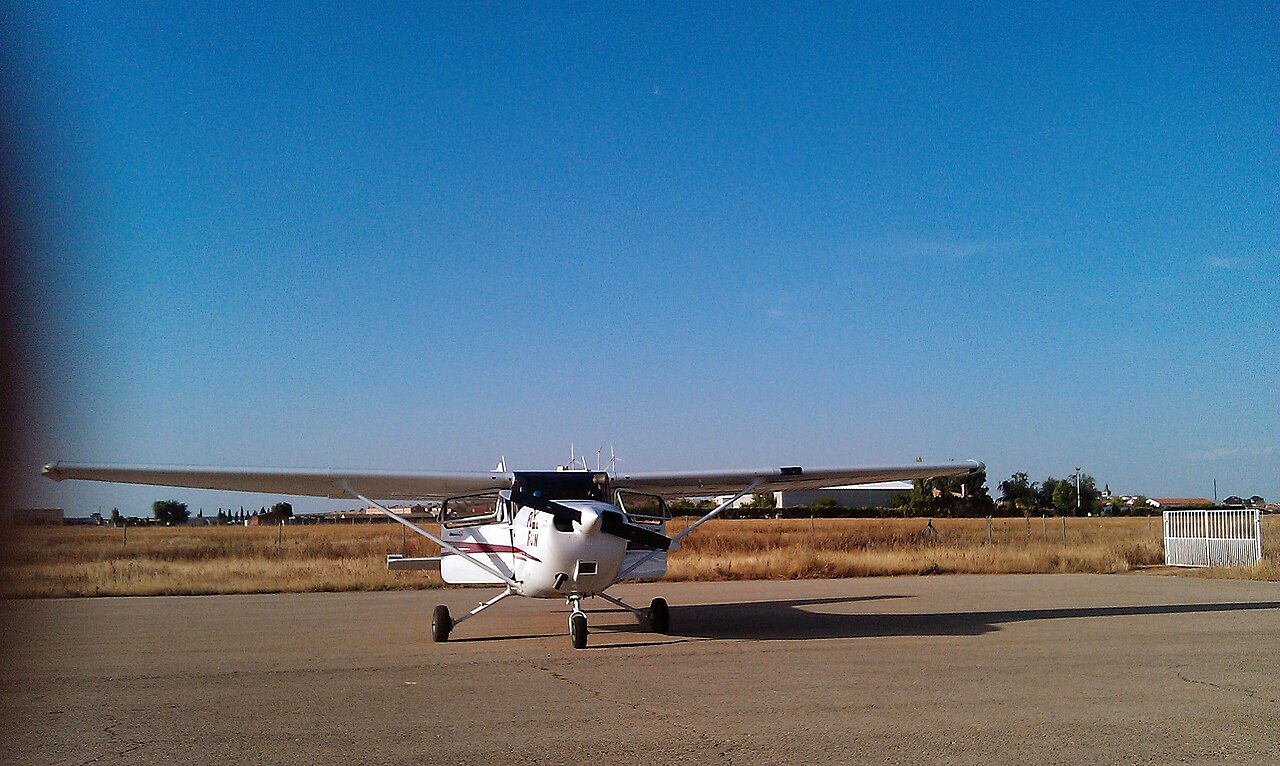
The Cessna 172 Skyhawk is a four-seat, single-engine, high-wing airplane and the most-produced aircraft in history. Its forgiving handling and fixed tricycle gear have made it the default primary trainer for generations of U.S. pilots.
Overview & history
The Cessna 172 Skyhawk is a four-seat, single-engine, high-wing airplane built by Cessna (now part of Textron Aviation). First flown in the mid-1950s and delivered from 1956, it has been produced in larger numbers than any other aircraft, with more than 44,000 built across its production run — a figure no other airplane has matched.
The 172 grew out of the earlier tail-wheel Cessna 170 by adding tricycle landing gear, which places the third wheel under the nose rather than the tail. That single change made the airplane dramatically easier to take off, land, and taxi, and it is a large part of why the type became the standard primary trainer at flight schools worldwide.
Its enduring appeal comes from a combination of traits that suit a learning environment: a high wing that gives good downward visibility and shades the cabin, docile low-speed handling, predictable stall behavior, and a robust airframe. Production paused in the mid-1980s amid U.S. product-liability pressures and resumed in 1996 with the restyled 172R and 172S models, which remain in production today.
Variants
The 172 has been refined across many model letters rather than redesigned. A reader encounters the names most often at the flight line, so it helps to know how they map to one another. The major families are:
- Early straight-tail models (172, 172A–172D, 1956–early 1960s): the original carbureted Continental-powered airplanes, distinguished by an upright vertical fin.
- Swept-tail and "Skyhawk" era (172E onward, 1960s–1970s): introduced the swept vertical tail and the deluxe "Skyhawk" trim that later became the name for the whole line. Engine power crept upward over these letters.
- 172N / 172P (late 1970s–1980s): high-production training models, many of which still fill flight-school ramps. The 172P added a higher gross weight and detail refinements before the 1986 production pause.
- 172R (1996–): the "new-production" Skyhawk reintroduced after the production gap, powered by a fuel-injected Lycoming IO-360 derated to 160 horsepower.
- 172S Skyhawk SP (1998–): the same airframe with the IO-360 rated to its full 180 horsepower, giving better takeoff and climb performance. Most modern glass-cockpit trainers are 172S airplanes.
A turbocharged retractable-gear development, the Cessna 172RG Cutlass, and the diesel-powered 172 Skyhawk JT-A were also produced in smaller numbers. The figures in the specification table below describe the modern 172R and 172S, the variants a student is most likely to train in.
Specifications & performance
Dimensions
| Specification | 172R | 172S / SP |
|---|---|---|
| Length | 27 ft 2 in (8.28 m) | 27 ft 2 in (8.28 m) |
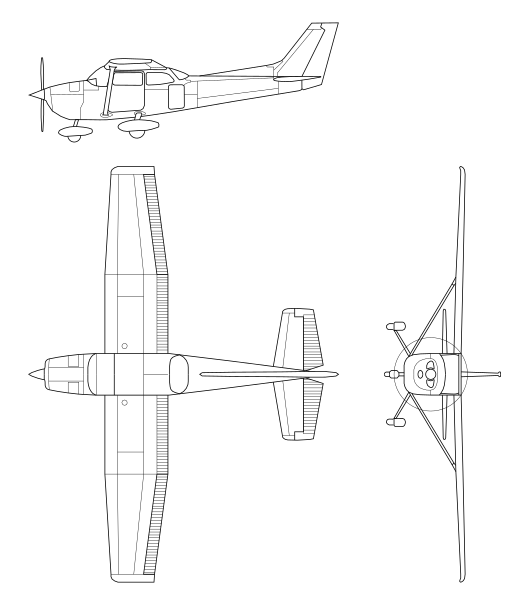
| Wingspan | 36 ft 1 in (11.0 m) | 36 ft 1 in (11.0 m) |
| Height | 8 ft 11 in (2.72 m) | 8 ft 11 in (2.72 m) |
| Wing area | 174 sq ft (16.2 m²) | 174 sq ft (16.2 m²) |
| Seats | 4 | 4 |
Weights
| Specification | 172R | 172S / SP |
|---|---|---|
| Max gross (takeoff) weight | 2,450 lb (1,111 kg) | 2,550 lb (1,157 kg) |
| Typical empty weight | ≈ 1,680 lb (762 kg) | ≈ 1,690 lb (767 kg) |
| Usable fuel (standard) | 53 gal (200 L) | 53 gal (200 L) |
Powerplant
| Specification | 172R | 172S / SP |
|---|---|---|
| Engine | Lycoming IO-360-L2A | Lycoming IO-360-L2A |
| Configuration | 4-cyl, fuel-injected, air-cooled, horizontally opposed | 4-cyl, fuel-injected, air-cooled, horizontally opposed |
| Rated power | 160 hp @ 2,400 rpm | 180 hp @ 2,700 rpm |
| Propeller | Fixed-pitch, two-blade | Fixed-pitch, two-blade |
Performance
| Specification | 172R | 172S / SP |
|---|---|---|
| Cruise speed (typical) | 122 kn (140 mph) | 124 kn (143 mph) |
| Never-exceed speed (Vne) | 163 kn (188 mph) | 163 kn (188 mph) |
| Stall speed, flaps down (Vs0) | 47 KCAS | 48 KCAS |
| Service ceiling | 13,500 ft (4,115 m) | 14,000 ft (4,267 m) |
| Rate of climb (sea level) | ≈ 720 ft/min | ≈ 730 ft/min |
| Range (typical, no reserve) | ≈ 518 nm | ≈ 518 nm |
| Takeoff ground roll | ≈ 960 ft | ≈ 960 ft |
Figures are manufacturer/typical published values for the Cessna 172R and 172S (Skyhawk SP) and are cross-checked against the FAA Type Certificate Data Sheet No. 3A12. Airspeed, weight, and powerplant limits for a specific airplane are defined by that airplane’s Pilot’s Operating Handbook (POH) and the TCDS — always use the figures for the exact serial number you fly.
Images
FAA Type Certificate Data Sheet
TCDS No. 3A12 — Type Certificate Holder: Textron Aviation Inc. (Wichita, Kansas).
FAA Type Certificate Data Sheet No. 3A12 covers the Cessna 172 family (172 through 172S). It is a public-domain FAA document; search the FAA Dynamic Regulatory System (DRS) for "3A12" to open the current revision. It may be self-hosted later.
Pilot’s Operating Handbook (POH/AFM)
The Pilot’s Operating Handbook / Airplane Flight Manual (POH/AFM) is copyrighted by the manufacturer and is NOT reproduced here. Obtain the official handbook for your aircraft from Textron Aviation or an authorized dealer, and always fly to the limitations in the POH for your specific serial number.
How this ties to your exam
- Weight & balanceLoading a 172 within its CG envelope is a classic knowledge-test and checkride task — practice the arithmetic with real arm/moment numbers.
- Aircraft performance & density altitudeThe 172’s normally-aspirated engine loses power as density altitude rises — the same effect behind takeoff and climb performance questions.
- The four forces of flightLift, weight, thrust, and drag explain why the 172 climbs, cruises, and stalls the way it does.
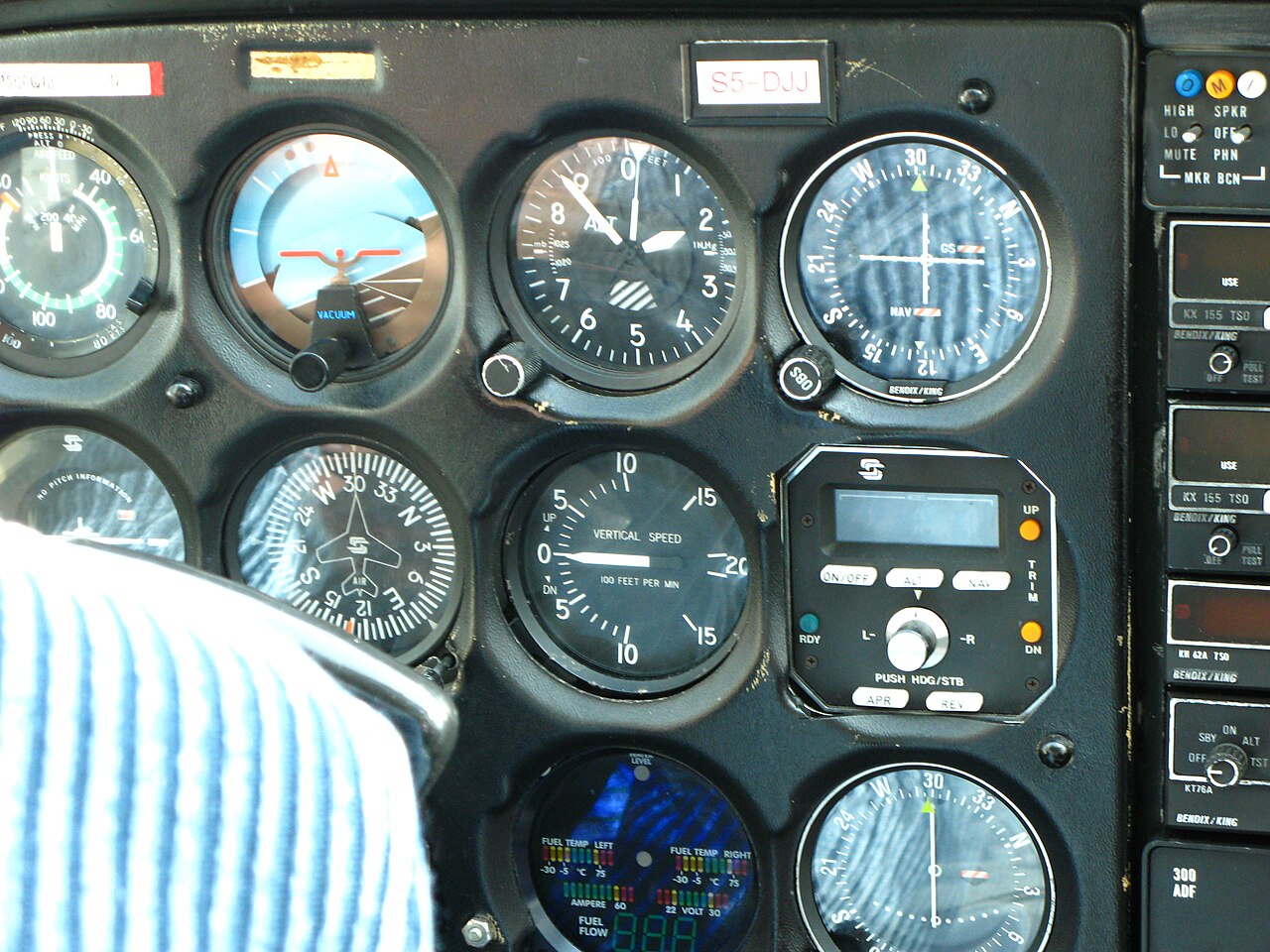
- The pitot-static systemThe airspeed indicator, altimeter, and VSI on a 172 panel are all driven by the pitot-static system.
Test yourself on the Cessna 172 Skyhawk
Reading builds understanding — questions build a passing score. Drill ACS-aligned questions free, no account needed.
Take a free practice test →