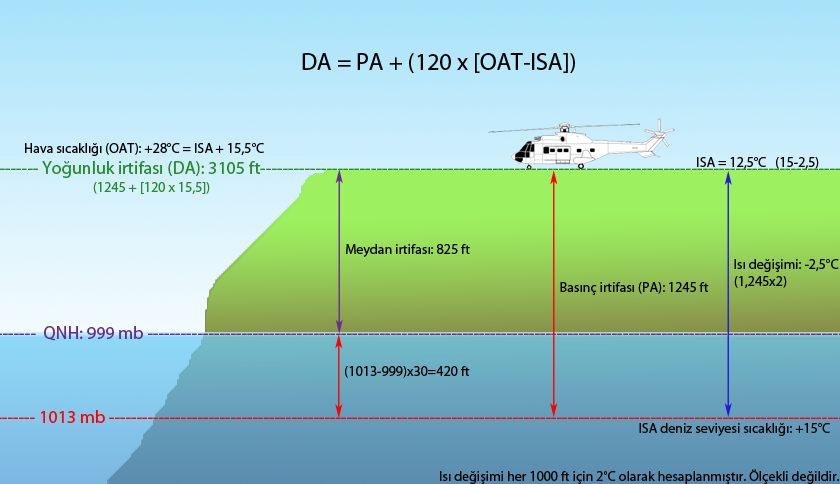
Density altitude is pressure altitude corrected for nonstandard temperature. Put simply, it is the altitude at which the airplane thinks it is operating, aerodynamically and from the engine’s point of view, based on how thin the air actually is. When air density is low, the airplane and engine perform as though they were much higher than the field elevation shown on the chart.
What thins the air
- High elevation — air is naturally less dense at higher altitudes.
- High temperature — warm air expands and becomes less dense.
- High humidity — water vapor is lighter than dry air, so moist air is slightly less dense.
- Low atmospheric pressure — fewer air molecules in a given volume.
A useful memory aid is that high, hot, and humid conditions all raise density altitude. On a hot summer afternoon at a mountain airport, the density altitude can be thousands of feet above the actual field elevation.
Why it matters for performance
Thin air affects an airplane in three ways at once. The wing produces less lift for a given airspeed, the propeller bites into less air for thrust, and a normally aspirated engine produces less power because it draws in less oxygen. The combined result is a longer takeoff roll, a shallower climb, a higher true airspeed for the same indicated airspeed, and a longer landing distance.
Because all three effects stack up, high density altitude is a frequent factor in takeoff and climb accidents. A pilot who calculates density altitude before departure can anticipate degraded performance, recompute takeoff and climb numbers, reduce weight, choose a cooler time of day, or wait for better conditions.
Estimating it
Density altitude can be found with a flight computer, a chart in the airplane’s flight manual, or a calculator that takes pressure altitude and temperature as inputs. The practical habit worth building is to ask, before every takeoff from a high or hot field, “what altitude does the airplane really think it’s at today?”