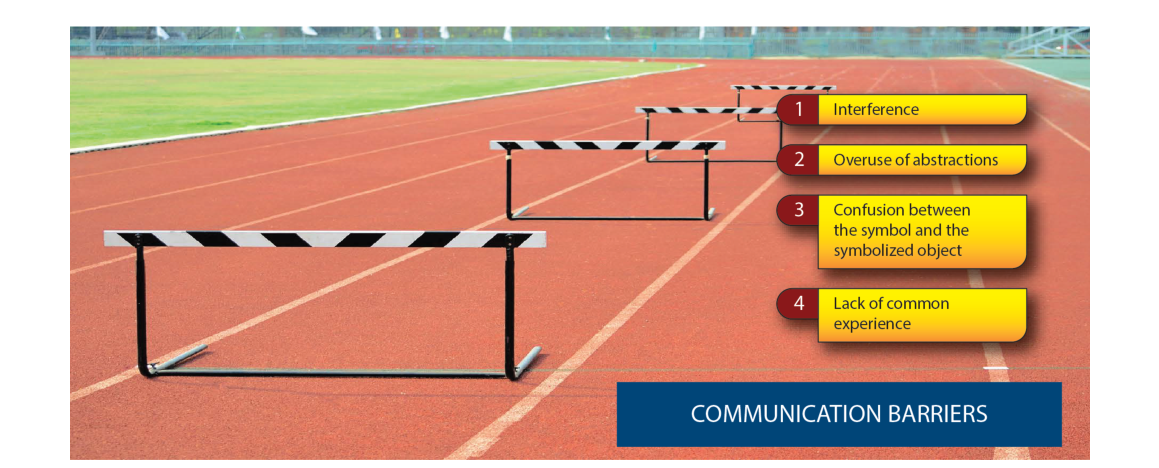
In aviation maintenance, a wrench turned incorrectly is dangerous. But an error that goes uncommunicated — passed invisibly from one technician to the next, or left undiscovered across a shift change — can be catastrophic. Effective communication and disciplined handoff procedures are among the most powerful defenses against maintenance-induced accidents. The FAA's human factors research, summarized in the Aviation Maintenance Technician Handbook – General (FAA-H-8083-30), identifies lack of communication as one of the twelve "Dirty Dozen" human factors that degrade maintenance quality. Understanding how and why these breakdowns happen — and how to prevent them — is essential knowledge for every AMT candidate and working technician.
This article explores what effective maintenance communication looks like, how formal handoff procedures work, and why the aviation industry has developed structured tools to manage the flow of safety-critical information between people and across time.
Communication as a Safety System
Communication in maintenance is not simply passing along information — it is a closed-loop process in which the sender transmits a message and the receiver acknowledges or reads it back, allowing the sender to confirm that the acknowledgment reflects correct understanding. This feedback loop is what distinguishes genuine communication from mere talking. When a technician says "I torqued the bolts" and another simply nods, nothing has been verified. When the second technician repeats back "You torqued the six bolts on the left-engine access panel to 40 foot-pounds and safety-wired them," both parties have confirmed the same mental picture of the task status.
The FAA recognizes three primary channels through which maintenance information flows: verbal (face-to-face or by phone), written (logbooks, discrepancy records, maintenance release documents, work orders), and non-verbal (gestures, body language, visual signals in a noisy hangar). Each channel carries risks. Verbal messages can be misheard in noisy environments or forgotten under time pressure. Written records can be incomplete, illegible, or simply unread. Non-verbal cues can be ambiguous. Best practice calls for combining channels — verbal communication confirmed in writing — especially for complex, incomplete, or safety-critical tasks.
The Dirty Dozen and Communication Failures
The FAA identifies twelve human factors preconditions — the "Dirty Dozen" — that make maintenance errors more likely. Communication failure sits near the top of the list and feeds into many of the others. Lack of communication is a direct preconditor for errors caused by complacency (assuming another tech caught a problem), norms (assuming the standard procedure was followed because nobody said otherwise), and distraction (losing track of incomplete tasks when attention is pulled away). A technician who is interrupted mid-task and returns without a proper briefing on what was accomplished may unknowingly duplicate work, skip steps, or assume a safety check was already performed.
Fatigue compounds these risks. When technicians are tired, their recall of verbal instructions degrades, they may skip written documentation steps, and they are less likely to ask clarifying questions. This is precisely why structured, written handoff tools — rather than informal verbal summaries alone — are considered best practice in professional maintenance environments, even though no single FAA regulation mandates a specific written handoff format.
Shift Handoffs: The High-Risk Transition
The shift change is statistically one of the most dangerous moments in maintenance operations. An incomplete task, an open panel, a disconnected wire bundle, or a deferred discrepancy can all transition from one crew to the next without proper documentation, leaving the incoming technician without a clear, accurate picture of the aircraft's condition. The FAA emphasizes that incoming technicians should never assume continuity of knowledge from the outgoing crew without explicit, verified communication.
A proper shift handoff typically involves several structured elements:
- Written task status log: Every open task should be documented in writing, including what was accomplished, what remains, what tools or parts are staged, and any anomalies observed. A partially torqued fastener is not the same as a fully-torqued one, and the difference must be explicit.
- Face-to-face briefing: The outgoing technician should walk the incoming technician through the current status of the aircraft, preferably at the aircraft itself rather than in an office. Physical presence reinforces verbal information and allows for visual confirmation of component status.
- Open-item emphasis: Any task that is not complete deserves extra attention in the handoff. Open items, deferred maintenance, and non-routine findings should be highlighted — not buried in narrative — so the incoming crew can prioritize appropriately.
- Sign-off of handoff records: Both the outgoing and incoming technicians should sign or initial the handoff document, acknowledging that the transfer of information was performed. This creates accountability and a legal record.
- Verification walk-around: Where practical, the incoming technician should conduct a physical inspection of the work area, confirming the documented status against actual component conditions before resuming work.
Tools and Documentation Practices
Structured documentation is the backbone of effective maintenance communication. The primary tools include the aircraft's maintenance logbooks (required under 14 CFR Part 43), work order systems, discrepancy write-ups, and hangar-specific handoff logs. Each plays a distinct role.
Maintenance logbooks serve as the legal record of work performed, including the nature of the work, the date, the approval for return to service, and the identity of the approving technician. These entries must be clear enough for any qualified technician — not just the original author — to understand what was done. Vague entries like "repaired as required" are an invitation for confusion and are discouraged by FAA guidance.
Discrepancy write-ups document findings that require corrective action. A clear write-up names the specific system or component, describes the anomaly in objective terms, and references the applicable task card or maintenance manual section. A poor write-up that reads "something seems off with the hydraulics" gives the next technician nothing actionable. A write-up that reads "Left main landing gear actuator exhibited 15 psi pressure drop over 30 minutes at ground test; suspect internal seal degradation per AMM Chapter 32" gives them a starting point.
Continuation sheets and deferred item logs are used when a task spans multiple shifts or work periods. These should include a running narrative of what was accomplished during each work session, allowing any technician to pick up exactly where the previous one stopped. Some operators use color-coded flags, safety pins, or placard systems on the aircraft itself to provide an immediate visual cue that a task is open, a panel is not closed, or a system is deactivated. These physical markers must be backed up by written documentation — never substituted for it.
Multi-Technician and Multi-Crew Coordination
When more than one technician works on a single aircraft or system simultaneously, communication requirements multiply. Each technician must know which portions of the aircraft are their responsibility, which are others', and how their respective tasks interface. A classic risk scenario involves one technician reinstalling a panel while another is still routing wiring behind it — without communication, the result can be trapped or pinched wires that cause an in-service failure.
The concept of task ownership is critical in multi-crew environments. Each open task should have a clearly designated responsible technician. When handoffs of task ownership occur, they should be treated with the same formality as shift handoffs, with written documentation and verbal confirmation. Anonymous tasks — where nobody is clearly responsible — are a human factors hazard.
Why It Matters: Case Studies in Breakdown
Aviation history contains numerous accidents in which communication failure during maintenance was a primary or contributing cause. A recurring pattern involves incomplete tasks where the outgoing crew believed they had communicated the open item and the incoming crew believed the task was complete. This "phantom completion" scenario is a direct product of informal, unverified communication. Another pattern involves deferred maintenance items that are communicated verbally but never entered into the written record, effectively disappearing from institutional awareness by the next shift.
The FAA's human factors guidance stresses that no verbal communication in maintenance should be considered finalized until it is confirmed in writing. The signed handoff record is not bureaucracy for its own sake — it is a safety barrier that closes the gap between what was said and what was understood.
Key Numbers and Rules
- 14 CFR Part 43 requires maintenance records to include the date, description of work performed, and the signature and certificate number of the approving person.
- The FAA's Dirty Dozen identifies lack of communication as one of twelve primary human factors in maintenance errors.
- Closed-loop communication is best understood as transmission followed by acknowledgment and confirmation of correct understanding — best practice, not a fixed regulatory step-count.
- Documenting an incomplete maintenance task in writing before a shift change is strongly recommended best practice under FAA human factors guidance, though it is not spelled out as an absolute requirement in 14 CFR Part 43.
- Physical markers (flags, placards, pins) on open tasks must be accompanied by written documentation — they supplement but never replace the written record.
Common Test Traps
- Assuming verbal communication is sufficient: The AMT knowledge test may present scenarios where a verbal briefing occurred but no written record was made. Verbal alone is not sufficient for open-item handoffs; written documentation is required.
- Confusing a completed handoff with a completed task: Handing off an incomplete task is a legitimate and safe practice — but only when done properly. The test may try to imply that any task change between technicians is inherently a violation. It is not, provided documentation is correct.
- Overlooking the Dirty Dozen connection: Questions may describe a scenario involving complacency or distraction without explicitly mentioning communication. Recognize that these human factors are tightly coupled and that communication failure often underlies them.
- Misidentifying the purpose of return-to-service entries: Logbook entries are not just administrative — they are communication tools for future maintainers. Incomplete or vague entries are a safety issue, not merely a paperwork deficiency.
- Thinking task ownership is automatic: In multi-technician scenarios, the test may imply that whoever picks up a task inherently "owns" it. In reality, task ownership must be explicitly assigned and communicated, not assumed.