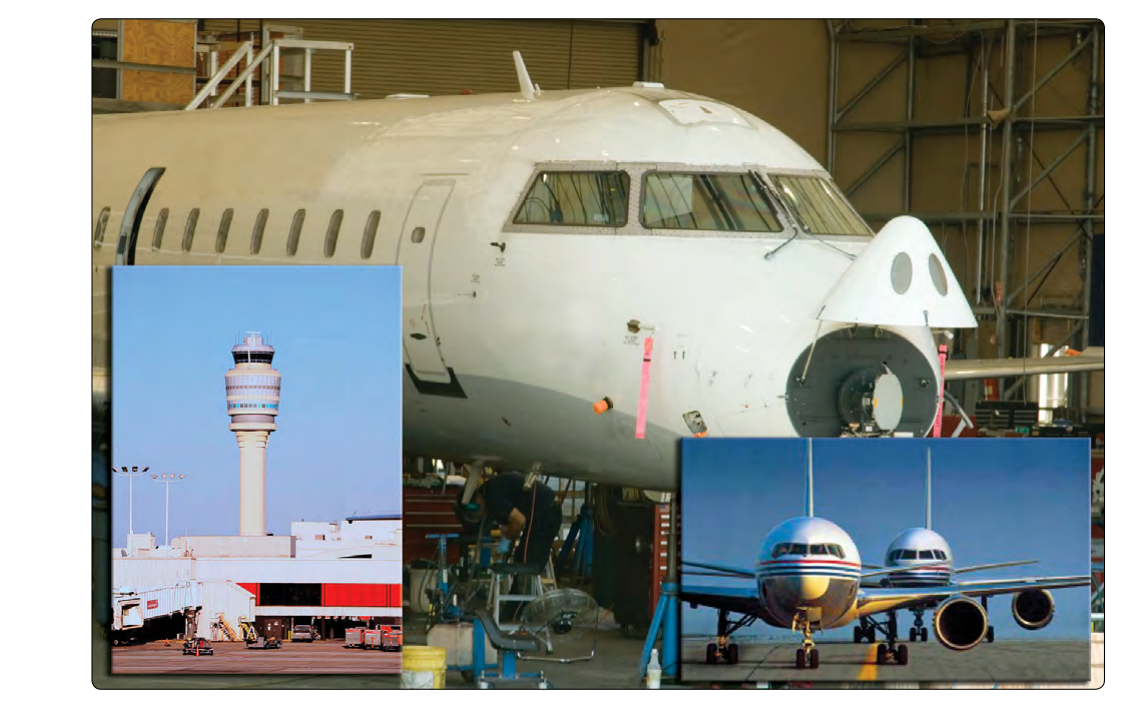
Aviation maintenance is among the most technically demanding and safety-critical professions in the world. Yet even the most skilled mechanics and avionics technicians can make mistakes — not because of a lack of technical knowledge, but because of human factors. In the 1990s, Gordon Dupont, while working for Transport Canada, originated the twelve most common human factors that contribute to maintenance errors. This framework became known as the Dirty Dozen. The FAA later adopted and promoted this framework in its own guidance, including AC 120-72 and FAA-H-8083-30. Every AMT working toward FAA certification should understand each factor deeply, not just for the knowledge test, but because recognizing these traps in daily work is a genuine life-saving skill.
The Dirty Dozen does not suggest that humans are inherently flawed or careless. Instead, it acknowledges that certain predictable conditions reliably degrade human performance. By naming them, maintenance professionals can recognize, communicate about, and actively mitigate them. The FAA addresses this framework in its human factors guidance and it forms a core pillar of any Maintenance Resource Management (MRM) program.
The Twelve Human Factors
1. Lack of Communication
Incomplete, inaccurate, or absent communication between maintenance personnel — whether written, verbal, or both — is one of the leading root causes of maintenance errors. When a task is handed off between shifts without a thorough briefing, or when a discrepancy is not documented clearly in the maintenance logbook, the next technician may proceed on faulty assumptions. Best practice is clear, standardized written sign-offs for every open task, combined with a face-to-face briefing during shift changes.
2. Complacency
Complacency occurs when a technician performs a familiar task with reduced vigilance, assuming everything is fine because it always has been before. Routine inspections are especially vulnerable to complacency — the hundredth oil change can feel identical to the first, causing a mechanic to skip a careful visual check. The FAA emphasizes that complacency is particularly dangerous because the technician is often unaware it is occurring. Actively challenging your own assumptions and performing self-checks can counteract it.
3. Lack of Knowledge
Attempting to maintain equipment without adequate training, current technical data, or the correct manuals is a serious hazard. Regulations require that maintenance be performed in accordance with manufacturer's instructions and approved data. Using an outdated revision of a maintenance manual, or simply not knowing a procedure exists, can lead directly to an improper repair. Continuous training and ensuring access to the most current approved data are the defenses against this factor.
4. Distraction
Any interruption — a coworker asking a question, a phone call, or noise on the hangar floor — can break a technician's concentration and cause a step to be missed. Research consistently shows that a distraction during a safety-critical task causes a disproportionate number of errors, because the technician often resumes work in the wrong place in the procedure. After any interruption, FAA guidance recommends going back and re-checking at least the three previous steps before resuming, rather than assuming you remember exactly where you left off.
5. Lack of Teamwork
Maintenance is rarely a solo endeavor. Poor coordination between team members — failing to share information, not asking for help, or assuming someone else completed a task — multiplies the risk of an error going undetected. Effective MRM programs stress that asking for assistance is a sign of professionalism, not weakness. Required Inspection Items (RIIs) exist precisely to ensure a second set of qualified eyes on the most critical tasks.
6. Fatigue
Fatigue impairs judgment, slows reaction time, degrades short-term memory, and reduces fine motor skills — all abilities essential to quality maintenance. Fatigue can result from sleep deprivation, extended shifts, circadian disruption (such as night work), or strenuous physical labor. Unlike alcohol impairment, fatigue can creep up gradually, and a fatigued technician often feels subjectively capable while being objectively impaired. The FAA encourages operators to implement fatigue risk management policies and for individuals to recognize when they are too tired to work safely.
7. Lack of Resources
When the right tools, parts, documentation, personnel, or time are not available, technicians may improvise or take shortcuts. Using an incorrect tool on a fastener, substituting a part not approved for that aircraft, or rushing a procedure to meet a departure time all create risk. Resource management means planning ahead to ensure every needed item is on hand before a task begins, and having the professional courage to stop work if proper resources are unavailable.
8. Pressure
Pressure — whether external (from management, customers, or schedule demands) or internal (self-imposed stress to get the job done) — is one of the most dangerous human factors because it actively compresses the time and attention given to safety steps. An aircraft-on-ground (AOG) situation can create enormous pressure to return a plane to service quickly. Recognizing when pressure is affecting decision-making is critical. The appropriate professional response is always to prioritize airworthiness over schedule, and to feel empowered to escalate concerns without fear of reprisal.
9. Lack of Assertiveness
Even when a technician knows something is wrong, they may fail to speak up due to deference to authority, fear of embarrassment, or a reluctance to challenge established practices. A junior mechanic who notices a discrepancy but says nothing because a senior colleague approved the work represents a breakdown in assertiveness. Effective MRM programs and a healthy safety culture empower every team member to raise concerns, stop the job, and voice observations regardless of rank.
10. Stress
Stress, whether from workplace pressures, personal life, or the complexity of a task, occupies cognitive resources that should be devoted to the job. Unlike simple fatigue, stress is also emotionally charged, which can cause poor judgment and hasty decisions. Technicians experiencing high stress should use strategies such as breaking tasks into smaller steps, using checklists rigorously, and seeking assistance when the cognitive load becomes too high.
11. Lack of Awareness
Situational awareness means understanding not just what you are doing right now, but the broader context — how your work fits into the overall aircraft condition, what other tasks are being performed simultaneously, and what the downstream consequences of your actions are. A technician who reassembles a system without realizing another team has already signed off a related component, or who does not consider how a repair interacts with adjacent systems, is suffering from a lack of awareness. Checklists, work cards, and thorough pre-task briefings all support situational awareness.
12. Norms
Norms are the informal, unwritten rules that develop in any workplace over time — the way things are actually done versus the way procedures say they should be done. When a shortcut or a deviation from procedure becomes routine, it becomes a norm, and the group no longer perceives it as a risk. This normalization of deviance is particularly insidious because it is invisible to those inside the culture. Audits, standardized procedures, and a culture that rewards adherence to correct practices — rather than speed — are the antidote to destructive norms.
Why the Dirty Dozen Matters for AMTs
The majority of aircraft accidents and incidents attributed to maintenance error can be traced back to one or more of these twelve factors. Recognizing the Dirty Dozen in the real world — on the hangar floor, during a night shift, during a rushed return-to-service — is what transforms book knowledge into genuine safety practice. Regulations such as 14 CFR Part 65 establish qualification requirements, and Part 43 governs maintenance performance standards, but neither can substitute for human self-awareness. The Dirty Dozen gives maintenance professionals a shared language to discuss, report, and ultimately prevent human error.
Many airlines, repair stations, and MRO facilities have implemented formal MRM programs that incorporate Dirty Dozen awareness training. These programs teach technicians to identify warning signs — for example, recognizing when fatigue or pressure is influencing a decision — and to use countermeasures before an error occurs rather than investigating after an incident has happened.
Key Numbers and Rules
- 12 factors total, originated by Gordon Dupont at Transport Canada in the early 1990s and later adopted and promoted by the FAA.
- Applicable to all aviation maintenance personnel, including AMTs, repairmen, and inspection personnel working under 14 CFR Parts 43, 65, and 145.
- Required Inspection Items (RIIs), established under 14 CFR 121.371 (and corresponding provisions in Part 135) for air carrier maintenance programs, are a regulatory countermeasure specifically addressing lack of teamwork and lack of awareness.
- The FAA Aviation Maintenance Technician Handbook — General (FAA-H-8083-30) addresses human factors in maintenance as a foundational topic for AMT certification.
- No single factor operates in isolation — errors most often result from a chain of two or more Dirty Dozen factors acting together.
Common Test Traps
- Confusing stress and fatigue: These are related but distinct. Fatigue is primarily a physiological state of exhaustion; stress is a cognitive and emotional state of overload. Both impair performance but through different mechanisms.
- Underestimating complacency: Test questions may frame complacency as overconfidence, but it is more accurately the gradual, unconscious reduction in vigilance on familiar tasks — the technician is not aware it is happening.
- Misidentifying norms: Norms are not formal rules — they are informal, habitual deviations that the group has come to accept as normal. A question describing a longstanding shortcut that everyone does is describing a norm, not simply a policy violation.
- Thinking lack of assertiveness only applies to junior personnel: Anyone in any role can fail to speak up. Senior technicians can also defer inappropriately to management pressure or customer demands.
- Assuming distraction requires a loud or dramatic event: Even a brief, quiet interruption during a safety-critical task — such as someone asking a simple question — is sufficient to cause a dangerous loss of place in a procedure.