Flight Training Aircraft: A Comparison Guide
Choosing the Right Flight Training Aircraft
When you begin your journey toward a pilot certificate, one of the first things you'll notice is that not all flight training aircraft are created equal. From the classic high-wing Cessna 172 to the sleek Diamond DA40, the airplane you train in shapes your habits, your comfort level, and even the cost of your training. Understanding the strengths and limitations of the most common trainers will help you make an informed decision—whether you're selecting a flight school or simply satisfying your curiosity about the machines that produce most of the world's new pilots.
This comparison guide covers the most widely used primary and advanced training aircraft, breaking down their handling characteristics, avionics options, cost considerations, and which types of students they tend to suit best. Pair this knowledge with solid ground study—including ACS-aligned practice questions—and you'll be well-prepared for both the written exam and the cockpit.
What Makes a Great Flight Training Aircraft?
Before comparing specific models, it helps to know what the aviation community generally looks for in a training platform. FAA-certified instructors and flight schools typically evaluate aircraft on several criteria:
- Stability and forgiving flight characteristics — A trainer should be predictable and tolerant of student mistakes.
- Visibility — Good outside reference is critical for learning traffic patterns, landings, and situational awareness.
- Operational cost — Fuel burn, maintenance, and insurance costs directly affect what students pay per hour.
- Avionics — Modern glass-cockpit options prepare students for today's instrument environment, while traditional steam gauges build fundamental skills.
- Parts availability and reliability — Schools need aircraft that stay airworthy with manageable downtime.
With those benchmarks in mind, let's look at the aircraft you'll most commonly encounter on the ramp at a busy flight school.
Cessna 172 Skyhawk: The Industry Standard
It would be nearly impossible to write a flight training aircraft comparison without leading with the Cessna 172. Produced continuously since the late 1950s, the 172 is the most-produced aircraft in history and remains the dominant choice for primary training worldwide.
The high-wing configuration gives student pilots exceptional ground visibility during turns in the pattern and makes it easier to judge height during the flare. The tricycle landing gear is more intuitive for beginners than conventional (tailwheel) gear, and the 172's naturally stable handling means it tends to return to coordinated flight without aggressive inputs.
Modern 172S models come equipped with the Garmin G1000 glass cockpit, bridging the gap between analog fundamentals and the digital environment of professional aviation. Earlier carbureted models with traditional round gauges are also common and offer a lower hourly cost, making them attractive for budget-conscious students working on a private pilot certificate.
Best suited for:
- First-time student pilots
- Private and instrument rating students
- Schools that prioritize fleet standardization
Cessna 152: Affordable Primary Training
The smaller sibling of the 172, the Cessna 152 is a two-seat, lighter aircraft that burns significantly less fuel. For solo students and early dual instruction focused on basic maneuvers and pattern work, the 152 delivers an economical platform. Its lighter control forces also make it responsive and fun to fly.
The tradeoffs are real, however. The narrow cockpit can be uncomfortable for larger pilots, and the reduced useful load limits cross-country versatility. Still, for pure primary training on a tight budget, many flight schools keep a 152 or two in the fleet for good reason.
Piper Cherokee and Archer: Low-Wing Perspective
The Piper PA-28 family—including the Cherokee, Warrior, and Archer variants—offers student pilots a low-wing experience that contrasts meaningfully with the Cessna lineup. The low-wing design provides excellent in-flight visibility of the horizon without wing obstruction, which some students find helps with attitude flying.
The tradeoff is reduced visibility of ground features during turns in the pattern, since the wing can block your view of the runway environment. That said, many pilots argue the Piper's slightly heavier, more damped feel on the controls does a better job of preparing students for larger aircraft they may fly later in their careers.
The Archer III, in particular, is a popular instrument training platform, and its fuel-injected Lycoming engine offers slightly better performance than the carbureted Cessna 172 at similar price points. Piper aircraft also benefit from robust parts support and a long maintenance track record.
Best suited for:
- Students planning to transition to low-wing aircraft professionally
- Private, instrument, and commercial training
- Pilots who prefer a more manual feel on the controls
Diamond DA20 and DA40: Modern Composite Trainers
Diamond Aircraft has carved out a significant niche in flight training with its composite airframes and modern cockpit options. The DA20 is a two-seat primary trainer known for its lightweight construction, excellent glide ratio, and aerodynamically efficient design. That glide performance is a double-edged sword: it builds excellent energy management habits, but the aircraft does not slow down or descend as readily as heavier trainers, which can challenge students learning to fly stabilized approaches.
The DA40 steps up to a four-seat configuration and is widely used for instrument and commercial training. Many DA40 variants come factory-equipped with the Garmin G1000 suite, and the aircraft's handling qualities—particularly its light, responsive controls—are often praised by students and FAA-certified instructors alike. Diamond's emphasis on safety features, including a centrally located throttle console and built-in energy absorption in the airframe, reflects a design philosophy oriented toward student safety.
Best suited for:
- Students at modern flight academies with composite fleets
- Pilots pursuing instrument and commercial ratings who want glass-panel experience
- Aviation enthusiasts who want a technically sophisticated training environment
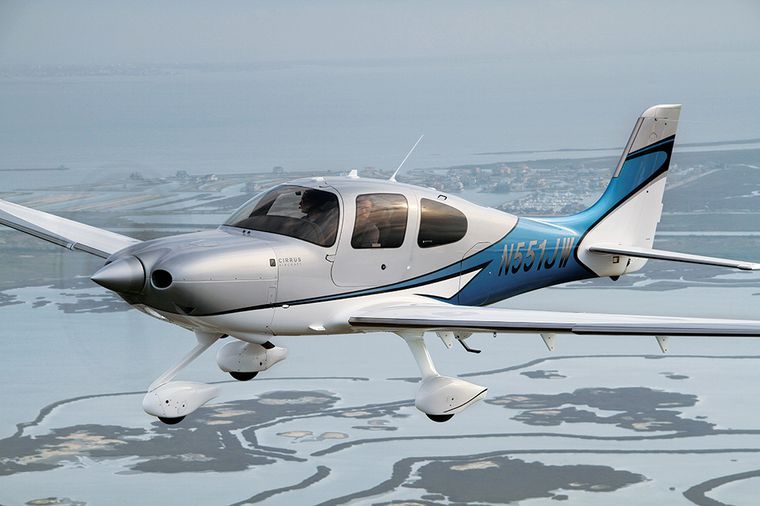
Cirrus SR20: Glass Cockpit and Safety Technology
The Cirrus SR20 occupies an interesting space in flight training. It is not as common as the Cessna or Piper platforms simply because of its higher acquisition and operating cost, but a growing number of schools and private owners use it for training due to its sophisticated avionics and signature Cirrus Airframe Parachute System (CAPS). The SR20's Perspective avionics suite offers one of the most comprehensive glass-cockpit environments available in a single-engine piston aircraft, making it a strong preparation tool for technically complex operations.
Students training in the SR20 must adapt to its side-stick control yoke and powerful autopilot, but they gain experience with automation management that is increasingly relevant in modern aviation. The CAPS system, while not a substitute for good airmanship, is a genuine safety feature that sets Cirrus aircraft apart.
Tailwheel Aircraft: Building Fundamental Skills
Beyond the mainstream trainers, a growing number of flight schools incorporate tailwheel aircraft—like the Piper J-3 Cub or American Champion Citabria—into their curricula. These aircraft demand precise rudder coordination and careful crosswind technique, habits that translate directly into sharper flying skills across all aircraft types. Many experienced FAA-certified instructors advocate for at least some tailwheel time as a fundamental skill builder, even for students who ultimately plan to fly modern glass-cockpit aircraft.
How Ground Study Ties Into Your Aircraft Choice
Regardless of which aircraft you train in, passing your FAA written examination requires solid knowledge of aerodynamics, aircraft systems, weather, regulations, and navigation—knowledge that applies across all platforms. The Aviation Test Prep exam library covers every FAA knowledge test with ACS-aligned practice questions reviewed by FAA-certified instructors. Our AI tutor, Ace, provides instant, plain-language explanations for every question, helping you understand the why behind each answer rather than just memorizing responses.
Our proven 5-step study method—assess, learn, practice, review, and test—mirrors the structured approach that FAA-certified instructors use on the ground and in the cockpit. You can also explore ACS code breakdowns to see exactly which knowledge areas need the most attention before your checkride.
Making Your Decision
There is no universally superior flight training aircraft—only the right aircraft for your goals, budget, and local school's fleet. Consider visiting a few flight schools, sitting in different cockpits, and asking your prospective FAA-certified instructors which aircraft they feel best prepares students for the ratings you're pursuing. Practical experience in the airplane matters, but so does the knowledge you bring to every preflight briefing.
Ready to build the ground knowledge to match your cockpit time? Start your free Aviation Test Prep account today and take the first step toward acing your FAA written exam with confidence.
Ready to pass your FAA written exam?