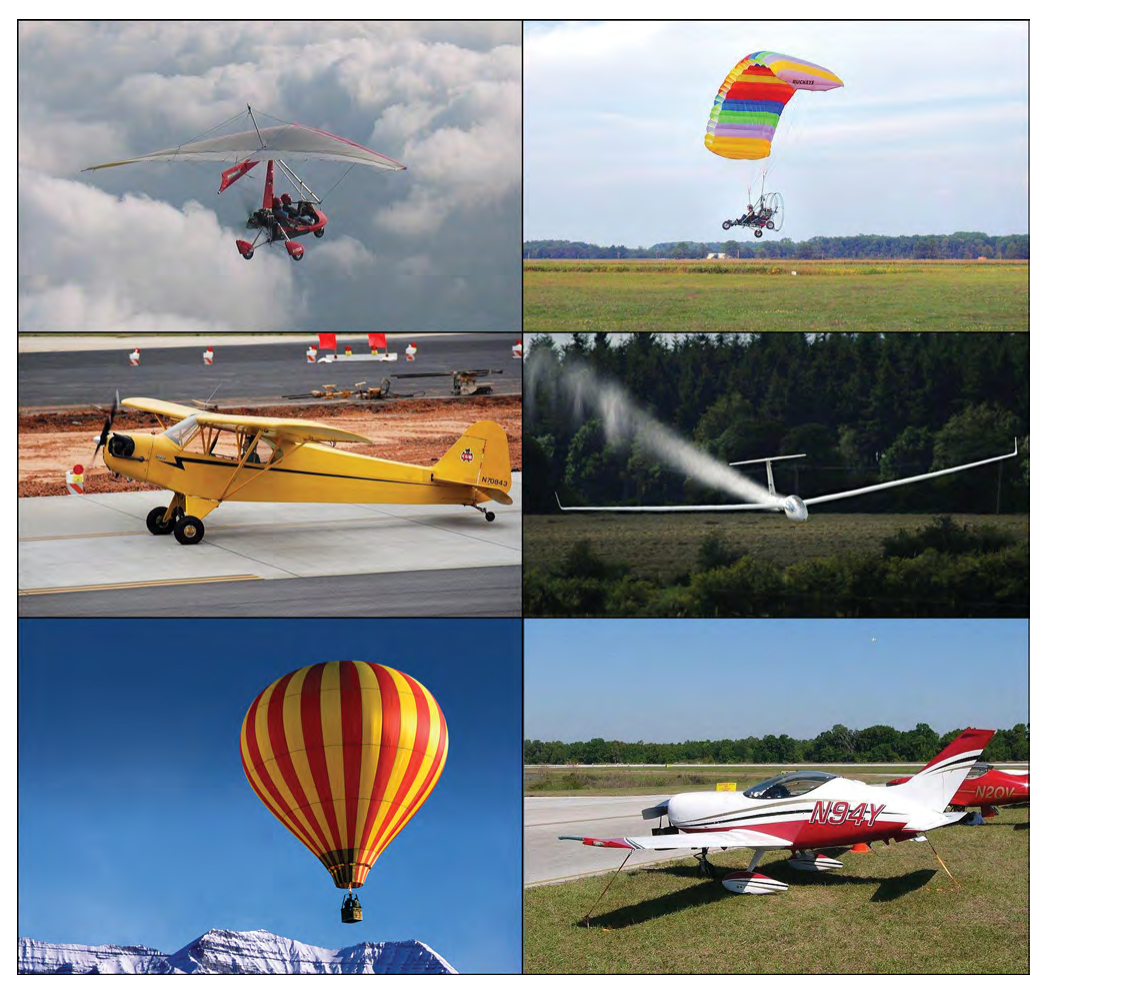
The sport pilot certificate represents one of the most accessible pathways into powered flight, but that accessibility comes packaged with a precisely engineered regulatory fence. A sport pilot may serve as pilot-in-command only of aircraft that meet the FAA's definition of a light-sport aircraft (LSA), and that definition is built on two interlocking pillars: the aircraft must belong to one of the specific categories listed in the sport pilot rules, and it must simultaneously satisfy every one of the FAA's strict performance and design limits. Understanding both pillars — and where they interact — is essential for the Knowledge Test, the practical test, and every flight you log under 14 CFR Part 61, Subpart J.
What Legally Makes an Aircraft an LSA?
The controlling definition lives in 14 CFR Part 1, and it is an all-or-nothing standard. An aircraft either satisfies every criterion simultaneously or it is not an LSA — full stop. The criteria are:
- Maximum certificated takeoff weight (MTOW): No more than 1,320 lb for aircraft not intended for operation on water; no more than 1,430 lb for aircraft intended for operation on water (seaplanes, amphibians, and similar).
- Maximum level-flight airspeed (VH): No more than 120 knots CAS at maximum continuous power in level flight.
- Maximum stall speed (VS0): No more than 45 knots CAS in the landing configuration — flaps down, gear down, power off.
- Seating: No more than two occupant seats, including the pilot.
- Powerplant (if powered): A single reciprocating engine only — no turbines, no multi-engine configurations.
- Propeller: Fixed or ground-adjustable only; no in-flight variable-pitch propellers.
- Cabin: Non-pressurized.
- Landing gear: Fixed, with an exception allowing repositionable gear for seaplanes and gliders where design requires it.
Every one of these limits must be met concurrently. An aircraft that posts a VH of 118 knots but carries a MTOW of 1,400 lb on land is disqualified. An aircraft with beautifully low stall speeds but three seats is disqualified. There is no partial credit in the regulatory definition.
The Six Eligible Categories — and What They Include
Even an aircraft that satisfies all performance limits is not eligible for sport pilot operations unless it belongs to one of the six specific categories recognized under 14 CFR 61.315 (sport pilot privileges and limitations), applied against the light-sport aircraft definition in 14 CFR 1.1. Each category has nuances worth knowing in depth.
1. Airplane (Single-Engine Land and Single-Engine Sea)
This is by far the most common sport pilot category. A sport pilot certificate with an airplane endorsement is further divided by class: single-engine land (ASEL) and single-engine sea (ASES). These are treated as separate privileges. A pilot endorsed for ASEL operations cannot simply hop into a floatplane — a separate water class endorsement and the associated training are required. Qualifying land airplanes must stay at or below 1,320 lb MTOW; qualifying seaplanes and amphibians get the 1,430 lb allowance. Multi-engine airplanes are categorically excluded; the single-engine requirement in the LSA definition eliminates them regardless of their weight or speed.
2. Glider
Gliders — both unpowered and powered gliders (those with a small engine for self-launching or sustaining) — can qualify as LSA provided they meet the applicable limits. The fixed-gear rule is relaxed for gliders because retractable or repositionable gear is a normal design feature of sailplanes. There is no MTOW limit applied to gliders under the LSA framework in the same way as powered aircraft, but other criteria still apply. Gliders do not require an engine, so the single-engine and propeller requirements are simply inapplicable rather than prohibitive.
3. Gyroplane
A gyroplane uses a free-spinning, unpowered rotor for lift and a conventional propeller (driven by a reciprocating engine) for thrust. It is classified as a rotorcraft, but it is the only rotorcraft category eligible for sport pilot. Helicopters — which use a powered rotor for both lift and thrust — are explicitly absent from the Part 61 sport pilot category list. This distinction trips up many Knowledge Test candidates. A gyroplane that meets the LSA performance limits is legal for sport pilot; a helicopter never is under current rules.
4. Lighter-Than-Air (Balloon and Airship)
The lighter-than-air category encompasses two classes: balloon and airship. Balloons — both gas and hot-air — are popular sport pilot aircraft because their operating characteristics are naturally aligned with LSA constraints. Airships (powered, steerable lighter-than-air craft) are far less common but remain eligible if they satisfy the LSA limits. A sport pilot seeking to fly both a balloon and an airship needs separate class endorsements for each.
5. Weight-Shift Control Aircraft (Trike)
Weight-shift control aircraft — commonly called trikes — use a hang-glider-style wing combined with a powered, three-wheeled cart. The pilot controls pitch and roll by shifting body weight to move the wing relative to the cart rather than using conventional control surfaces. These aircraft fall under their own category in the sport pilot rules, separate from airplanes. Like airplanes, they are subdivided into land and sea classes, each requiring its own endorsement.
6. Powered Parachute
A powered parachute consists of a flexible parachute canopy providing lift and a motorized cart — either wheeled or with a hull for water operations — hanging beneath it. Speed is inherently low, making this category naturally compatible with the 120-knot VH and 45-knot VS0 limits. Land and sea classes again apply. Powered parachutes are among the simplest aircraft to operate and are popular for low-altitude, slow-speed recreational flying.
The Endorsement Requirement: No Blanket Authorization
Earning a sport pilot certificate in one category does not grant blanket privileges across all six eligible categories. Under 14 CFR Part 61.321, a sport pilot who wants to add a category or class must receive ground and flight training from a certificated flight instructor, demonstrate proficiency, and obtain a logbook endorsement for the new category and class. Flying a weight-shift control trike without that endorsement — even if you hold a sport pilot certificate for ASEL — is a regulatory violation equivalent to operating without authorization. Each category demands different skills, aerodynamics, and emergency procedures, which is exactly why the FAA requires separate training before expanding privileges.
Why These Boundaries Exist and Why They Matter
The LSA category system is not arbitrary bureaucracy. The performance limits — especially the 45-knot stall speed and 120-knot cruise cap — keep these aircraft operating at energies where amateur and occasional pilots can realistically manage emergencies. Lower kinetic energy at impact means more survivable accidents. The single-engine restriction keeps system complexity within the scope of the abbreviated sport pilot training syllabus. The two-seat limit ensures that, at most, one passenger is exposed to a sport pilot's less-extensive training compared to a private pilot's.
From a test-taking perspective, examiners frequently probe whether candidates truly understand that the LSA definition is conjunctive — all limits apply simultaneously. A question might describe an attractive aircraft that meets five of the eight criteria but fails on MTOW. The correct answer is that it does not qualify, full stop. Similarly, test questions often offer helicopter or powered-lift as answer choices when asking which aircraft a sport pilot may fly — both are traps, since neither is on the eligible list.
Key Numbers and Rules at a Glance
- MTOW: 1,320 lb (land) / 1,430 lb (water-based)
- VH: 120 knots CAS maximum
- VS0: 45 knots CAS maximum (landing configuration)
- Seats: 2 maximum
- Engine: single reciprocating only
- Propeller: fixed or ground-adjustable only
- Six eligible categories: Airplane, Glider, Gyroplane, Lighter-than-air, Weight-shift control, Powered parachute
- Helicopters and powered-lift: NOT eligible
- Multi-engine: NOT eligible
- Each new category/class requires a separate CFI endorsement
Common Test Traps
- Helicopter trap: Helicopter appears as a plausible answer on many tests. It is a rotorcraft, but it is not among the six eligible sport pilot categories. Only gyroplanes qualify under the rotorcraft umbrella — and even gyroplanes must meet all LSA limits.
- Land vs. water MTOW trap: The 1,320 lb limit applies to land aircraft; the 1,430 lb limit applies to water-based aircraft. Switching these numbers is a classic error.
- VS0 configuration trap: The 45-knot stall limit is specifically in the landing configuration — flaps and gear deployed, power off. A clean-configuration stall speed is irrelevant to the LSA determination.
- Blanket endorsement trap: A sport pilot certificate in one category does not authorize any other. Each category and class requires independent training and a logbook endorsement.
- Single-engine trap: The LSA definition limits powered aircraft to a single reciprocating engine. A light twin that otherwise weighs under 1,320 lb and stalls at 40 knots is still not an LSA and still not legal for a sport pilot to fly as PIC.
- Variable-pitch propeller trap: Some LSA-sized aircraft are fitted with in-flight variable-pitch props. That feature alone disqualifies them from the LSA definition regardless of weight or speed.