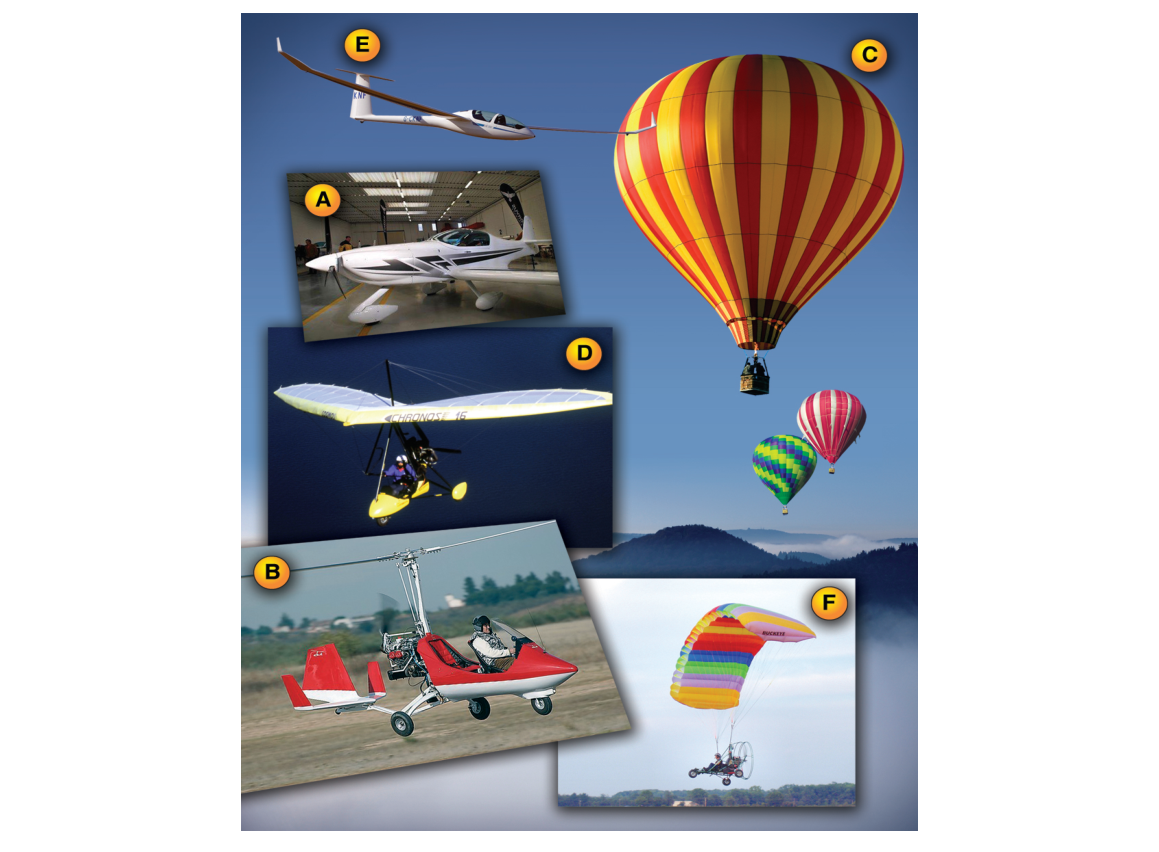
Light-sport aircraft (LSA) represent one of the most carefully engineered regulatory categories in U.S. aviation. When the FAA created the sport pilot and light-sport aircraft rules in 2004, the agency set out to lower the barrier to entry for recreational flight while still defining a precise safety envelope. That envelope is built around a specific set of weight and speed limits found in 14 CFR Part 1, Section 1.1. These numbers are not arbitrary thresholds — they reflect deliberate trade-offs between accessibility, manageable handling characteristics, and the reduced training requirements that come with a sport pilot certificate. Every applicant for the sport pilot knowledge test must be able to recite these limits, explain why they exist, and recognize the edge cases that trip up even attentive students.
What Defines an LSA: The Simultaneous Test
The most important concept to internalize before memorizing any individual number is that an aircraft qualifies as a light-sport aircraft only when it meets every applicable limit at the same time. Satisfying four out of six criteria is not enough. The FAA designed the category this way so that aircraft manufacturers, sport pilots, and the public share a clear, unambiguous definition. If any single parameter is exceeded — even by a small margin — the aircraft falls outside the LSA definition, and a sport pilot certificate alone will not authorize you to act as pilot-in-command.
The parameters that must simultaneously be satisfied for a powered, fixed-wing, land-based aircraft to qualify as an LSA are: maximum gross takeoff weight, maximum level-flight airspeed, maximum stall speed, number of seats, powerplant type, landing gear configuration, and pressurization status. The following sections break each of these down in the depth needed for both the knowledge test and real-world application.
Weight Limits Explained
Land-Based Fixed-Wing Aircraft
The maximum certificated gross takeoff weight for a land-based fixed-wing LSA is 1,320 pounds (600 kilograms). This figure was selected because it roughly corresponded to the weight of popular two-seat trainers already on the market in 2004, while still being light enough to keep kinetic energy at impact relatively low — a key factor in limiting injury severity in accidents. Aircraft that exceed this limit, even with full fuel, must be certificated under a different category and may not be flown by a sport pilot without additional ratings.
Water-Based and Amphibious Aircraft
Seaplanes and amphibious aircraft receive a slightly higher weight allowance: 1,430 pounds (650 kilograms). The extra 110 pounds accounts for the structural reinforcement needed for water operations — hull strengthening, water rudders, and floats that simply do not exist on a land plane. The FAA recognized that penalizing seaplane designs with the same weight cap as land planes would effectively exclude an entire class of light recreational aircraft from the category. Note carefully that an amphibious aircraft can qualify under either the 1,320-pound or 1,430-pound limit depending on how it is operated and certified, but it may never exceed 1,430 pounds regardless of configuration.
Speed Limits Explained
Maximum Level-Flight Airspeed (VH)
An LSA must not be capable of exceeding 120 knots calibrated airspeed (KCAS) in level flight with maximum continuous power. The use of calibrated airspeed — rather than indicated airspeed — is significant. Calibrated airspeed corrects for instrument and position error, making it a more standardized and enforceable metric. The 120-knot cap matters for sport pilots operationally because it aligns with the airspeed range where simple, fixed-pitch propellers and carbureted engines operate efficiently, and it keeps LSA out of the higher-speed performance profiles where additional regulations and more complex cockpit systems are typically required.
A worked example helps illustrate enforcement: suppose an aircraft is advertised as having a cruise speed of 115 knots indicated at 75% power, but with full throttle at low altitude it achieves 124 knots calibrated. That aircraft does not qualify as an LSA, because VH is measured at maximum continuous power — not cruise power. Manufacturers must demonstrate compliance at full power during the certification process.
Maximum Stall Speed (VS0)
The stall speed in the landing configuration — flaps fully extended, gear down, power at idle — must not exceed 45 knots calibrated airspeed (KCAS). This limit is perhaps the most safety-critical number in the entire LSA definition. The relationship between stall speed and accident survivability is well-established: lower stall speeds mean lower impact energies in the event of a stall-related accident near the ground. By capping VS0 at 45 knots, the FAA ensures that LSA remain within the handling envelope that a sport pilot, with fewer minimum flight hours than a private pilot, can manage safely.
The 45-knot stall speed also drives traffic pattern speeds. A sport pilot flying an aircraft that stalls at 45 knots will typically fly final approach at approximately 1.3 times VS0 — roughly 58 to 59 knots — keeping pattern speeds modest and compatible with uncontrolled airport operations.
Additional Defining Parameters
Seating Configuration
An LSA may have no more than two occupant seats. This is a straightforward limit, but it interacts with the weight limit in an important way. With a maximum gross weight of 1,320 pounds shared between the aircraft's empty weight, two occupants, baggage, and fuel, designers must make careful trade-offs. Many popular LSA have useful loads of only 500 to 600 pounds, meaning a pilot, passenger, and full fuel may push right against the limit.
Powerplant
If the aircraft is powered, it must use a single reciprocating engine. This rules out turbine engines, turboprops, and multi-engine configurations. However, the LSA category does include unpowered aircraft (gliders) and non-traditional propulsion formats found in weight-shift-control aircraft and powered parachutes — each with their own sub-category rules that still fall under the broader LSA definition.
Landing Gear
The landing gear must be fixed and non-retractable, with two exceptions: gliders (which may have retractable gear) and aircraft operated on water. Fixed gear reduces mechanical complexity, lowers maintenance demands, and eliminates the risk of gear-up landings — all consistent with the spirit of an accessible, lower-workload category.
Pressurization
LSA cannot have a pressurized cabin. This restriction implicitly limits practical service ceilings and keeps these aircraft in the lower altitude environment for which the sport pilot operating rules are designed.
Why These Limits Shape Sport Pilot Privileges
Understanding the LSA definition is inseparable from understanding sport pilot privileges and limitations under 14 CFR Part 61, Subpart J. A sport pilot may act as pilot-in-command only of an aircraft that meets the LSA definition — and only within the category and class for which that pilot holds an endorsement. If an aircraft's manufacturer modifies the design beyond any single LSA parameter — say, adding retractable gear for aerodynamic efficiency — the aircraft is no longer an LSA, and the sport pilot certificate provides no authority to fly it without additional ratings.
This framework also explains why the 45-knot stall speed is as important to the pilot as it is to the aircraft. The reduced aeronautical experience required for a sport pilot certificate — a minimum of 20 flight hours under 14 CFR §61.313, compared to a minimum of 40 flight hours for a private pilot certificate under the Part 61 general requirements of §61.109 — is directly justified by the forgiving low-speed handling characteristics that the stall speed cap enforces on every qualifying aircraft.
Common Test Traps
- Land vs. water weight limits: Many students apply the 1,320-pound limit to seaplanes. The water-based limit is 1,430 pounds.
- Indicated vs. calibrated airspeed: Both VH and VS0 are measured in calibrated airspeed, not indicated. This distinction appears explicitly in 14 CFR Part 1.
- VH at max continuous power: The 120-knot cap applies at maximum continuous power, not cruise or economy power settings.
- All criteria must be met simultaneously: An aircraft is not an LSA simply because it weighs less than 1,320 pounds — every other parameter must also be satisfied.
- Fixed gear exception for gliders: Students sometimes memorize "fixed gear only" without remembering the glider and water-operation exceptions.
- Reciprocating engine rule: Unpowered LSA (gliders) are not subject to the single reciprocating engine requirement; that rule applies only to powered aircraft in the category.