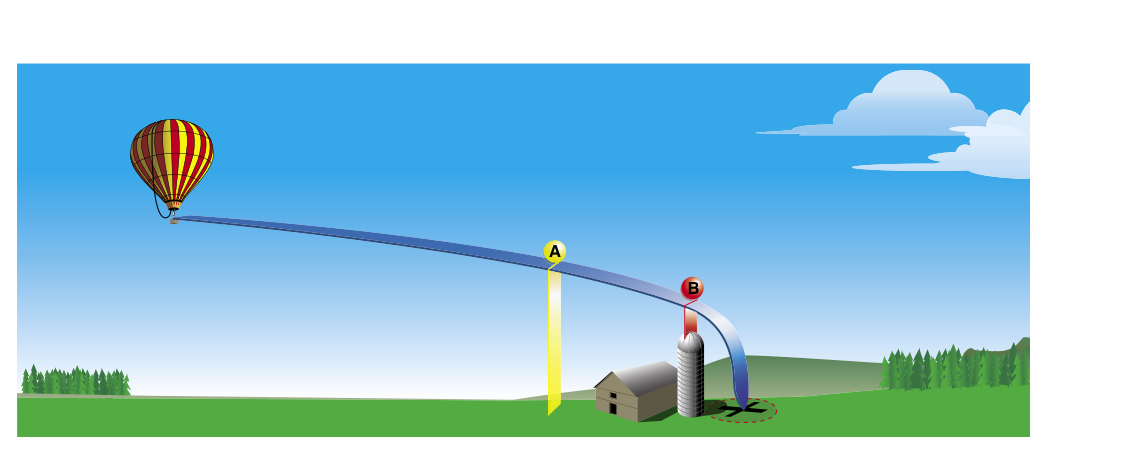
When a transport-category aircraft loses an engine at high-altitude cruise, it typically cannot maintain that altitude on the remaining engines. Instead, it must gradually descend—a process known as driftdown—until it reaches a new stabilized cruise altitude where the remaining powerplant(s) can sustain level flight. Far from being an uncontrolled emergency descent, driftdown is a precisely defined, regulation-driven procedure that must guarantee obstacle clearance along every mile of the route being flown. Understanding how driftdown works, how the net flight path is constructed, and what the regulations demand is essential knowledge for the Airline Transport Pilot certificate and for safe Part 121 line operations.
14 CFR 121.191 is the governing regulation for en route limitations following an engine failure on a large, turbine-powered aircraft operated under Part 121. It establishes the specific obstacle clearance margins the operator must demonstrate before dispatching any flight over any route segment. Pilots who understand the intent behind these rules can make better in-flight decisions and communicate more effectively with dispatch when abnormal conditions arise.
How Driftdown Works
At normal cruise altitudes—often above Flight Level 300—the thrust available from all engines is barely more than the thrust required for level flight. Losing even one engine on a twin-engine jet eliminates roughly half of total available thrust. On a three- or four-engine aircraft the loss is smaller in percentage but still significant, particularly at high altitudes where engine efficiency is reduced and the aircraft is heavy. As a result, the aircraft can no longer maintain altitude and must descend.
The pilot (or autopilot) initially allows the aircraft to drift down at a controlled rate, typically holding the airspeed that yields the best engine-out climb gradient—or, equivalently, the minimum rate of descent. This speed is published in the aircraft's Airplane Flight Manual (AFM) and is often referred to as the engine-out best-range or driftdown speed. Holding this speed maximizes the horizontal distance traveled for each foot of altitude lost, which in turn gives the aircraft the shallowest possible descent angle and the best chance of clearing terrain.
As the aircraft descends, air density increases. Greater air density means more thrust from the remaining engines and reduced induced drag from the wings operating at lower altitude. Eventually the aircraft reaches a new equilibrium altitude—often called the engine-out ceiling or driftdown altitude—where level flight is again possible. This altitude depends on the aircraft's current weight (fuel burned since departure), the ambient temperature, and the number of engines still operating.
The Net Flight Path Concept
Regulators recognized that calculating obstacle clearance based on the actual performance data from flight tests would be dangerously optimistic when applied to line operations. Real aircraft vary from the test article, engines age, crews may not perfectly execute the procedure, and atmospheric conditions are never identical to test-day conditions. To build in a safety margin, 14 CFR 121.191 requires that obstacle clearance be evaluated against the net flight path, not the gross (actual) flight path.
The net flight path is the gross engine-out flight path reduced by a specified gradient penalty. For turbine-powered aircraft operating under Part 121, that penalty is 1.1 percent of the climb gradient (a reduction of 1.1 percentage points from the gross climb gradient) applied per 14 CFR 121.191 and the underlying Part 25 net flight path methodology. During the driftdown descent itself the aircraft is not climbing, so this penalty is not simply subtracted arithmetically from a negative descent gradient the way it would be from a positive climb gradient; rather, the approved AFM/performance data build the net flight path using the certificated gradient decrements so that it is always more conservative than the actual (gross) flight path. The net path is always worse than the actual path, meaning the aircraft appears, on paper, to descend more steeply and travel farther before reaching the stabilized engine-out altitude. This conservative accounting ensures that even with real-world performance degradation, the aircraft clears obstacles.
It is important to note that during the driftdown descent, the net flight path gradient is less favorable (steeper descent) than gross, so the net path is below the gross path. The net path must still clear all obstacles by the required vertical margin.
Obstacle Clearance Requirements Under 14 CFR 121.191
The regulation specifies different clearance margins depending on whether the route is over land or water and how the route is defined:
- Over land: The net flight path must clear all terrain and obstacles within five statute miles on either side of the intended track by at least 2,000 feet vertically.
- Over water or in other areas without reliable obstacle data: The net flight path must clear the surface by at least 1,000 feet, though specific route analysis and ETOPS authorization may alter the practical methodology.
- Fuel jettisoning: If the aircraft is equipped with a fuel jettison system and the operator's approved procedures permit its use, fuel may be jettisoned during driftdown to reduce weight, improve performance, and achieve a higher stabilized engine-out altitude. The regulation allows operators to account for fuel jettisoning in the performance analysis, provided the jettison is completed before the aircraft reaches the critical obstacle.
The five-statute-mile corridor on each side of the track is not a fixed airspace boundary; it accounts for normal navigation tolerances in ATC radar environments. In areas of required navigation performance (RNP), operators may be able to use a narrower corridor if the navigation specification supports it and the Operations Specifications reflect that approval.
Dispatch and Route Planning Implications
Before an airplane is dispatched on any route segment, the airline's dispatch/flight release function must verify—using approved performance charts or computerized performance programs derived from the AFM—that the net flight path clears all obstacles in the corridor for every possible engine-failure point along the route. This analysis considers:
- The aircraft's maximum certificated takeoff weight or the actual planned weight at each point along the route (weight decreases as fuel burns, improving engine-out performance).
- Forecasted en route temperatures (high temperature reduces engine thrust and degrades performance).
- Planned cruise altitude and the driftdown altitude achievable at each weight/temperature combination.
- The presence of high terrain or artificial obstacles along the corridor.
If the analysis reveals a segment where the net flight path cannot clear an obstacle by the required margin over land, the operator must take corrective action: reduce the dispatch weight, select an alternate route that avoids the obstacle, or—if equipped and approved—plan a fuel jettison that reduces weight sufficiently before the critical point.
Pilot Execution of the Driftdown Procedure
When an engine failure actually occurs at cruise, the crew executes the abnormal checklist, secures the failed engine, and transitions to the driftdown airspeed published in the AFM. The autopilot is typically used to maintain precise airspeed and bank angle during the descent. ATC must be notified immediately; the crew declares an emergency if obstacle clearance or airspace conflicts demand priority handling. The crew also evaluates the divert options available, because even if the aircraft can eventually level off at the engine-out ceiling, that altitude may still be below the minimum en route altitude for some segments.
Communication with dispatch is equally critical. Dispatch can confirm the pre-planned driftdown altitude for the current weight, alert the crew to obstacles along the intended or divert routes, and coordinate with ATC for a priority routing that keeps the aircraft over lower terrain when possible.
Why It Matters for the ATP
Driftdown and net flight path are not abstract regulatory topics—they represent the fundamental promise that a transport-category aircraft can lose an engine anywhere on its route and still land safely. The ATP certificate holder is personally responsible for understanding these limitations when acting as pilot-in-command. The PIC must be able to recognize when the pre-planned driftdown is no longer adequate (for example, if an engine failure occurs at a higher-than-expected weight due to a fuel-upload change) and take appropriate action, including declaring an emergency and requesting an immediate divert.
The ATP knowledge test and oral examination frequently probe this topic by presenting scenarios where the examinee must identify the correct clearance margin, explain the difference between net and gross flight path, or describe the role of fuel jettisoning in restoring obstacle clearance capability.
Key Numbers and Rules
- Net flight path penalty: 1.1 percentage points below the gross engine-out climb gradient (14 CFR 121.191).
- Obstacle clearance corridor: 5 statute miles on either side of the intended track.
- Required vertical clearance: 2,000 feet above all obstacles within the corridor over land (1,000 feet over water/areas without reliable obstacle data).
- Fuel jettisoning: May be credited in performance analysis if AFM-approved procedures are followed.
- Applicable aircraft: Large, turbine-powered transport-category airplanes operated under 14 CFR Part 121.
Common Test Traps
- Confusing net and gross flight paths: The net path is always worse (steeper descent or shallower climb) than gross. Obstacle clearance is evaluated against the net path, not actual performance.
- Misidentifying the clearance margin: The required clearance over land is 2,000 feet—not 1,000 feet (which applies over water or areas without reliable obstacle data) and not 500 feet (which applies to certain takeoff segment analyses).
- Forgetting the corridor width: The five-statute-mile corridor is measured from the intended track, not from the aircraft's actual position; obstacles five miles away must still be accounted for.
- Overlooking fuel jettisoning as a tool: Many candidates forget that jettisoning fuel is a legitimate, regulation-recognized method of restoring net flight path obstacle clearance during en route planning.
- Assuming driftdown is unregulated: Driftdown is not simply an emergency descent—it is a precisely defined procedure tied to AFM-approved speeds and gradients that must be followed to validate the pre-dispatch obstacle-clearance analysis.