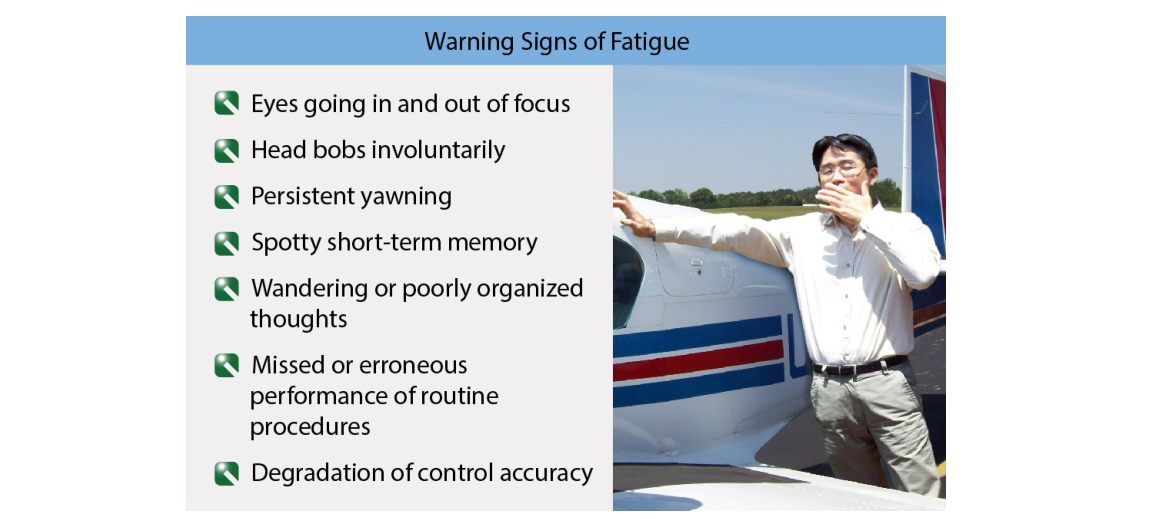
Fatigue is one of the most underestimated hazards in aviation — and that includes remote pilot operations conducted under 14 CFR Part 107. Unlike a dramatic mechanical failure or sudden weather change, fatigue creeps in quietly, eroding your ability to make sound decisions, process information, and react quickly before you are even aware it has happened. The FAA consistently identifies human factors — including fatigue and sleep deprivation — as major contributors to aviation accidents and incidents across all categories of flight, manned and unmanned alike.
As a remote pilot in command (RPIC), you bear full responsibility for determining that your small unmanned aircraft system (sUAS) operation is safe before every flight. That responsibility includes an honest, rigorous self-assessment of your own physiological readiness. Understanding how fatigue affects performance — at the neurological, cognitive, and behavioral levels — is not just good test preparation; it is fundamental airmanship.
What Is Fatigue and How Does It Develop?
The FAA's Risk Management Handbook (FAA-H-8083-2) and Aviation Weather and physiology guidance recognize two primary types of fatigue relevant to pilots: acute fatigue and chronic fatigue. Acute fatigue is short-term tiredness resulting from a single period of intense activity, physical exertion, emotional stress, or a poor night of sleep. It is usually resolved by adequate rest. Chronic fatigue, on the other hand, builds up over days or weeks when sleep debt accumulates and rest opportunities are consistently insufficient. Chronic fatigue is far more dangerous because pilots often adapt behaviorally — they feel like they are functioning normally — while their actual cognitive performance has declined significantly.
Sleep deprivation is the direct engine that drives both types. Most adults require seven to nine hours of quality sleep per 24-hour period to maintain full cognitive function. Losing even one to two hours per night over several consecutive days produces impairments comparable to being awake for an entire 24-hour period. Fatigue research often cited in aviation human factors training suggests that after roughly 17 hours of continuous wakefulness, a person's reaction time and decision-making quality can degrade to levels comparable to a blood alcohol concentration of around 0.05 percent — a figure drawn from external fatigue studies rather than an FAA-published numeric standard, but useful for illustrating how significantly extended wakefulness can impair performance.
How Fatigue Impairs Pilot Performance
Fatigue does not impair all cognitive functions equally or simultaneously, which makes it especially dangerous. The first faculties to deteriorate are the higher-order executive functions — exactly those skills a remote pilot relies on most.
Attention and Situational Awareness
A fatigued pilot struggles to divide attention effectively between multiple inputs: watching the aircraft's position, scanning for manned aircraft and obstacles, monitoring the control station, and managing battery life or payload status. The brain begins to tunnel, focusing narrowly on one input while others fall away. This is directly related to what the FAA calls loss of situational awareness — a breakdown in the pilot's accurate mental model of what is happening around them in three-dimensional space.
Decision-Making and Risk Judgment
Fatigue causes pilots to take shortcuts in decision-making, a phenomenon sometimes called cognitive offloading. You may accept risk that a rested version of yourself would reject. You may stop questioning whether a flight profile is truly within regulatory and safety limits. The FAA's Risk Management Handbook emphasizes that impaired risk perception is particularly dangerous because it is self-concealing — a fatigued pilot often does not recognize that their judgment is compromised.
Reaction Time and Motor Control
Physical reaction time increases substantially under fatigue. For an sUAS operator, slower control inputs can mean the difference between a safe recovery from an unexpected gust and a flyaway or collision. Fine motor coordination also suffers, making precise stick or joystick movements less accurate.
Memory and Communication
Working memory — the ability to hold and manipulate information in your head in real time — is highly sensitive to sleep loss. A fatigued pilot may forget a waypoint, miss a critical checklist item, or fail to correctly communicate intentions to a visual observer or other crewmember. In crew operations, this breaks down the CRM chain that keeps the operation coordinated and safe.
Why Fatigue Matters Specifically for Part 107 Operations
Part 107 remote pilots often operate without the formal scheduling structures that govern airline crews. There are no FAA-mandated rest requirements for sUAS operations equivalent to 14 CFR Part 117 rest rules for airline pilots. This places the entire burden of fatigue management on the individual RPIC. A commercial drone pilot might fly early morning mapping missions, respond to an afternoon infrastructure inspection call, and then accept an evening event photography job — accumulating fatigue without any regulatory backstop requiring them to stop.
Furthermore, many Part 107 operations involve repetitive, monotonous tasks such as long linear corridor surveys or extended hover operations over a structure. Monotony accelerates the onset of fatigue even in a relatively well-rested pilot, further compressing the margin of safety. The FAA's guidance on human factors stresses that vigilance decrement — the natural decline in sustained attention over time — is especially pronounced when tasks are repetitive and when the operator is already sleep-deprived.
Environmental factors common to outdoor sUAS operations — heat, cold, glare, noise — can each independently increase the rate at which fatigue develops, compounding the risk when a pilot is already tired before the mission begins.
Key Numbers and Rules
- Sleep requirement: Most adults need 7–9 hours of quality sleep per night to maintain full cognitive performance.
- 17 hours awake: Fatigue research often cited in aviation training suggests cognitive performance after 17 hours of continuous wakefulness can be comparable to a BAC of around 0.05% — a widely referenced external research figure, not an FAA-published numeric standard.
- 24 hours awake: Similar research suggests performance equivalence can rise to roughly 0.10% BAC territory; note that the actual legal BAC limit for manned aircraft operations under 14 CFR 91.17(a)(4) is 0.04%.
- No mandated sUAS rest rules: 14 CFR Part 107 does not prescribe specific minimum rest periods for remote pilots — self-assessment is required before every flight.
- IMSAFE checklist: The FAA's personal minimums checklist includes fatigue as a go/no-go criterion; the F in IMSAFE stands for Fatigue — if fatigued, do not fly.
- Monotony and vigilance: Sustained attention on repetitive tasks can begin to degrade measurably in well under an hour, even in rested individuals — worse when fatigued. The FAA's human factors guidance recognizes this vigilance decrement without specifying an exact timeframe.
Memory Aid: IMSAFE
The FAA-recommended IMSAFE personal checklist is a pre-flight self-assessment tool applicable to Part 107 remote pilots just as it is to manned aircraft pilots. Run through it before every mission:
- I — Illness: Am I sick or feeling unwell in any way?
- M — Medication: Am I taking any prescription or over-the-counter drugs that could affect alertness or cognition?
- S — Stress: Am I under significant psychological, financial, or personal stress?
- A — Alcohol: Have I consumed alcohol within the past 8 hours (the regulatory floor under 14 CFR 91.17), or am I still feeling any effects? FAA guidance recommends waiting considerably longer than the 8-hour minimum.
- F — Fatigue: Am I adequately rested? Have I had sufficient sleep in the past 24 hours and over the past several days?
- E — Eating/Emotion: Have I eaten appropriately, and am I emotionally stable enough to focus on this operation?
If the answer to the Fatigue question — or any IMSAFE item — raises a genuine concern, the FAA's position is clear: do not fly. No commercial job, no client deadline, and no weather window is worth the risk of operating an sUAS while cognitively impaired.
Practical Mitigation Strategies
Preventing fatigue is far more effective than trying to manage it once it sets in. Prioritize consistent sleep schedules rather than trying to catch up on weekends. Build realistic mission schedules that account for travel time, pre-flight planning, and post-flight duties — all of which add to mental load before a single flight is flown. Schedule complex or high-risk operations during times of day when your alertness is naturally highest, typically mid-morning for most people following a natural circadian rhythm. Avoid accepting new missions when you are already aware of accumulated sleep debt. Communicate honestly with clients and employers about physiological readiness — it is both a safety imperative and a professional responsibility.
Common Test Traps
- Thinking Part 107 has mandatory rest rules: It does not. Unlike airline operations under Part 117, Part 107 places all rest responsibility on the RPIC. The test may present scenarios implying rest is regulated — it is not, but self-assessment is still required.
- Confusing acute and chronic fatigue: Acute fatigue is short-term and rest-recoverable; chronic fatigue accumulates over days or weeks. Know the distinction — test questions may describe a scenario and ask which type applies.
- Believing caffeine or stimulants eliminate fatigue: The FAA is explicit that stimulants mask the feeling of tiredness without restoring cognitive function. Caffeine may increase alertness temporarily but does not repair the underlying sleep debt or restore full decision-making capability.
- Missing the IMSAFE mnemonic question: The FAA knowledge test frequently asks what IMSAFE stands for and what each letter represents. Know all six elements cold — especially that F is specifically Fatigue.
- Underestimating monotony as a fatigue accelerant: Test questions sometimes describe long, repetitive sUAS missions and ask about risks. Monotony-induced vigilance decrement is a recognized FAA human factors concern — don't overlook it as a source of in-flight fatigue even when a pilot starts the day well-rested.