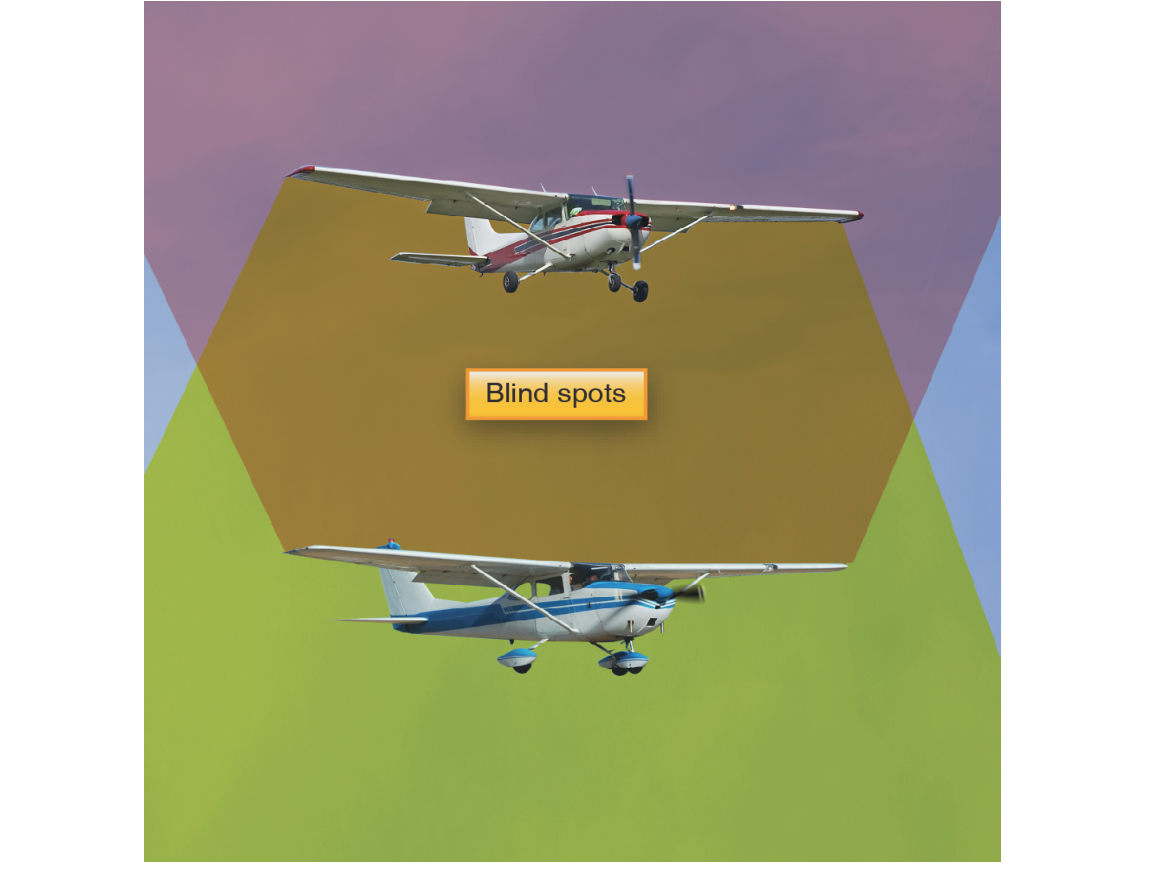
Imagine you are flying a small unmanned aircraft system (sUAS) for a commercial mapping job. Your drone is 400 feet above ground level, moving downwind, and your visual observer is distracted by a bystander. Meanwhile, a helicopter is approaching from your 7 o'clock position and a gusty wind has just pushed your aircraft outside your planned operating area. At any one of those moments, if you do not have an accurate, up-to-date mental picture of everything happening around you, a collision, flyaway, or regulatory violation is just seconds away. That mental picture — constantly built, updated, and acted upon — is what aviation professionals call situational awareness (SA).
SA is a foundational concept in crew resource management (CRM), a discipline originally developed for crewed airline operations but now directly applicable to Part 107 remote pilot operations. FAA Risk Management Handbook (FAA-H-8083-2) describes SA as knowing what is happening around you and projecting what is likely to happen next. For remote pilots, SA is uniquely challenging because you are physically separated from the aircraft, you rely heavily on instruments and radio links rather than direct sensory feedback, and you often operate in dynamic, uncontrolled environments alongside other people.
The Three Levels of Situational Awareness
Aviation psychologists commonly describe SA in three progressive layers. Understanding these layers helps you recognize exactly where your awareness might be breaking down.
- Level 1 — Perception: You are actively taking in raw information from your environment. This includes reading your ground control station (GCS) display, watching the aircraft visually, listening for other traffic, checking wind indicators, and monitoring battery levels. Perception is the foundation. If you miss a piece of data — say, you never glance at your GCS altitude readout — you cannot build an accurate picture.
- Level 2 — Comprehension: You combine the raw data points and understand what they mean together. A battery at 40% is just a number (Level 1). Understanding that 40% remaining with a strong headwind on the return leg means you have a narrow margin — that is Level 2. Comprehension connects dots and reveals significance.
- Level 3 — Projection: You anticipate what the situation will look like in the near future. If you project that your aircraft will reach the far end of its planned flight path in 90 seconds, your battery will be at 25%, and the wind is increasing, you should start your return now. Projection is the most powerful level of SA — it is what separates a reactive pilot from a proactive one.
Building and Maintaining SA During sUAS Operations
Pre-flight Situational Awareness
SA begins well before you power on the aircraft. A thorough pre-flight process is your first opportunity to build an accurate mental model of the operating environment. Check weather sources for wind speed and direction, visibility, cloud ceilings, and any forecast changes during your flight window. Review airspace using B4UFLY, ArcGIS, or the FAA's UAS Facility Maps. Brief any visual observers (VOs) or ground crew on their roles, communication protocols, and lost-link procedures. The more complete your pre-flight mental model, the easier it is to detect deviations during flight.
Continuous Visual Contact
Under 14 CFR Part 107, the remote pilot in command (RPIC) must maintain visual line of sight (VLOS) with the sUAS at all times — or ensure that a designated visual observer does. VLOS is not just a regulatory requirement; it is your most direct SA tool. When you can see the aircraft, you immediately perceive its attitude, altitude, proximity to obstacles, and relationship to other traffic. When you spend long periods looking at your GCS screen rather than the aircraft, you trade Level 1 perception for instrument data alone, increasing your vulnerability to loss of SA.
Using a Visual Observer Effectively
A VO significantly expands your SA capacity because they can watch the aircraft and the surrounding airspace while you manage the GCS and flight controls. However, a VO is only effective if they are properly briefed. Before flight, establish clear communication calls — what words or signals the VO will use if they see a manned aircraft, a person entering the area, or the drone approaching a boundary. Agree on who has authority to call an abort. An unbriefed or passive VO offers little SA benefit.
Scanning the Environment Systematically
Random visual scanning tends to leave gaps. Develop a structured scan pattern: periodically shift your eyes from the aircraft to the horizon for traffic, then down to the GCS for battery, signal strength, and GPS lock, then to the surrounding ground area for people or vehicles. The interval depends on mission complexity, but in a dynamic environment, a full scan cycle every 15–30 seconds is a reasonable starting point. Think of it as an instrument scan adapted for sUAS — structured, rhythmic, and complete.
Monitoring GCS Data
Your GCS is an SA amplifier. Most systems display GPS satellite count, signal strength between controller and aircraft, battery state of charge, altitude, speed, distance from home point, and flight time. Learning to read this data fluently — without fixating on the screen — lets you detect developing problems early. Two critical numbers to internalize before every flight are your minimum return battery level (below which you initiate return-to-home immediately) and your maximum range for reliable control link. Establish these numbers during pre-flight and treat crossing them as a mandatory decision point.
Threats to Situational Awareness
SA does not erode all at once — it degrades through predictable pathways. Recognizing these threats in yourself and your crew is essential to catching SA loss before it leads to an incident.
- Task saturation: When you are managing a complex camera mission, dealing with changing winds, and answering a client's questions simultaneously, your cognitive bandwidth fills up. The first thing to slip is broad environmental scanning — exactly the SA you need most.
- Complacency: Routine flights breed familiarity, and familiarity breeds assumption. Assuming an airspace is clear because it always has been is a form of SA loss. Every flight deserves fresh perception.
- Distraction: Bystanders, phone calls, crew conversations, and equipment glitches all pull attention away from the aircraft. Designate a sterile cockpit concept: during active flight, non-essential communication stops.
- Fixation: Focusing too long on one element — say, perfecting a camera angle — while neglecting battery level, airspace, or the aircraft's position is called tunneling or channelized attention. The FAA notes this as a common precursor to in-flight emergencies.
- Stress and fatigue: Physical or emotional stress narrows attention and slows decision-making. A remote pilot who is tired, dehydrated, or emotionally preoccupied has reduced SA capacity even before the first motor spins up. The IMSAFE checklist (Illness, Medication, Stress, Alcohol, Fatigue, Eating/Hydration) applies directly to remote pilots performing Part 107 operations.
Recovering Lost SA
If you realize your mental picture of the situation has gone blank — you are not sure where exactly the drone is, which direction it is heading, or what the battery state is — do not guess and continue. Execute a controlled hover. Stopping lateral movement immediately gives you time to re-establish perception. Look for the aircraft visually, orient it by its heading lights or by briefly yawing it, then check your GCS systematically. Only resume the mission once you have rebuilt at least Level 1 and Level 2 SA. If conditions prevent you from re-establishing SA quickly, land as soon as safely possible.
Key Numbers and Rules
- Part 107 requires VLOS at all times for both the RPIC and any VO on the operation (14 CFR 107.31).
- Maximum altitude for most Part 107 operations is 400 feet AGL; within 400 feet horizontally of a structure, you may fly up to 400 feet above the structure's highest point (14 CFR 107.51).
- Waivered operations (nighttime, beyond VLOS, over people) still require the RPIC to demonstrate mitigations that maintain effective SA equivalence.
- No Part 107 operation may be conducted in a careless or reckless manner that endangers life or property — a direct reflection of the SA obligation (14 CFR 107.23).
- IMSAFE self-assessment should be completed before every flight to identify physiological SA degraders.
Memory Aid
PAVE — a standard FAA risk-identification checklist that doubles as a SA-building framework before each flight:
- P — Pilot: Am I fit to fly? Consider IMSAFE factors. Is my proficiency current for this mission type?
- A — Aircraft: Is the sUAS airworthy? Are batteries charged, props undamaged, firmware updated, and GCS calibrated?
- V — enVironment: What are the weather, airspace, terrain, and lighting conditions? What might change during the flight?
- E — External pressures: Is a client deadline, schedule pressure, or desire to impress pushing me toward poor decisions? Identify and consciously counter those pressures.
Running through PAVE before every flight ensures that SA-building starts on the ground, where you have the most time and the least risk.
Common Test Traps
- SA is not just watching the aircraft. Test questions often frame SA as purely visual. Remember that SA includes airspace awareness, crew coordination, weather changes, and equipment status — all simultaneously.
- A VO does not transfer RPIC responsibility. Even with a VO watching the aircraft, the RPIC remains responsible for the entire operation. If the VO loses sight of the drone, the RPIC must respond — not assume the VO will resolve it.
- Fixation is the enemy of SA. Questions about channelized attention or task saturation are testing your understanding that focusing deeply on one task (like framing a perfect shot) destroys broad SA. The correct answer prioritizes aircraft safety over mission quality.
- IMSAFE applies to remote pilots. Some students assume physiological checklists only matter for manned aircraft. The FAA explicitly applies these human factors principles to Part 107 operations through the Risk Management Handbook.
- Recovering SA means stopping, not guessing. If a test scenario presents a pilot who is uncertain of their drone's position or state, the correct action is always to halt, hover, and re-establish awareness — never to continue the mission while uncertain.