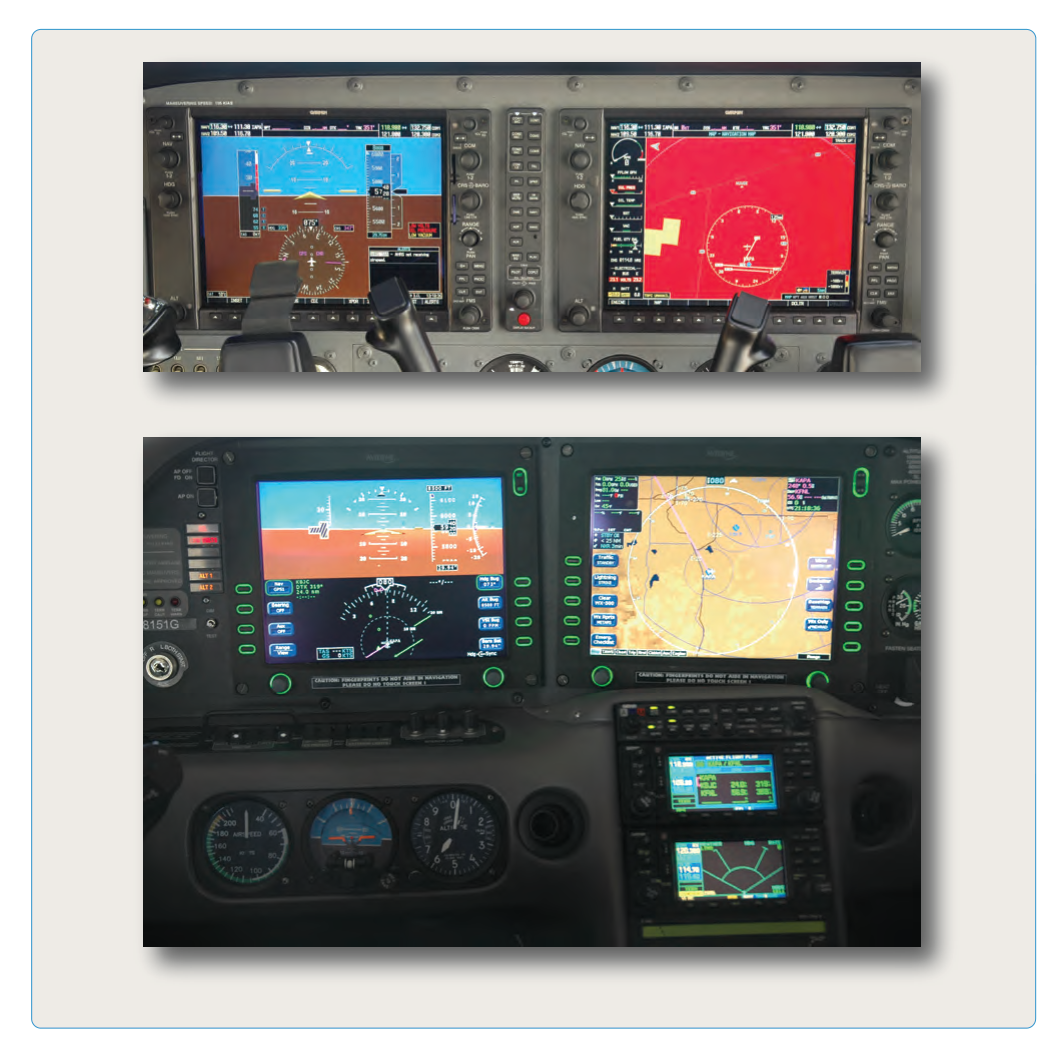
Required Navigation Performance (RNP) and Area Navigation (RNAV) have quietly become the backbone of modern instrument procedures in the United States and around the world. For the airline dispatcher, understanding the difference between the two frameworks — and knowing exactly what to verify before signing a release — is both a regulatory obligation and a critical safety function. A crew that flies an RNP AR approach in an airplane that has not been authorized for it, or on a route that requires oceanic RNP 4 without the proper OpSpec, can expose passengers, crew, and the certificate holder to serious risk.
This article walks through the core concepts of RNAV and RNP navigation specifications, explains how the authorization chain works from the FAA to the flight release, and identifies the specific items a dispatcher must confirm before a flight departs.
RNAV vs. RNP: What Is the Difference?
Area Navigation (RNAV) is a navigation method that allows an aircraft to fly any desired flight path within the coverage of ground-based or space-based navigation aids, rather than being confined to routes defined by physical VOR or NDB stations. RNAV uses on-board navigation computers that blend inputs from GPS, VOR/DME, DME/DME, and inertial reference systems to compute a continuous position solution and track to a waypoint.
Required Navigation Performance (RNP) is a subset of RNAV with one critical addition: on-board performance monitoring and alerting (OPMA). An RNP-capable system continuously computes its own accuracy estimate — called the Actual Navigation Performance (ANP) or Estimated Position Uncertainty (EPU) — and compares it against the Required Navigation Performance value for the operation. If the system cannot guarantee it is operating within that value, it alerts the crew. This self-monitoring capability is what distinguishes RNP from plain RNAV and is why RNP operations can be conducted with tighter obstacle clearance and in more demanding environments.
The FAA formally documents navigation specifications in AC 90-105 (Approval Guidance for RNP Operations and Airborne RNP Systems) and in the Instrument Procedures Handbook (FAA-H-8083-16), which dispatchers should treat as primary references alongside the AIM.
The Navigation Specification Hierarchy
Navigation specifications are labeled with a number that represents the total system error (TSE) in nautical miles that must not be exceeded for a specified percentage of flight time (typically 95%). Common specifications a dispatcher will encounter include the following:
- RNAV 10 (RNP 10): Used in oceanic and remote continental airspace. Requires the aircraft to remain within 10 NM of the centerline for 95% of flight time. Despite being labeled RNP 10 in older documents, it does not require OPMA, so it is technically an RNAV specification.
- RNAV 5: Used in domestic en-route airspace in some regions. Accuracy within 5 NM.
- RNAV 2: The standard for Q- and T-routes and most domestic RNAV SIDs and STARs in the U.S. Requires the aircraft to be within 2 NM for 95% of the time.
- RNAV 1: Required for certain terminal procedures, including many RNAV SIDs and STARs that are more tightly spaced. Within 1 NM for 95% of flight time.
- RNP 4: Used in oceanic/remote areas where ADS-B or ADS-C separation standards are applied. Requires OPMA and lateral accuracy of 4 NM at 95%.
- RNP 1: Used in terminal and approach segments where OPMA is required. Accuracy of 1 NM at 95%.
- RNP APCH (Approach): The specification underlying LNAV, LNAV/VNAV, LP, and LPV lines of minima on RNAV (GPS) approach procedures. This is by far the most commonly used RNP specification in day-to-day operations.
- RNP AR APCH (Authorization Required): The most demanding approach specification, allowing curved flight paths (radius-to-fix, RF legs), very tight accuracy values as low as 0.1 NM, and approaches to as low as 200 feet decision altitude in some configurations. Special aircraft certification AND operational authorization (OpSpec/MSpec/LOA) are required.
The Authorization Chain: Aircraft, Crew, and Operator
Before any flight using an RNP or RNAV specification, the dispatcher must confirm authorization at three distinct levels: the aircraft, the crew, and the operator (certificate holder).
Aircraft Airworthiness and Equipment
The aircraft's Flight Manual (AFM) or an approved supplement must explicitly state the navigation specifications for which the avionics and flight management system have been certified. A Part 25 transport category airplane may be certified for RNP APCH but not RNP AR APCH. The dispatcher must match the procedure's required specification against what is listed in the AFM. In practice, operators maintain a fleet capability document or maintenance tracking entry, but the dispatcher is responsible for not releasing a flight to an RNP AR approach airport unless that specific tail number is authorized.
Crew Training and Currency
Crewmembers must be trained and current on the specific procedures. RNP AR approaches, for example, require dedicated training and checking under the operator's approved training program. Under 14 CFR Part 121, the carrier's Operations Specifications (OpSpecs) paragraph C059 covers RNP AR operations and typically includes training requirements that must be reflected in crew records. The dispatcher must be aware of any crew limitations on the release.
Operator OpSpecs and LOAs
The carrier's Operations Specifications, issued by the FAA to the certificate holder, authorize specific navigation operations. No RNAV or RNP operation may be conducted unless covered by an applicable OpSpec paragraph. Key OpSpec paragraphs the dispatcher should know include:
- B036: En-route operations using RNAV, including specific accuracy values authorized.
- B039: Oceanic and remote operations (covering RNAV 10, RNP 4, etc.).
- C059: Special aircraft and aircrew authorization required (SAAAR) / RNP AR approach procedures.
- C063: Standard RNP approach procedures (RNP APCH).
For Part 91 operators using a Letter of Authorization (LOA) instead of OpSpecs, the principle is the same — the LOA from the FSDO must specifically cover the navigation specification used.
Route and Procedure Verification
Navigation specifications are charted on procedures and published in route descriptions. The dispatcher must check the following specific items during flight planning and before signing the release:
- SID and STAR charting notes: Many departure and arrival procedures are labeled RNAV 1 or RNAV 2 in the procedure title or chart notes. If a procedure requires RNAV 1 and the aircraft is only certified to RNAV 2, the procedure cannot be used.
- Approach procedure minima lines: RNAV (GPS) approaches publish separate lines of minima (LPV, LNAV/VNAV, LP, LNAV) corresponding to different levels of equipment and authorization. LPV minima require a WAAS receiver certified to TSO-C146; LNAV/VNAV may use WAAS or baro-VNAV. Confirm the aircraft's avionics support the intended line of minima.
- Route remarks in the ATC system: Oceanic tracks and certain Q-routes carry RNAV specifications in their definitions. Dispatchers using PFPX, Lido, Jeppesen FliteDeck, or similar systems must confirm that the route filed is within the aircraft's authorized performance envelope.
- NOTAMs: GPS NOTAMs, RAIM prediction outages, and WAAS service advisories can invalidate an RNAV or RNP approach entirely. The dispatcher must check GPS NOTAMs for the destination, alternate, and en-route segments during the estimated time of arrival window.
RAIM and WAAS: The GPS Integrity Check
Receiver Autonomous Integrity Monitoring (RAIM) is the GPS receiver's internal check that there are sufficient satellites with acceptable geometry to provide an accurate and reliable position solution. For RNP APCH operations using non-WAAS equipment, the dispatcher or crew must perform a RAIM prediction for the destination and alternate airports within the anticipated arrival window. FAA RAIM prediction tools (the FAA's Aviation Weather Center RAIM prediction service, or equivalent) are available online for this purpose.
WAAS (Wide Area Augmentation System) receivers certified to TSO-C145/C146 effectively have continuous integrity monitoring from the WAAS ground network and do not require a separate RAIM prediction. However, WAAS outages or degraded service can still affect LPV minima availability, and dispatchers should check WAAS NOTAMs accordingly.
Why It Matters Operationally
Dispatchers share legal responsibility for the safety and lawfulness of the flight under 14 CFR Part 121. Releasing a flight to an RNP AR approach without verifying OpSpec C059 authorization, crew qualification, and aircraft certification is not a paperwork failure — it is an unsafe act that could result in controlled flight toward terrain when a curved RF leg maneuver is attempted with an uncertified FMS. Likewise, failure to check GPS NOTAMs and RAIM availability has led to situations where crews arrived at an alternate with no usable approach. The dispatcher is the last ground-based safeguard.
Key Numbers and Rules
- RNAV 10 / RNP 10: 10 NM lateral accuracy at 95% — oceanic, no OPMA required.
- RNP 4: 4 NM, OPMA required — oceanic/remote ADS-B separation.
- RNAV 2: 2 NM — Q-routes, T-routes, most domestic SIDs/STARs.
- RNAV 1: 1 NM — tighter terminal RNAV procedures.
- RNP APCH: The standard GPS approach spec; accuracy 0.3 NM in the final approach segment.
- RNP AR APCH: Authorization required; accuracy as low as 0.1 NM; RF legs permitted; OpSpec C059 mandatory.
- LPV minima require TSO-C145 or TSO-C146 WAAS avionics.
- RAIM prediction required for non-WAAS GPS approaches; check within the arrival window.
Common Test Traps
- Confusing RNAV 10 with RNP: The specification was historically called RNP 10, but it does NOT require on-board performance monitoring. The modern ICAO/FAA designation is RNAV 10. Exam questions sometimes test whether you know OPMA is not required.
- Assuming LPV = GPS approach: LPV minima require WAAS-certified avionics. A GPS receiver without WAAS can fly LNAV minima on the same chart, but not LPV. The chart having an LPV line does not mean every GPS-equipped aircraft can use it.
- Forgetting that OpSpecs apply to the certificate holder, not just the aircraft: Even a properly equipped aircraft cannot be used for RNP AR operations if the operator's OpSpecs do not include C059.
- Overlooking GPS NOTAMs and RAIM for alternates: Dispatchers typically check the destination, but the alternate airport approach also depends on GPS availability if that alternate only has RNAV approaches.
- Treating RNAV SIDs/STARs as optional equipment: If ATC clears a flight via an RNAV 1 departure and the aircraft is only RNAV 2 certified, the flight cannot legally accept that clearance. Dispatchers must know the aircraft's certified accuracy level before filing RNAV routes.