Standard Instrument Departures (SIDs) and Standard Terminal Arrival Routes (STARs) are published instrument flight procedures that form the connective tissue between the en route structure and the terminal environment. For aircraft dispatchers and flight crew alike, these procedures are not merely navigational conveniences — they are integral components of an IFR flight plan that affect fuel burn, routing legality, crew workload, and ATC coordination. Understanding how SIDs and STARs are designed, how they appear on a flight plan, and where they impose specific aircraft or crew requirements is essential knowledge for the Aircraft Dispatcher certificate.
Both procedure types are codified in the FAA's Aeronautical Information Manual (AIM) and the Instrument Procedures Handbook (FAA-H-8083-16). Together these sources define what these procedures are, when they apply, and how dispatchers must account for them in preflight planning and operational control.
What Are SIDs and How They Work
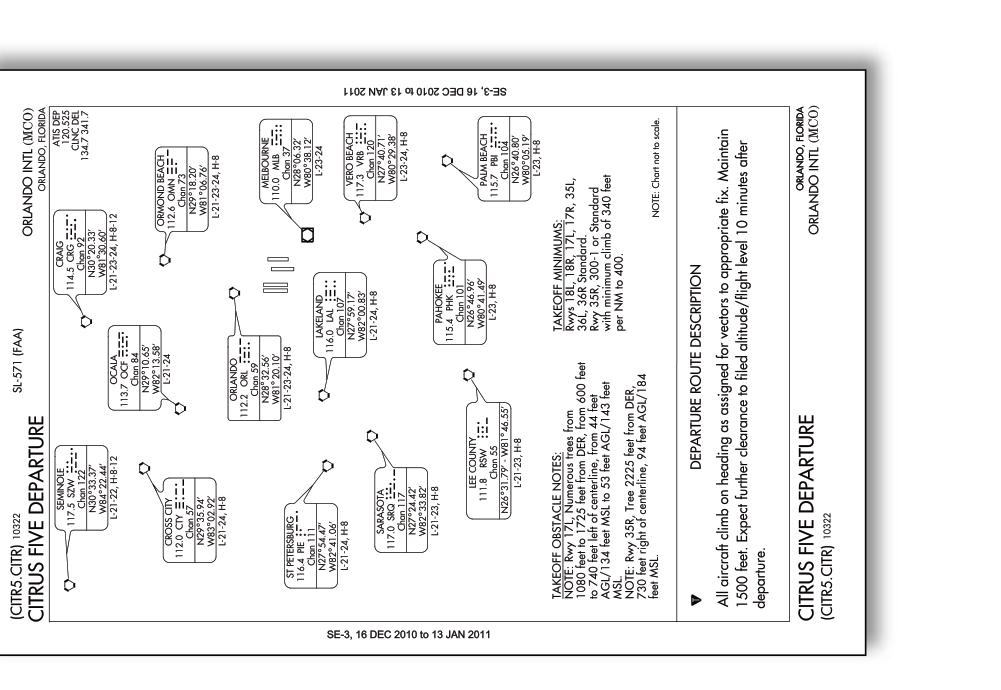
A Standard Instrument Departure — officially termed a Departure Procedure (DP) in FAA terminology — is a pre-planned, published IFR procedure that provides an obstacle-departure path and a standardized transition from the departure airport into the en route structure. The FAA publishes two categories of DPs: Obstacle Departure Procedures (ODPs) and Standard Instrument Departures (SIDs). ODPs are designed primarily for obstacle clearance and may be textual (printed in the front of the Terminal Procedures Publication) or graphic. SIDs, by contrast, are graphic procedures specifically designed for ATC route management — they reduce the need for lengthy verbal route clearances and manage traffic flow in busy terminal areas.
A SID consists of one or more common routes from the airport that then fan out into multiple transition routes, each of which connects to a specific en route fix or airway. When ATC issues a clearance with a SID, the pilot and dispatcher know the aircraft will fly a defined lateral path, often with speed and altitude restrictions depicted on the chart. For example, a SID might specify crossing a particular fix at or below a certain altitude, or maintaining a specific speed until reaching a named waypoint. These restrictions are part of the clearance and must be complied with unless ATC issues an amendment.
What Are STARs and How They Work
A Standard Terminal Arrival Route (STAR) is the arrival counterpart to the SID. It provides a pre-planned IFR route from the en route structure down into the terminal area, terminating at a point from which an instrument approach can be commenced. Like SIDs, STARs reduce controller workload by eliminating the need to issue individual routing instructions to every arriving aircraft. A single STAR clearance communicates a complex series of waypoints, altitudes, and speed restrictions in a single phrase.
STARs typically begin at a high-altitude en route fix and route the aircraft progressively lower as it approaches the terminal area. Many STARs include published altitude and speed restrictions that must be met unless ATC specifically cancels them. A common restriction format is "at or above," "at or below," or a hard "cross at" altitude. Speed restrictions on STARs frequently cap the aircraft at 250 knots below 10,000 feet MSL, consistent with 14 CFR Part 91 requirements, but the charted procedure may impose tighter constraints. Dispatchers must ensure the aircraft's performance data supports compliance with these restrictions, especially on arrivals into mountainous or high-density terminal areas.
Flight Planning Implications for the Dispatcher
From a dispatch standpoint, SIDs and STARs carry real operational weight. When a SID or STAR is included in a filed flight plan, the dispatcher must account for several factors:
- Routing and mileage: A SID or STAR may add track miles compared to a direct routing, affecting fuel load calculations. Conversely, it may provide a more efficient path than a random route in high-density airspace. The dispatcher must use the actual planned routing — including SID and STAR miles — when computing fuel requirements.
- Altitude restrictions: Published crossing altitudes on SIDs and STARs affect the aircraft's ability to reach cruise altitude efficiently and can influence fuel burn profiles. A SID that holds the aircraft low for a prolonged period increases fuel consumption in the climb phase.
- Speed restrictions: STARs with low-speed requirements may affect arrival time estimates. If an aircraft must slow to 210 knots at a fix 80 miles from the destination, the ETA calculation must reflect that deceleration.
- Equipment and RNAV requirements: Many modern SIDs and STARs are RNAV procedures requiring specific avionics (e.g., GPS/GNSS, FMS). The note "RNAV" or "RNP" on a procedure chart means the aircraft must be appropriately equipped and the crew must be qualified. Dispatchers must verify aircraft equipment codes filed with the flight plan match the requirements of any assigned SID or STAR.
- Pilot familiarity and NOTAMs: Dispatchers should confirm crew familiarity with complex procedures and check NOTAMs for any temporary changes to SID/STAR routing, altitude restrictions, or procedure unavailability.
How SIDs and STARs Appear on an IFR Flight Plan
When filing an IFR flight plan with ATC (via FSS, DUAT/DUATS, or a third-party dispatch system that transmits the plan into the NAS), SIDs and STARs are inserted at specific positions in the route field. A SID is listed immediately after the departure airport identifier, followed by the SID name and, if applicable, the transition fix. A STAR is inserted just before the destination airport, preceded by the en route transition fix and followed by the STAR name. An example route string might look like: KDFW PODDE3.PODDE DIRECT CRIED Q68 HALFE KORRY4.KORRY KORD, where PODDE3 is the SID, KORRY4 is the STAR, and the named fixes are transitions.
It is critical that the filed routing connects logically: the last fix of the SID must link to the en route structure, and the entry fix of the STAR must be reachable from the en route portion of the route. Routing errors at these junctions are a common source of amended clearances or flight plan rejections, both of which can delay operations.
Why SIDs and STARs Matter to Operational Control
Under 14 CFR Part 121, the dispatcher shares operational control of the flight with the captain. This means the dispatcher must understand not just that a SID or STAR exists on the flight plan, but what constraints it imposes and whether those constraints are compatible with the aircraft's capabilities and the operational environment. A STAR that requires crossing a fix at FL240 while the aircraft is heavy and the destination weather is driving a high fuel load is an operational planning problem, not just a navigation one.
Additionally, SIDs and STARs can change. The FAA issues new or amended procedures on the 28-day AIRAC cycle. Dispatchers working international operations must also be aware that ICAO procedures use the same concept under slightly different naming conventions, and that some foreign STARs carry mandatory speed and altitude profiles that differ from U.S. practices.
Key Numbers and Rules
- 28-day cycle: SIDs and STARs are updated on the standard 28-day AIRAC cycle; using outdated charts is a procedural and legal error.
- 250 KIAS below 10,000 ft MSL: Per 14 CFR §91.117, speed is restricted to 250 knots below 10,000 feet; STAR speed restrictions may be more restrictive.
- Obstacle clearance: ODPs provide a minimum of 200 feet per nautical mile climb gradient (or a higher published gradient) for obstacle clearance; SIDs may also specify a required climb gradient that the aircraft must meet.
- RNAV SID/STAR equipment: Aircraft must have the avionics specified on the procedure (e.g., GPS, DME/DME/IRU) and the equipment suffix on the flight plan must correctly reflect that capability.
- Altitude restrictions are mandatory: Unless ATC explicitly clears the aircraft to deviate, all depicted crossing altitudes and speed restrictions on a SID or STAR are part of the ATC clearance and must be complied with.
Common Test Traps
- ODP vs. SID confusion: An ODP is not an ATC procedure and may be flown without a specific ATC clearance to depart IFR; a SID is an ATC procedure and requires a specific ATC clearance. Pilots are expected to fly the applicable ODP unless ATC assigns a SID or issues specific departure instructions. Examiners test whether candidates understand this distinction.
- Assuming SID/STAR restrictions are advisory: Published altitude and speed restrictions on SIDs and STARs are mandatory unless ATC cancels them with a specific instruction. Treating them as optional is incorrect and potentially unsafe.
- Forgetting equipment requirements: An RNAV SID cannot be flown by an aircraft lacking the required navigation equipment, regardless of what the filed flight plan says. The dispatcher must verify equipment compatibility.
- Mileage and fuel miscalculation: Filing a SID or STAR adds routing miles that must be reflected in fuel planning. Ignoring SID/STAR track miles leads to fuel underestimates.
- Outdated procedure charts: Using a SID or STAR chart from a prior AIRAC cycle is invalid. Dispatchers must ensure current charts are available to flight crews and that the filed routing reflects the current procedure geometry.