Few maintenance activities carry the immediate life-safety stakes of fueling an aircraft on the ground. Aviation fuels — particularly aviation gasoline (avgas) and Jet-A turbine fuel — are highly flammable or combustible liquids whose vapors can ignite with almost no warning. A static spark, an open flame, or a hot surface can turn a routine fueling stop into a catastrophic fire. Aviation maintenance technicians (AMTs) must understand not only the procedures for safe ground fueling but also the physics behind the hazards so they can make sound decisions when circumstances do not follow the checklist perfectly.
This article covers the fire triangle and how it applies to fuel vapors, bonding and grounding requirements, positioning and environmental controls, personal protective equipment (PPE), emergency shutdown procedures, and the regulatory and advisory framework that governs ground fueling operations.
The Fire Triangle and Aviation Fuels
Fire requires three elements simultaneously: fuel, oxygen, and an ignition source. Remove any one of the three and combustion cannot occur or will extinguish itself. During ground fueling, a plentiful supply of fuel vapor and atmospheric oxygen is essentially unavoidable, so the primary strategy is eliminating ignition sources and minimizing vapor accumulation through ventilation and proper technique.
Avgas (100LL) has a very low flash point — below 0 °F (approximately -18 °C) — meaning it produces ignitable vapors even in cold weather. Jet-A has a significantly higher flash point (typically 100 °F / 38 °C or above), which makes it somewhat safer in cold ambient temperatures but still hazardous in warm conditions or when atomized. The flammable range — the concentration of fuel vapor in air between the Lower Explosive Limit (LEL) and the Upper Explosive Limit (UEL) — represents the danger zone. Below the LEL the mixture is too lean to burn; above the UEL it is too rich. During fueling, vapors escaping from tank vents routinely pass through the flammable range, which is why all ignition sources must be eliminated before and throughout the fueling process.
Bonding and Grounding
Static electricity is the most insidious ignition source during fueling because it is invisible and builds up silently. As fuel flows through hoses, nozzles, and tank openings, friction between fuel molecules and the delivery hardware generates static charges. If the fueling truck and aircraft are at different electrical potentials, the first moment of metal-to-metal contact — such as touching the nozzle to a fuel port — can produce a spark energetic enough to ignite fuel vapors.
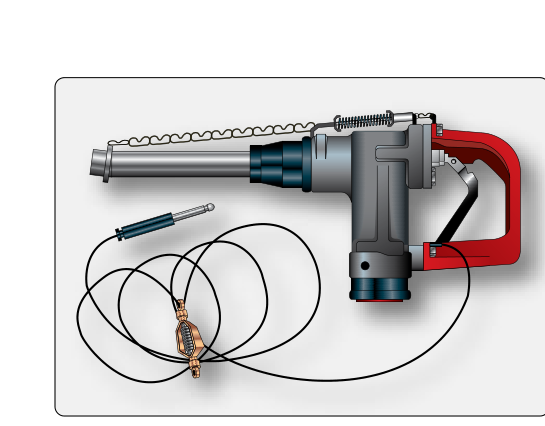
Bonding is the process of electrically connecting two objects so they reach the same potential, eliminating the voltage difference between them. Before any fuel cap is opened or any nozzle is approached to a tank opening, the fueling equipment must be bonded to the aircraft. This is accomplished with a bonding wire (also called a bond strap or static line) that clamps to an unpainted metal surface on both the vehicle and the aircraft. The FAA's Aviation Maintenance Technician Handbook — General (FAA-H-8083-30) emphasizes that bonding must occur before any fuel is moved.
Grounding is a related but distinct concept: it connects an object to the earth itself, providing a continuous path for charge dissipation. Grounding the fueling truck to an airport ground rod or a grounded facility structure prevents the truck from accumulating charge during operation. Some installations use grounding cables at dedicated fueling pits. Note that bonding between the aircraft and the fueling truck equalizes potential between those two objects; grounding ties the entire system to the earth reference. Both the fueling equipment and the aircraft should be bonded together and grounded to earth before any fuel is transferred.
FAA guidance (AC 00-34, Aircraft Ground Handling and Servicing, and FAA-H-8083-30) does not prescribe a single rigid numbered sequence for every situation, but the accepted practice is that the fueling equipment and the aircraft must be bonded together, and the system grounded to earth, before any fuel cap is opened or any nozzle is brought near the aircraft, and that these connections remain in place throughout fueling. A commonly taught practice is to ground the fueling vehicle to earth, then bond the fueling vehicle to the aircraft, before opening fuel caps or positioning nozzles, fueling the aircraft, and only then reversing the process — removing the nozzle and closing caps before removing the bond strap, and removing the bond strap before removing the ground cable. Disconnecting bonding or grounding before fueling and cap closure are complete reintroduces the risk of a spark during disconnection.
Positioning and Environmental Controls
The physical positioning of the aircraft and fueling equipment significantly affects fire risk. Aircraft should be fueled outdoors or in specifically designed, ventilated fueling facilities — never in an enclosed hangar unless the hangar is equipped with explosion-proof electrical systems and adequate ventilation. Fuel vapors are heavier than air and will collect in low areas, trenches, pits, and the lower regions of enclosed spaces, where they can reach the flammable range and persist long after fueling ends.
Position the fueling vehicle so it can be driven away quickly in an emergency and so the vehicle's exhaust is directed away from the aircraft and the fueling point. Fuel truck engines and aircraft engines must be shut down before fueling begins — and must not be started until all equipment is removed and fuel caps are secured. No smoking, open flames, or spark-producing tools are permitted within 50 feet of the fueling operation; many FBOs and airport authorities establish even larger no-smoking zones as a precaution.
Cell phones and handheld radios are potential ignition sources. While the hazard from these devices is debated in some industries, the conservative and widely accepted aviation practice is to prohibit their use at the point of fueling. Aircraft master switches should be off unless fuel quantity gauges must be checked during fueling, in which case all unnecessary electrical loads should be minimized.
Personal Protective Equipment and Personnel Practices
AMTs and fueling personnel should wear clothing made from natural fibers (cotton or wool) rather than synthetic materials that can build static charges. Leather-soled or static-dissipative shoes help bleed off body static before contact with grounded equipment. Nitrile or neoprene gloves protect the skin from fuel contact, which can cause dermal absorption of hydrocarbons and chemical burns with repeated or prolonged exposure.
Fuel spills must be addressed immediately. Small spills should be wiped up with absorbent material and disposed of according to local hazardous waste procedures; fueling should not resume until the spilled fuel has evaporated or been removed and the area is determined to be free of flammable concentrations. Large spills require stopping all operations, moving personnel upwind, notifying the airport authority or fire department, and not restarting any engines or electrical equipment until the area is cleared.
Fire Extinguisher Requirements and Emergency Response
A serviceable fire extinguisher of the appropriate type must be immediately available during all fueling operations. For fuel fires (Class B fires), carbon dioxide (CO2) or dry chemical extinguishers rated for Class B use are required. Water must never be used on a fuel fire; it can spread the burning liquid and intensify the hazard. Know where the extinguisher is before fueling begins — not after a fire starts.
If a fire ignites during fueling, the immediate priorities are: (1) stop fuel flow by releasing the nozzle's dead-man handle or shutting the fuel valve, (2) activate the fuel truck's emergency shutoff if equipped, (3) move personnel to safety upwind, (4) alert the airport fire department immediately, and (5) use a fire extinguisher only if the fire is small, contained, and can be suppressed safely without putting personnel at risk. Never attempt to fight a fire that has grown beyond the incipient stage with a portable extinguisher.
Fuel Identification and Contamination Awareness
Misfueling — putting the wrong fuel type into an aircraft — is a separate but fire-related hazard. Avgas 100LL is dyed blue to help distinguish it from Jet-A (clear to straw-colored). Nozzle sizes are intentionally mismatched between avgas and Jet-A systems to help prevent accidental misfueling, but these safeguards are not foolproof. Always verify the fuel type on the fuel truck, the fuel order, and the aircraft's approved fuel placard before beginning. Introducing Jet-A into a piston-engine aircraft intended for avgas can cause engine failure, which, while not directly a fueling-area fire hazard, can lead to a crash-and-fire scenario.
Key Numbers and Rules
- Flash point of avgas (100LL): below 0 °F (-18 °C) — produces ignitable vapors in virtually all weather conditions.
- Flash point of Jet-A: minimum 100 °F (38 °C) per specification — still hazardous in warm conditions or when atomized.
- Bonding before opening caps: bond wire must be attached before any fuel cap or filler port is opened or any nozzle is brought near the aircraft.
- No-smoking zone: commonly 50 feet or more from the fueling operation; follow airport-specific rules.
- Extinguisher type: CO2 or dry chemical (Class B rated); never water on a fuel fire.
- Fueling location: outdoors or a ventilated, explosion-proof facility; never in a closed hangar with standard electrical systems.
- Engine status: all engines off (aircraft and fuel truck) before fueling commences.
Memory Aid
Use the acronym BGEST as a fueling safety sequence check: Bond the truck to the aircraft; Ground the truck to earth (done first, listed here as a reminder); Engines and electrics off; Smoke and ignition sources eliminated; Type of fuel verified. While not a universally published FAA mnemonic, this sequence maps directly to the general guidance described in FAA-H-8083-30 and AC 00-34 and is a reliable mental checklist for AMTs.
Common Test Traps
- Bonding vs. grounding confusion: Bonding equalizes potential between two objects (e.g., truck and aircraft); grounding connects an object to the earth. Both are necessary and they are not interchangeable terms on the AMT written exam.
- Order of bonding: The bond strap must be attached before any fuel cap is opened, not after — even a momentary approach of a charged nozzle to a tank opening can produce a spark.
- Avgas flash point: Students often assume avgas is safe in cold weather because fires seem less likely; in fact, its very low flash point makes it more dangerous in cold weather than Jet-A because it vaporizes freely at any normal ambient temperature.
- Extinguisher type: CO2 or dry chemical for Class B (flammable liquid) fires — choosing water-based extinguishers on a fuel fire is a lethal error and a common distractor on tests.
- Hangar fueling: Fueling inside a standard hangar is prohibited due to vapor accumulation and ignition risks from ordinary electrical equipment; this is a frequently tested scenario where students incorrectly assume a hangar is a safe enclosed environment.