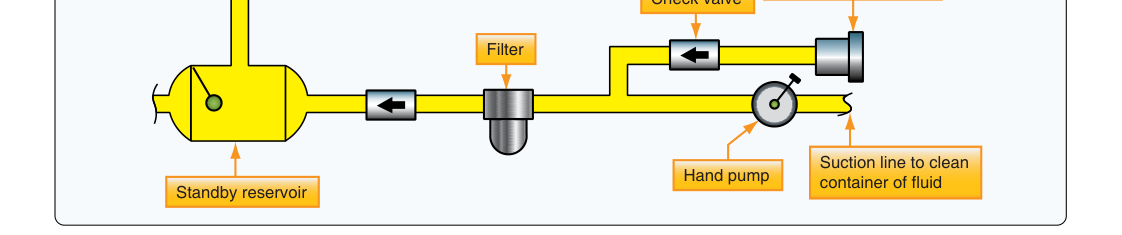
Hydraulic systems power some of the most critical functions on an aircraft — landing gear retraction, wheel brakes, flight control actuation, and thrust reversers, among others. Because these systems operate under pressures commonly ranging from 1,000 psi in light general aviation aircraft up to 3,000 psi or more in large transport-category airplanes, even a small servicing error can result in system failure, contamination damage, or a hazardous pressure event on the ground. Aviation Maintenance Technicians (AMTs) must approach hydraulic servicing with disciplined technique, correct material selection, and thorough knowledge of the applicable aircraft maintenance manual (AMM).
This article covers the full ground procedure for hydraulic servicing — fluid type identification, reservoir filling, pressure checks, contamination control, and post-servicing inspections — grounded in the principles taught in FAA handbooks for aviation maintenance.
Understanding Hydraulic Fluid Types
The single most critical step before touching any hydraulic servicing equipment is confirming the correct fluid type. Hydraulic fluids are not interchangeable, and mixing them can destroy seals, corrode metal components, and render the entire system unairworthy. There are three primary categories used in civil aviation:
- Mineral-based fluid (MIL-PRF-5606 / MIL-PRF-6083): A petroleum-derived fluid, red in color, used in many light general aviation aircraft and older designs. It is compatible with natural rubber seals. It is flammable.
- Polyalphaolefin (PAO) synthetic fluid (MIL-PRF-87257): A synthetic hydrocarbon fluid, also red in color, designed as an improved, lower-flammability alternative to MIL-PRF-5606. Compatible with the same seal materials as MIL-PRF-5606.
- Phosphate ester fluid (Skydrol® type, MIL-PRF-46170 class): A fire-resistant fluid used in most transport-category and commercial jet aircraft. Typically purple or light green in color. Requires synthetic rubber (ethylene-propylene) seals and is incompatible with mineral-based fluid seals. Phosphate ester fluid is an irritant and requires personal protective equipment (PPE) including chemical-resistant gloves and eye protection during handling.
Always verify the aircraft's AMM or placards on the reservoir filler cap before adding any fluid. If there is any question about what fluid is currently in the system, the fluid must be tested or the system drained and refilled under engineering guidance before flight.
Reservoir Servicing and Fluid Level Checks
Most hydraulic reservoirs are serviced either by direct filling through a filtered filler cap or by a pressurized ground servicing point that pumps fluid directly into the system. Before beginning, ensure the following conditions are met:
- The aircraft is depressurized from all hydraulic accumulators per the AMM. Accumulators store compressed gas (typically nitrogen) pre-charged to a specific pressure and can deliver sudden pressure output if servicing procedures are not followed.
- All hydraulic actuators are in their normal ground positions (landing gear down and locked, flight control surfaces neutral, flaps in the approach or up position as specified).
- The aircraft is on level ground, because reservoir sight gauges and dipsticks are calibrated for a level attitude.
- The correct fluid and a clean, approved servicing unit or container are ready.
When adding fluid through an open filler, keep the work area clean, cap the servicing container when not actively pouring, and use lint-free cloths to wipe the filler area. Contamination of hydraulic fluid — even with minute quantities of dirt, water, or the wrong fluid — can cause servo valve erosion, seal swelling, and actuator sticking. Some transport-category aircraft hydraulic reservoirs are pressurized with engine bleed air or system (nitrogen) pressure to ensure a positive head of fluid to the pumps, while most light general aviation aircraft reservoirs are vented and unpressurized; release any reservoir pressure carefully through the designated bleed valve before opening the filler cap on systems that are pressurized.
Once the correct fluid level is confirmed (typically within the marked MIN/MAX range on the sight gauge with actuators in specified positions), close and safety the filler cap, restore any pressurization per the AMM, and record the quantity of fluid added in the maintenance logbook.
Pressure Checks and Accumulator Servicing
Hydraulic pressure checks verify that pumps, relief valves, and accumulators are operating within limits. Engine-driven pumps (EDPs) and electric motor-driven pumps (EMDPs) each have specific pressure output limits published in the AMM. During ground checks powered by ground hydraulic carts or aircraft APU/electric systems, a technician reads system pressure on calibrated cockpit gauges or portable test gauges plumbed into test ports.
Accumulators serve a dual purpose: they dampen pressure surges and provide a reserve of pressurized fluid for brief emergency operations (such as one brake application after pump failure). Most accumulators are bladder or piston type and are pre-charged on the gas (dry nitrogen) side before the hydraulic side is pressurized. The nitrogen pre-charge must be checked and set per the AMM before hydraulic pressure is applied — checking with the hydraulic system depressurized. Never use oxygen to pre-charge an accumulator; oxygen in contact with hydraulic fluid creates an explosion hazard. Always use dry nitrogen.
To check accumulator pre-charge: depressurize the hydraulic system fully, then attach a calibrated nitrogen pressure gauge to the gas valve (Schrader or equivalent) on the accumulator. The reading obtained is the pre-charge pressure. If it is low, add dry nitrogen from a regulated cylinder to the specified value. If the pre-charge reads zero with the hydraulic system depressurized, the bladder or piston seal may be ruptured and the accumulator must be removed for inspection.
Contamination Control
Hydraulic system contamination is the leading cause of component wear and in-service failures. Contaminants fall into two categories: particulate (metal chips, seal fragments, dirt) and fluid chemical (water, wrong fluid, oxidation products). Systems incorporate high-pressure and return-line filters, with micron ratings varying by system and filter type, to continuously clean circulating fluid. During servicing, the AMT must:
- Use only clean, approved servicing carts that have been flushed and whose filter elements are within service life.
- Cap all open hydraulic lines immediately with clean, appropriate caps — never use rags stuffed in a port.
- Wear clean nitrile or chemical-resistant gloves to prevent skin oils and contaminants from entering the system.
- Check fluid samples for color, clarity, and odor before adding. Milky or cloudy fluid indicates water contamination; dark or burnt-smelling fluid suggests thermal degradation.
- Replace filter elements after any known contamination event, major component replacement, or at the intervals specified by the AMM.
Why It Matters
Hydraulic systems are classified as flight-critical in virtually every aircraft they appear in. Landing gear that fails to extend on approach, brakes that do not respond on rollout, or flight controls that become sluggish due to internal leakage from degraded seals can all be directly traced to servicing errors or maintenance neglect. Beyond airworthiness, high-pressure hydraulic fluid jets from improperly disconnected fittings can cause severe injection injuries — a hazard that makes PPE and depressurization verification non-negotiable steps.
Regulatory accountability is clear: 14 CFR Part 43 requires that maintenance be performed in accordance with manufacturer instructions and that all work be properly documented. A hydraulic servicing entry must include the date, type and quantity of fluid added, accumulator pre-charge pressure set, filter condition, and the technician's certificate number and signature.
Key Numbers and Rules
- Light GA aircraft system pressure: typically 1,000–1,500 psi.
- Transport-category system pressure: typically 3,000 psi; some individual aircraft types operate at higher pressures per their specific type design — always verify against the applicable AMM.
- Accumulator pre-charge medium: dry nitrogen only — never oxygen, never compressed air.
- Filter replacement: per AMM interval or after any confirmed contamination event.
- Fluid color references: Mineral/PAO = red; Phosphate ester (Skydrol) = purple or light green.
- 14 CFR Part 43: governs documentation requirements for all maintenance actions including hydraulic servicing.
- Level surface requirement: aircraft must be level for accurate fluid quantity readings.
Common Test Traps
- Mixing fluid types: The AMT written test frequently presents scenarios where an aircraft uses phosphate ester fluid but the available servicing cart contains mineral-based fluid. These are never interchangeable — always verify before adding fluid.
- Accumulator pre-charge sequence: Pre-charge must be checked and set with the hydraulic system depressurized. If you check with pressure on the system, you will read combined gas and hydraulic pressure and get a falsely high reading.
- Oxygen vs. nitrogen: Test questions sometimes suggest using oxygen or shop air for accumulator pre-charge. Only dry nitrogen is correct. Oxygen mixed with hydraulic fluid is explosive.
- Filler cap not safetied: After servicing, the filler cap or access panel must be secured and safetied per the AMM; failing to do so is an open-fluid-path hazard and a Part 43 maintenance error.
- Fluid level with actuators retracted vs. extended: Reservoir level appears different depending on actuator position. Always check level with actuators in the position specified by the AMM, or the reading will be misleading.