Aircraft tires endure extraordinary stress during every takeoff and landing. They must absorb impact loads that can reach several times the aircraft's gross weight, dissipate enormous heat generated by braking, and maintain precise dimensional stability across wide temperature extremes. The inflation medium and inflation pressure inside each tire are fundamental to how well it performs all of these tasks. For aviation maintenance technicians (AMTs), understanding tire inflation procedures and the rationale behind nitrogen servicing is not simply a matter of following a step — it is the foundation of safe ground operations and extended tire service life.
This article covers the mechanics of tire inflation, the specific reasons aircraft tires are inflated with dry nitrogen rather than compressed air, the correct servicing procedure, and the safety considerations that the FAA knowledge test and practical experience demand you know.
Why Inflation Pressure Matters
An aircraft tire operates as a pneumatic spring. The inflation pressure determines how the tire deflects under load, which in turn controls contact-patch geometry, load distribution across the carcass plies, and heat generation during rolling and braking. The FAA's Aviation Maintenance Technician Handbook — General (FAA-H-8083-30) emphasizes that both under-inflation and over-inflation are hazardous, for different reasons.
Under-inflation causes excessive sidewall flexion. Every time the tire rotates under load, the carcass bends more than it was designed to. This repeated flexing generates heat inside the tire structure — heat that degrades the rubber compounds and the fabric or steel cord plies that give the tire its strength. Severe under-inflation can lead to ply separation, tread chunking, or a catastrophic blowout, often during the high-speed takeoff roll when escape options are limited. Under-inflated tires also tend to creep or slip on the wheel rim, which can shear off the valve stem — leading to sudden deflation.
Over-inflation creates a different set of problems. An over-inflated tire has a smaller, stiffer contact patch. It is more susceptible to cuts, bruising, and impact damage from runway debris because the carcass has no ability to flex and absorb the blow. The tread wears rapidly in the center, shortening service life. Perhaps most dangerous, an over-inflated tire generates higher internal pressures when heated during hard braking, raising the risk of explosive failure. This is why wheels are equipped with thermal fuse plugs — fusible plugs designed to release pressure before the assembly explodes if temperatures become extreme — but those are a last-resort safety device, not a substitute for correct inflation.
Why Nitrogen Is Used Instead of Air
Standard atmospheric air is approximately 78 percent nitrogen, 21 percent oxygen, and small amounts of water vapor and other gases. Each of these non-nitrogen components creates problems in an aircraft tire environment.
Moisture and corrosion. Compressed air nearly always contains some water vapor. Inside a sealed wheel assembly, that moisture condenses and causes corrosion on the inner surface of the wheel halves — particularly aluminum alloy wheels. Corrosion pitting weakens the wheel structure and can eventually cause failure. Dry nitrogen, as supplied from high-pressure cylinders or nitrogen generation systems, contains negligible moisture and therefore virtually eliminates internal corrosion.
Pressure stability with temperature. All gases expand when heated and contract when cooled (Charles's Law). The key advantage of nitrogen is not that it behaves differently from air on a per-molecule basis — it does not — but that it contains no water vapor. Water vapor in liquid or gaseous form changes phase inside the tire as temperature swings occur, producing unpredictable pressure variations. Dry nitrogen provides stable, predictable pressure changes proportional only to temperature, making inflation management far more consistent.
Oxidation and fire risk. Oxygen supports combustion. Under the extreme heat of a hard braking event, residual oxygen inside a tire inflated with air can react with volatile compounds from the rubber and any oil or grease contamination that may be present. In rare but documented cases, this has caused internal ignition and explosive failure of the tire-wheel assembly. Nitrogen, being inert, eliminates this oxygen-driven ignition risk entirely.
Nitrogen Servicing Procedure
The correct procedure for inflating aircraft tires with nitrogen follows a logical sequence designed to ensure accuracy, safety, and equipment integrity. Always consult the aircraft's maintenance manual (AMM) or the tire and wheel manufacturer's data for the specific inflation pressure before beginning.
- Inspect the tire and wheel assembly first. Before adding any pressure, examine the tire for cuts, bruising, flat spots, tread wear, and sidewall damage. Check that the wheel halves are properly torqued and that the tire is correctly seated on the bead seats. Never inflate a tire that shows structural damage.
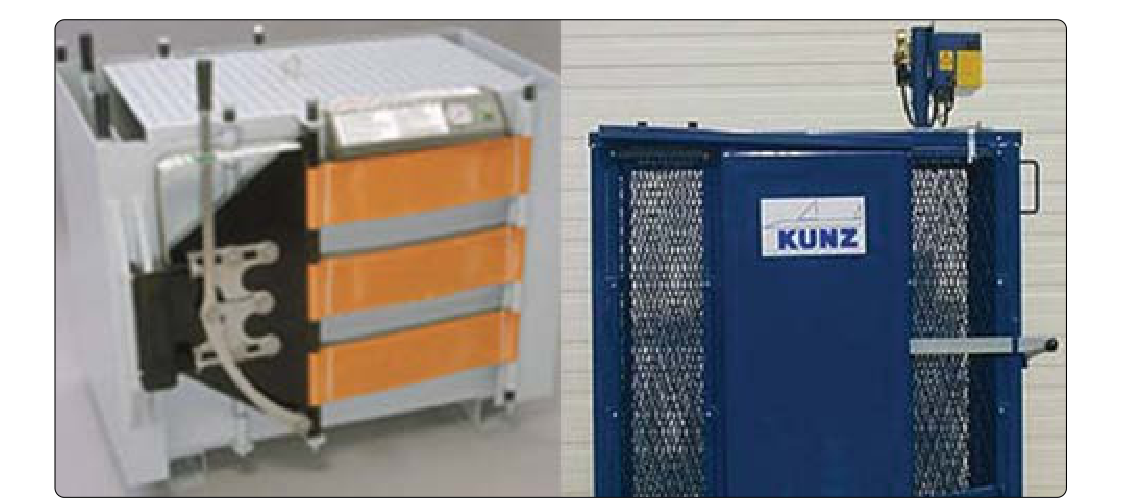
- Position a safety cage. When inflating any aircraft tire — especially high-pressure units on large aircraft — the wheel assembly must be restrained in an inflation cage or the tire must be placed so that no personnel are in the trajectory plane of the wheel in case of explosive separation. The bead seat area is the dangerous zone; a separating wheel half becomes a lethal projectile. This is non-negotiable.
- Connect the nitrogen source. Use a regulator and inflation chuck rated for the pressure range required. Attach the chuck to the valve stem firmly to prevent leakage during servicing.
- Inflate in stages if starting from flat. If a tire has been completely deflated (such as after demounting and remounting), inflate to a low seating pressure first — as specified by the tire and wheel manufacturer's data — then deflate completely. This initial inflation helps seat the tire beads evenly on the wheel flanges. After confirming even seating, re-inflate to the full specified pressure.
- Allow pressure to stabilize. Nitrogen flow from the supply creates a slight pressure spike at the valve. After reaching the target pressure, wait a moment, then read the pressure on the gauge after flow has ceased and the gas has had time to equalize.
- Check the inflation pressure cold. Inflation pressures are specified as cold inflation pressures — measured before the aircraft has taxied or operated. After landing or during warm conditions, tire pressure rises due to heat. Do not bleed down a hot tire to reach the cold inflation figure; wait for the tire to cool. Tire and aircraft manufacturer data generally show that pressure increases of only a few percent are normal for a given temperature rise, so a hot-tire reading above the cold-fill value does not by itself indicate over-servicing.
- Install the valve cap. The valve cap is not simply a dust cover — on many aircraft valve stems, the cap serves as a secondary seal. Always reinstall it after servicing and verify it is tight.
Key Numbers and Rules
- Aircraft tires are inflated with dry nitrogen (or in some light aircraft situations, dry air filtered through a moisture separator — but nitrogen is the industry standard and FAA best practice).
- Always inflate inside a safety cage or position personnel out of the wheel plane.
- Inflation pressures vary widely depending on aircraft type — from lower pressures on small general aviation aircraft to much higher pressures on large transport category aircraft. Always use the specific aircraft's maintenance manual value rather than a generic figure.
- Tires should be checked for pressure on a routine, periodic basis (such as before each flight or per the maintenance program), since normal seating settlement and small leakage can occur over time.
- Fusible (thermal fuse) plugs are installed in wheels to prevent explosive failure from heat-induced over-pressure — but do not replace proper inflation management.
- Nitrogen purity should generally be 95 percent or higher for aviation tire servicing, per tire and wheel manufacturer specifications.
- Never mix nitrogen and oxygen sources when servicing; using an oxygen cylinder on a tire is an extreme fire and explosion hazard.
Common Test Traps
- Confusing oxygen with nitrogen. The FAA test sometimes offers oxygen as a plausible answer for tire inflation. Oxygen is never used — it is a fire and explosion risk inside a tire. Only dry nitrogen (or in limited cases dry filtered air) is acceptable.
- Bleeding a hot tire. A frequent mistake is reading a higher-than-expected pressure after landing and bleeding the tire down to the book value. Hot inflation pressure is normal. Bleed only after the tire has cooled to ambient temperature, and only if pressure then exceeds limits.
- Skipping the safety cage. Test questions may describe a shortcut inflating procedure without a cage. The correct answer always involves restraining the wheel in a safety cage before inflating, regardless of how minor the inflation seems.
- Ignoring the bead-seating inflation step. After a tire has been demounted and remounted, simply inflating straight to final pressure without the intermediate bead-seating step risks uneven seating, which can lead to creep, valve stem shear, or sudden deflation.
- Assuming pressure stability is the only reason for nitrogen. The test may ask why nitrogen is preferred. The complete answer includes moisture exclusion, corrosion prevention, inert atmosphere (fire risk reduction), and pressure stability — not just one factor alone.
Understanding tire inflation and nitrogen servicing at this level of depth prepares an AMT not only for the knowledge test but for the practical reality of the ramp, where a missed step or wrong gas can have immediate and catastrophic consequences. Treat every tire servicing event with the systematic discipline these procedures demand.