Every aircraft technician eventually encounters a situation where numbers go negative — an outside air temperature of −40 °C, a pressure differential below ambient, or a correction factor that subtracts from a baseline value. Signed numbers give mathematics a way to represent quantities that exist on both sides of zero, and absolute value gives a way to talk about the size of those quantities without worrying about which direction they point. Mastering these two concepts is essential not just for the FAA Aviation Mechanic General written test, but for real shop calculations involving temperature ranges, electrical measurements, and stress analysis.
This article walks through signed numbers and absolute value from the ground up, with the practical, exam-focused depth that AMT candidates need.
What Are Signed Numbers?
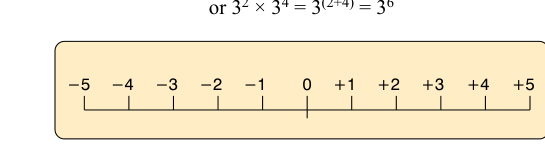
A signed number is any number that carries either a positive (+) or negative (−) sign to indicate its relationship to zero on a number line. Positive numbers lie to the right of zero; negative numbers lie to the left. Zero itself is neither positive nor negative — it is neutral.
In everyday life, signed numbers appear whenever a reference point exists: sea level for altitude, freezing point for temperature, atmospheric pressure as a baseline, or a structural neutral axis for stress. A temperature of +25 °C means 25 degrees above zero; a temperature of −55 °C means 55 degrees below zero. Both are perfectly valid, physically meaningful values — the sign is not a mathematical quirk but a real piece of information.
On a number line, the further right you move from zero, the larger the positive value; the further left, the larger the negative value. This ordering is critical: −10 is less than −3, because −10 sits further to the left. A common student mistake is to assume that −10 is larger because 10 is larger than 3 — but the negative sign reverses the intuitive ordering.
How Signed Number Arithmetic Works
Addition and Subtraction
When adding signed numbers, the rule depends on whether the signs are the same or different.
- Same signs: Add the numerical values and keep the common sign. For example, (−7) + (−4) = −11. Both numbers are negative, so the result is negative and larger in magnitude.
- Different signs: Subtract the smaller numerical value from the larger, then apply the sign of the number with the larger numerical value. For example, (−9) + (+4): subtract 4 from 9 to get 5, and since 9 is larger and was negative, the result is −5.
Subtraction of a signed number is equivalent to adding its opposite: A − (−B) = A + B. This rule trips up many students. For instance, 6 − (−4) = 6 + 4 = 10. Removing a negative value is the same as adding a positive one — intuitively, think of it as removing a debt, which increases your net worth.
Multiplication and Division
The sign rules for multiplication and division are simple and consistent:
- Positive × Positive = Positive
- Negative × Negative = Positive
- Positive × Negative = Negative
- Negative × Positive = Negative
The same rules apply to division. In short: like signs produce a positive result; unlike signs produce a negative result. A practical example: if an aircraft component experiences a stress reversal of −3 units per cycle and this is repeated across 5 cycles, the cumulative stress change is (−3) × 5 = −15 units — a net compressive loading of 15 units.
When more than two signed numbers are multiplied together, count the number of negative factors. An even number of negative signs gives a positive product; an odd number of negative signs gives a negative product. For example, (−2) × (−3) × (−1) = −6, because three negatives is an odd count.
What Is Absolute Value?
The absolute value of a number is its distance from zero on the number line, expressed as a non-negative quantity. Absolute value discards the sign and keeps only the magnitude. It is written using vertical bars: |x|.
- |+9| = 9
- |−9| = 9
- |0| = 0
Absolute value answers the question: How far, regardless of direction? In aviation maintenance, this matters whenever you care about the size of a deviation rather than which direction the deviation goes. For example, a torque specification might allow a fastener to be within ±5 in-lb of the nominal value. The acceptable range is defined by an absolute deviation — you do not care whether the actual torque is above or below, only that the difference |actual − nominal| ≤ 5 in-lb.
Another shop example: if a hydraulic system pressure gauge reads −15 psi relative to a reference, and you want to know how far off it is from zero reference, you take |−15| = 15 psi. The absolute value tells you the magnitude of the discrepancy; the sign tells you the direction (below reference, in this case).
Why These Concepts Matter for AMTs
Signed numbers and absolute value appear throughout aircraft maintenance in both direct calculations and in understanding technical data:
- Temperature conversions and ranges: Converting between Celsius and Fahrenheit when one value is negative requires correct signed arithmetic. Similarly, calculating the temperature range a component must endure (for example, from −65 °F to +250 °F) involves subtracting signed numbers: 250 − (−65) = 315 °F total range.
- Pressure differentials: Many aircraft systems use gauge pressure or differential pressure, where values can be negative relative to a reference. Cabin pressurization calculations, for instance, involve comparing inside cabin pressure to ambient — results can carry a sign depending on the reference chosen.
- Electrical measurements: Voltage in a circuit can be measured as positive or negative relative to ground, depending on polarity. Technicians interpreting multimeter readings must understand signed values to correctly diagnose wiring faults.
- Stress and load analysis: Structural analysis distinguishes between tensile (positive) and compressive (negative) stress. Understanding signed values lets a technician correctly interpret stress diagrams and identify whether a structural member is being pulled apart or crushed together.
- Weight and balance: While the FAA Weight and Balance Handbook uses a consistent datum, certain center-of-gravity calculations may produce arms that are negative (forward of datum). Moment = weight × arm; with a negative arm, the moment is negative, meaning it acts forward of datum. The technician must use signed arithmetic to sum all moments correctly.
Key Numbers and Rules
- The absolute value of any real number is always ≥ 0. It is never negative.
- |a| = |−a| for any number a — positive and negative versions of the same number have identical absolute values.
- When subtracting a negative: A − (−B) = A + B. Always simplify double negatives before calculating.
- An even count of negative factors in multiplication/division yields a positive result; an odd count yields a negative result.
- On the number line, larger negative numbers (like −100) are less than smaller negative numbers (like −1), even though 100 > 1.
- Temperature range calculations: always compute high − low using signed subtraction, especially when the low is negative: range = Thigh − Tlow = Thigh + |Tlow| when Tlow is negative.
Common Test Traps
- Confusing magnitude with value: The FAA test may ask you to compare −15 and −3 and identify which is greater. The answer is −3, not −15 — do not let the larger numeral mislead you. On the number line, −3 is to the right of −15 and therefore greater.
- Double negatives in subtraction: A question might show an expression like 8 − (−5) and expect students to incorrectly compute 8 − 5 = 3. The correct answer is 8 + 5 = 13. Always convert subtraction of a negative to addition before solving.
- Sign rules in multiplication: The test may present three or more signed factors. Students sometimes forget to count all negative signs — remember, the sign of the final answer depends on whether the total count of negative factors is odd (negative result) or even (positive result).
- Absolute value as always positive: A question might offer a negative number as a possible result of an absolute value expression. Absolute value is never negative — if your answer carries a minus sign, you made an error somewhere.
- Applying signed arithmetic to temperature ranges: Forgetting to apply the subtraction rule carefully when both temperatures are negative — or one is negative and one positive — leads to wrong range values. Always write out the full signed expression before computing.
Signed numbers and absolute value are not abstract algebra for its own sake — they are the mathematical language that makes precision possible when quantities span across zero. Whether you are reading a pressure gauge, interpreting a stress diagram, or calculating a temperature range for materials approval, you are using these concepts. Getting them right on the bench starts with getting them right on paper.