Earning an aircraft dispatcher certificate is a serious professional milestone, and the knowledge test — commonly called the ADX — is the first major hurdle every candidate must clear. Unlike the private pilot written exam, the ADX draws on an unusually wide range of subject matter, from meteorology and flight planning to federal aviation regulations, aircraft systems, and emergency procedures. Understanding exactly what is tested and how to allocate your study time is the difference between walking out of the testing center with a passing score and having to retest weeks later.
This article breaks down the regulatory authority behind the test, the subject areas you are responsible for, the passing standard, and a practical strategy for preparing efficiently.
Regulatory Authority: 14 CFR Part 65 Subpart C
The aircraft dispatcher certificate is governed by 14 CFR Part 65, Subpart C. This subpart establishes eligibility requirements, the knowledge test, the practical test, and the privileges and limitations of the certificate. Specifically, 14 CFR §65.55 lists the aeronautical knowledge areas that an applicant must demonstrate on the written knowledge test. The FAA uses this statutory list as the backbone for the ADX question bank. Every topic that appears on the exam traces back to one or more of these required knowledge areas, so studying §65.55 directly — not just a third-party outline — is essential for ensuring you have full coverage.
Eligibility under §65.51 requires that a candidate be at least 23 years of age, be able to read, write, speak, and understand English, and hold at least a third-class medical certificate (or an equivalent statement from a physician). Meeting these prerequisites before sitting for the knowledge test keeps your pathway to certification on track.
The 26 Subject Areas
Section 65.55 enumerates the aeronautical knowledge areas for the ADX. While the FAA may update the question bank periodically, the following broad categories represent the core domains every candidate must master:
- Regulations: Parts 1, 61, 71, 91, 121, and 135 of 14 CFR, along with ICAO standards for international operations.
- Meteorology: Aviation weather phenomena — fronts, thunderstorms, icing, turbulence, wind shear, and fog — as well as the interpretation of METARs, TAFs, PIREPs, SIGMETs, AIRMETs, and prog charts.
- Weather charts and reports: Surface analysis, upper-air charts, winds-aloft forecasts, and how to construct a dispatch weather picture across a route.
- Air traffic control procedures: Airspace structure, IFR clearances, departure and arrival procedures, separation standards, and how dispatchers coordinate with ATC during irregular operations.
- Flight planning and fuel requirements: Computing takeoff alternates, en-route alternates, destination alternates, fuel load requirements under Part 121, and extended overwater fuel.
- Navigation: VOR, NDB, ILS, RNAV, and GPS — principles, limitations, and how they appear in IFR flight planning.
- Aircraft performance: Takeoff and landing distance, climb gradients, obstacle clearance, accelerate-stop and accelerate-go distances, and the effect of pressure altitude and temperature.
- Weight and balance: Computing center of gravity, determining that the aircraft is within limits throughout the flight as fuel burns off.
- Airport operations: NOTAMs, runway conditions, lighting systems, instrument approach minimums, and airport facility data.
- Emergency procedures: Engine failures, depressurization, diversion authority, and coordination with the pilot in command during in-flight emergencies.
- Crew requirements: Flight time limitations and rest requirements under Part 121 Subpart Q and applicable rest rules.
- Communications: Proper phraseology, SELCAL, datalink, and dispatcher-pilot communication protocols.
- Loading and weight manifest: Cargo loading, hazardous materials awareness, and completion of load manifests.
- Aircraft systems: A working knowledge of pressurization, hydraulics, pneumatics, fuel systems, and avionics as they pertain to dispatch decisions.
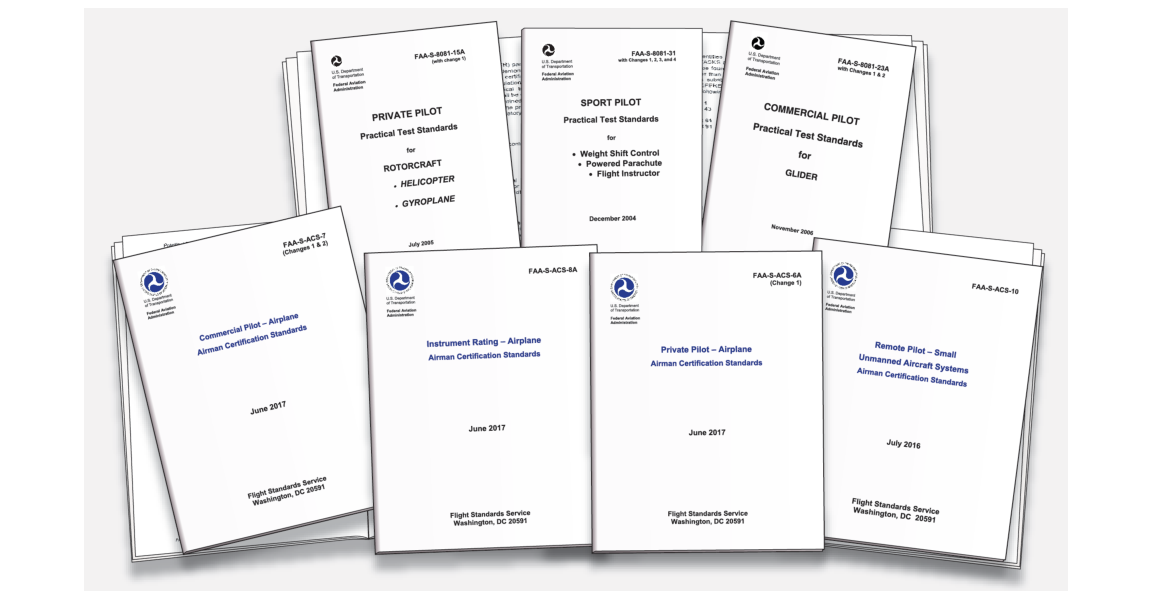
This is not a complete enumeration of every sub-topic, but it represents the major clusters from which exam questions are drawn. The FAA publishes an Airman Certification Standards (ACS) or a corresponding Practical Test Standards document for the dispatcher practical test; the knowledge test question bank aligns with the subject areas in §65.55 rather than a published ACS, so reviewing the regulation itself remains the most reliable guide.
The Passing Standard
To pass the ADX knowledge test, an applicant must score at least 70%. The test is administered at an FAA-approved testing center (such as those operated by PSI/CATS or equivalent vendors). There is no set number of questions fixed in the public domain that constitutes the final exam, but candidates should expect a test of approximately 80 questions drawn from the broad ADX question bank. Each question is multiple choice with three answer choices.
A passing knowledge test result is valid for 24 calendar months. If the practical test is not completed within that window, the applicant must retake the knowledge test. There is no mandatory waiting period for a first attempt, but applicants who fail must wait 30 days before retesting unless they obtain a written statement from an authorized instructor indicating additional instruction has been received.
Why Dispatcher Knowledge Breadth Matters Operationally
The wide scope of the ADX is not accidental. Under 14 CFR §121.533, the aircraft dispatcher and the pilot in command share joint responsibility for the safety of the flight during Part 121 operations. The dispatcher must be capable of making independent, competent judgments about weather, performance, regulatory compliance, and system status — often for multiple flights simultaneously. A dispatcher who cannot read an AIRMET Zulu for icing, compute an alternate fuel requirement, or identify an inoperative navigation aid before releasing a flight is a hazard, not a resource. The ADX knowledge test is therefore designed to be genuinely challenging in order to protect the flying public.
This joint authority is also why dispatchers have dispatch release authority — no Part 121 flight may depart without a signed dispatch release from both the PIC and the aircraft dispatcher. Understanding this legal framework helps candidates appreciate why the exam reaches into so many separate knowledge domains.
Key Numbers and Rules
- Minimum age: 23 years old (§65.51).
- Passing score: 70% or higher.
- Knowledge test validity: 24 calendar months from the date of passing.
- Retest waiting period after failure: 30 days (unless an instructor endorsement is obtained).
- Alternate fuel — domestic Part 121: Fuel to fly to destination, then to the most distant alternate, plus 45 minutes at normal cruise consumption (§121.639).
- Takeoff alternate: Required when the departure airport is below landing minimums; must be within 1 hour of departure at normal cruise speed in still air for two-engine aircraft (§121.617).
- Dispatcher certificate privileges: May release, delay, divert, or cancel a Part 121 flight; authority is concurrent with the PIC.
Study Strategy: Passing the ADX Efficiently
The most effective approach combines regulatory reading, structured question practice, and applied meteorology work. Here is a proven framework:
- Start with the regulations. Read 14 CFR Part 65 Subpart C in full, then work outward into Parts 121 and 91. Understand the why behind each rule — dispatchers are expected to apply regulations, not just memorize them.
- Master aviation weather. Meteorology questions are the single largest cluster on the ADX. Study the Aviation Weather Handbook (FAA-H-8083-28B) for the theoretical foundation, then practice decoding real METARs, TAFs, and prog charts daily. Weather product interpretation is a skill that improves with repetition.
- Work flight planning problems by hand. Fuel calculations, alternate requirements, and weight-and-balance problems all appear on the exam. Practice computing them from the relevant Part 121 rule sections rather than relying on a software shortcut.
- Use official FAA test prep materials and approved question banks. The FAA Learning Center and commercial dispatcher prep courses provide access to questions that mirror the actual test bank. Work through all available questions, but be sure you understand the correct answer — do not merely memorize choices.
- Review aircraft systems at a conceptual level. You do not need to be a mechanic, but you must understand how pressurization failure affects dispatcher decisions, what a hydraulic system powers, and why engine bleed air matters for flight planning in icing conditions.
- Simulate exam conditions. In the final week before your test, take full-length timed practice exams. The ADX rewards candidates who can sustain focus over a multi-hour sitting.
Common Test Traps
- Confusing Part 91 and Part 121 fuel requirements. Part 91 and Part 121 have different alternate fuel and reserve rules. The ADX tests Part 121 exclusively for air carrier operations — know which rule applies to which scenario.
- Misidentifying dispatcher authority versus PIC authority. The dispatcher can delay or cancel, but during an in-flight emergency the PIC has final command authority over the aircraft. Questions often probe where dispatcher authority ends.
- Overlooking SIGMET versus AIRMET applicability. SIGMETs are for severe or extreme conditions affecting all aircraft; AIRMETs are for conditions affecting light aircraft or IFR operations specifically. Mixing them up on weather questions is a common error.
- Forgetting the 24-month knowledge test validity window. Candidates sometimes plan their practical test too loosely and find their written result has expired.
- Treating takeoff alternate and destination alternate rules as identical. The weather minimums and distance requirements differ; confusing them leads to wrong fuel load answers.