When a drone hovers just a few feet off the ground, something interesting happens: it becomes easier to maintain altitude and requires less power to stay airborne. This phenomenon, known as ground effect, is one of the most practically important — and commonly misunderstood — performance concepts in small unmanned aircraft systems (sUAS) operations. Understanding ground effect helps remote pilots make better decisions about payload loading, takeoff planning, and transitioning to forward flight, all of which are tested on the FAA Part 107 knowledge exam.
Ground effect is not unique to drones. Full-scale helicopters, fixed-wing aircraft, and even birds experience it. But for sUAS operators, the consequences of misunderstanding ground effect can be subtle and insidious: a drone that hovers comfortably at two feet of altitude may struggle badly the moment it climbs to ten feet, especially on a hot, humid, high-altitude day with a heavy payload on board.
How Ground Effect Works
Every rotating blade — whether it is a helicopter main rotor or a multirotor drone propeller — generates lift by accelerating air downward. This downward flow of air is called induced airflow or downwash. In open air far from any surface, the downwash streams freely downward and outward without restriction.
When the aircraft hovers close to the ground, however, the ground acts as a physical barrier that interrupts and redirects the downwash. The air cannot easily escape downward, so it builds up a slight cushion of higher-pressure air beneath the rotor disk. This compressed air region partially supports the aircraft, meaning the rotors do not have to work as hard to generate the same amount of lift. The technical term for this is in-ground-effect (IGE) hover, and the improved efficiency it provides is sometimes described as the "ground cushion" or "air cushion."
The opposite condition — hovering high enough above the surface that there is no meaningful interaction between the downwash and the ground — is called out-of-ground-effect (OGE) hover. OGE hover requires noticeably more power (and thus more battery draw for electric sUAS) to achieve the same lift as IGE hover. The transition from IGE to OGE is one of the most power-demanding moments in any rotorcraft operation.
The Boundary of Ground Effect
For full-scale helicopters, ground effect is generally considered significant within one rotor diameter of the surface. For a multirotor drone, the principle is the same but the relevant reference is the diameter of the entire rotor disk system or sometimes the diameter of an individual propeller. As a general rule used in FAA-based rotorcraft performance discussions, ground effect becomes meaningful when the aircraft is operating at a height less than the rotor diameter above the surface. For most small consumer and commercial drones, this means ground effect is most pronounced in roughly the first one to three feet of altitude and diminishes gradually as altitude increases beyond that range.
It is also worth noting that ground effect is strongest over firm, flat surfaces like pavement or concrete, and is somewhat weaker over tall grass, water, or uneven terrain, because these surfaces allow more of the downwash to dissipate before creating a pressure cushion.
The Effect on Hover Performance
The key aerodynamic benefit of ground effect is a reduction in induced drag. Induced drag is the drag associated with producing lift — when a blade generates lift by pushing air down, it also creates a corresponding rearward drag force on itself. Near the ground, the interrupted downwash pattern reduces the induced flow (inflow velocity) through the rotor disk, and this reduced inflow increases the effective angle of attack at each blade section for a given pitch setting, which in turn reduces induced drag. The result is that the rotor system produces more lift per unit of power, or equivalently, requires less power to produce the same lift.
For an electric multirotor drone, this translates directly to reduced current draw from the battery during low-altitude hover. The drone's motors spin more efficiently, generate less heat, and consume less energy per unit time. This can create a misleading sense of performance capability.
Here is the practical danger: a remote pilot loads a drone to its maximum or near-maximum stated payload capacity and conducts a brief hover test at two to three feet of altitude. The drone hovers steadily, the motors sound smooth, and the battery draw looks acceptable. The pilot concludes the aircraft is performing well and proceeds with the mission. But as soon as the aircraft climbs to its intended working altitude — say, 50 or 100 feet — it transitions fully out of ground effect. Now the rotors must work significantly harder to maintain altitude with the same payload. The motors draw more current, battery voltage sags, and the aircraft may struggle to climb, maintain altitude, or respond to control inputs. In extreme cases, with a heavy payload in hot and high conditions, the aircraft may be unable to sustain OGE hover at all.
Why Ground Effect Matters for sUAS Operators
The FAA's Part 107 framework and the Pilot's Handbook of Aeronautical Knowledge emphasize performance planning as a critical responsibility of any pilot — including remote pilots. Ground effect is central to loading and performance decisions for several reasons.
Payload planning: Never use a low-altitude hover test as the definitive check of whether a drone can carry a given payload. Always consult the manufacturer's performance data, which typically specifies maximum payload and hover endurance under OGE conditions at standard or specified atmospheric conditions. If manufacturer OGE data is not available, treat any IGE hover test as an optimistic best-case scenario and apply a conservative safety margin.
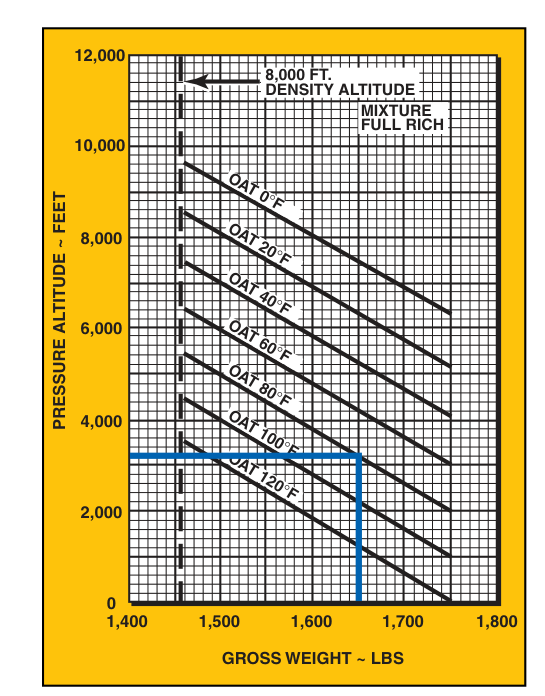
Density altitude: Ground effect does not compensate for high density altitude. On hot, humid days or at elevated field elevations, the air is less dense, rotor efficiency drops, and OGE hover capability is further reduced. The combination of high density altitude and a heavy payload can result in a drone that appears to hover fine at ground level but is dangerously overworked at operational altitude.
Takeoff and climb planning: The most power-demanding phase of a multirotor's flight is typically the transition through translational lift (for forward flight) or the climb from IGE to OGE hover altitude. Remote pilots should ensure the aircraft has sufficient power margin to complete this transition before committing to a mission, especially in confined areas where an emergency landing may be difficult.
Wind effects: Even light winds can disturb the ground cushion and reduce or eliminate the IGE benefit, particularly for small lightweight drones. A drone hovering easily in calm conditions near the ground may suddenly require more power in even a gentle breeze, because the wind disrupts the pressure buildup beneath the rotors.
Key Numbers and Rules
- Ground effect is significant at heights less than one rotor diameter above the surface — for most small drones, roughly one to three feet.
- IGE hover requires less power than OGE hover — meaning a low hover test overstates how easily the aircraft can perform at working altitude.
- Density altitude reduces OGE performance — high temperature, high humidity, and high elevation all reduce available rotor thrust.
- Ground effect is reduced over soft, uneven, or water surfaces — the pressure cushion builds less effectively over terrain that absorbs or scatters downwash.
- The most demanding power phase is the climb through OGE transition — always verify the aircraft can achieve this before starting a mission.
- Manufacturer performance data is authoritative — if the spec sheet lists payload limits and hover times, use those numbers, not ground-level hover impressions.
Common Test Traps
- Assuming a successful ground hover means OGE capability: The FAA exam commonly tests whether students understand that IGE hover performance does NOT guarantee the aircraft can sustain OGE hover with the same load. Always assume OGE is the relevant standard for real-world operations above a few feet.
- Confusing ground effect with ground cushion as separate phenomena: These terms are used interchangeably in FAA materials to describe the same aerodynamic condition — enhanced lift and reduced induced drag near the surface. They are not two different effects.
- Ignoring density altitude when evaluating hover performance: A drone hovering comfortably on a cool sea-level morning may be unable to sustain the same hover on a hot afternoon at a high-elevation site, even with no payload change. Part 107 exam questions often pair ground effect questions with density altitude scenarios.
- Believing ground effect provides unlimited benefit with altitude: Ground effect diminishes continuously as altitude increases. There is no sharp cutoff, but above roughly one rotor-diameter height, the benefit is essentially gone. Students sometimes think ground effect persists up to 10 or 20 feet; for small drones, it is largely gone well before that.
- Overlooking wind as a disruptor of ground effect: Even modest winds can reduce or eliminate the ground cushion. The FAA treats calm-condition IGE data as optimistic; remote pilots should expect reduced efficiency in real-world wind conditions.
Mastering the concept of ground effect means understanding both what it gives you — improved hover efficiency close to the surface — and what it can take away — a realistic picture of your drone's actual performance margins. By always planning for OGE conditions, accounting for density altitude, and relying on manufacturer performance data rather than informal hover tests, you will operate both safely and confidently as a Part 107 remote pilot.