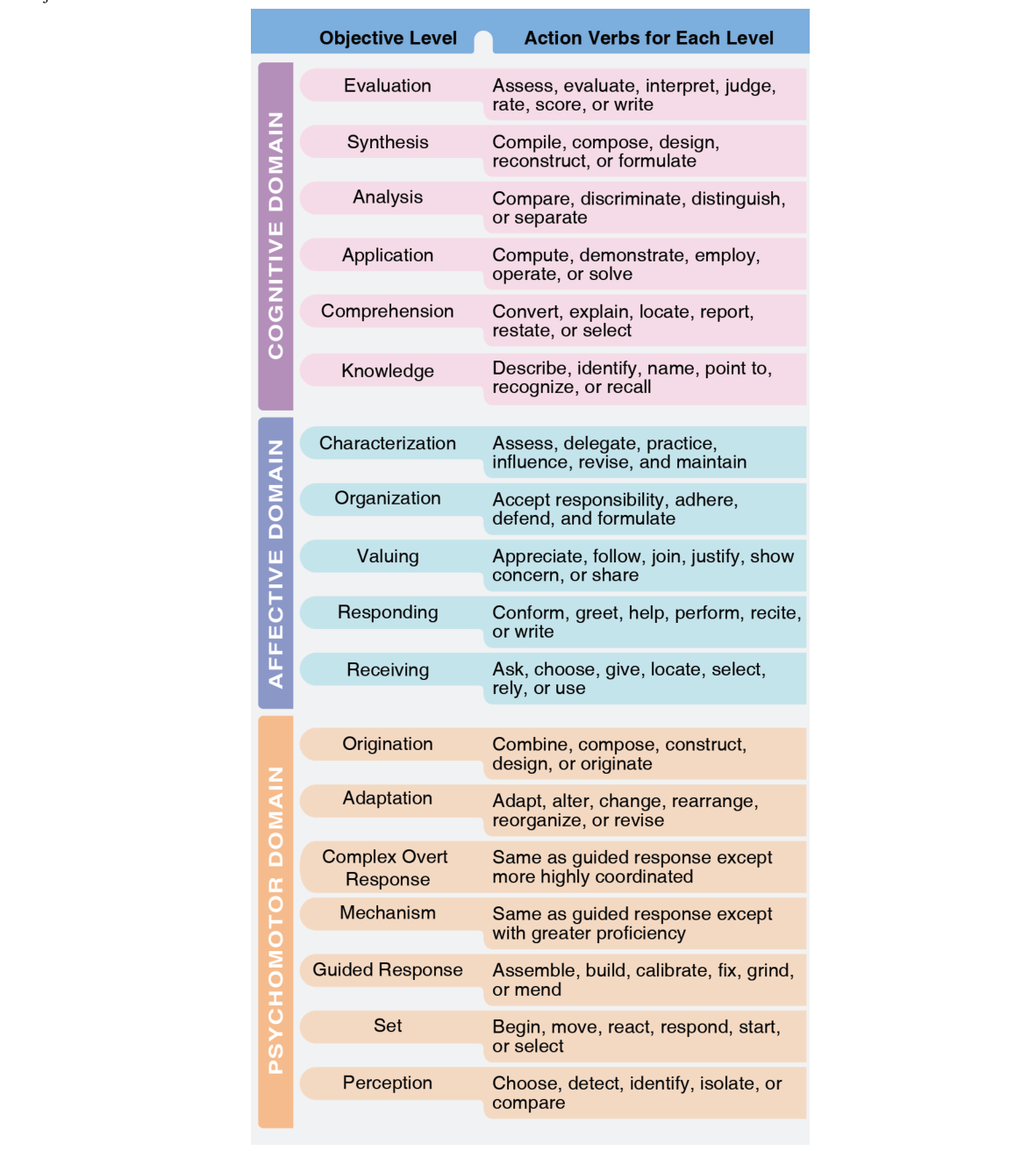
A flight instructor's job is not simply to demonstrate maneuvers from the right seat—it is to engineer a systematic learning experience that guides a student from zero experience to certification competence. That engineering begins long before the airplane starts moving, with deliberate lesson planning and a well-organized course of training. According to the Aviation Instructor's Handbook (FAA-H-8083-9), a lesson plan is a detailed outline that guides a single instructional period, while a course of training is the broader, sequenced framework of lessons designed to accomplish an overarching educational objective—such as earning a private pilot certificate or an instrument rating. Understanding how to build and use both is a core competency tested on the Flight Instructor Knowledge Test and evaluated throughout a flight instructor practical test.
What a Lesson Plan Actually Contains
The Aviation Instructor's Handbook identifies several non-negotiable components that every effective lesson plan must include. First is the objective—a clear statement of what the student should be able to do by the end of the lesson. A strong objective is specific and observable: not "understand stalls" but "demonstrate a power-off stall with recovery initiated at the first indication of a stall, with wings level and no more than a 20-degree heading deviation." Second is the content—the specific information, concepts, and procedural steps that will be presented. Third is the schedule—a realistic time allocation showing how long the instructor expects to spend on each element, including the preflight briefing, the maneuver itself, and the post-flight debrief. Fourth is equipment and materials—the aircraft type, checklists, charts, reference documents, or models needed.
The fifth element, and arguably the most important from a testing standpoint, is the completion standard. Completion standards define the measurable performance level that tells both instructor and student when the lesson goal has been achieved. Without them, a lesson has no defined finish line. The FAA-H-8083-9 is explicit: objectives and completion standards must be stated in measurable, observable terms. On the Flight Instructor Knowledge Test, questions frequently ask students to distinguish between an objective (what will be learned) and a completion standard (how well it must be performed to be considered learned). Both must appear in every plan.
Qualities of an Effective Lesson Plan
Beyond the required components, the Aviation Instructor's Handbook describes several qualities that separate a functional lesson plan from a bureaucratic checkbox. An effective plan should be appropriate to the student's experience level and background. A first-lesson student needs a plan focused entirely on basic aircraft control and orientation; a student preparing for an instrument rating checkride needs precision approaches flown to ACS standards in simulated IMC. The same template does not serve both purposes.
A good plan is also flexible. FAA guidance is clear that a lesson plan is a guide, not a script. If a student consistently struggles with rudder coordination during steep turns, the instructor must be willing to slow the pace, insert additional repetitions, or return to a prerequisite concept—even if that means not completing the planned agenda. Rigidly following a plan when a student is not meeting completion standards is a form of poor instruction that the Aviation Instructor's Handbook directly cautions against.
At the same time, flexibility does not mean optional. Adapting the sequence or pace is acceptable; omitting a required element is not. Title 14 CFR Part 61 specifies the aeronautical experience requirements—flight hours, maneuvers, and ground training topics—that must be completed before a student is eligible for a practical test. No amount of instructional creativity justifies skipping a regulatory requirement. This is a classic test trap: the question will describe a scenario where an instructor modifies a plan for a high-performing student and ask whether it is appropriate. The answer depends entirely on whether a regulatory training requirement is being bypassed.
Finally, lesson plans promote continuity and accountability. If a substitute instructor must step in, a written plan allows training to continue without duplication or gaps. Courts, legal proceedings, and FAA investigations have all turned on whether a training record documented the specific content taught. Lesson plans are part of the evidentiary record of a student's training.
Building a Course of Training
A course of training is the macro-level structure that sequences individual lessons into a coherent path from first flight to certificate issuance. The Aviation Instructor's Handbook and Title 14 CFR Part 61 together define the destination: the student must accumulate specific flight hours, demonstrate all knowledge and risk management elements found in the Airman Certification Standards (ACS), and pass both a knowledge test and a practical test administered by a Designated Pilot Examiner or FAA Inspector.
FAA guidance recognizes that effective courses of training typically move through recognizable phases. For private pilot training, these are commonly described as a pre-solo phase, a post-solo / skill-building phase, and a pre-checkride phase. The pre-solo phase focuses on fundamental aircraft control, normal and crosswind takeoffs and landings, traffic pattern operations, and the aeronautical knowledge necessary to operate safely without an instructor aboard. The post-solo phase extends competency to cross-country flight planning and navigation, night operations, simulated instrument flight (the required three hours under 14 CFR § 61.109), and emergency procedures. The pre-checkride phase polishes all ACS tasks to the required standards and typically includes one or more mock practical tests conducted just as a Designated Pilot Examiner would administer them.
Each phase should have its own phase completion standards—specific criteria the student must meet before advancing. This prevents a student from progressing into more complex tasks without a solid foundation, which the Aviation Instructor's Handbook identifies as one of the most common causes of training inefficiency and student frustration.
Backward Design: Starting from the ACS
One of the most powerful course-design strategies endorsed by FAA instructional philosophy is backward design—starting with the end goal and working backward to the first lesson. The ACS for each certificate and rating lists precise knowledge elements (what must be explained), risk management elements (what hazards must be identified and mitigated), and skill elements (what must be demonstrated and to what tolerances). An instructor who maps every lesson plan directly to ACS task references ensures that no training hour is wasted and that the student will be prepared not just for the checkride, but for the actual demands of safe flight.
For example, ACS Private Pilot Task IV.B (Steep Turns) requires the student to maintain altitude within ±100 feet, airspeed within ±10 knots, and roll out on the entry heading within ±10 degrees. A lesson plan targeting that task must state those exact numbers as completion standards. If the student consistently rolls out 25 degrees off heading, the completion standard is not met, and the task is not complete regardless of how many repetitions were attempted.
Key Numbers and Rules
- 14 CFR § 61.109 specifies the minimum aeronautical experience for a private pilot certificate, including 40 total flight hours, 20 hours of flight training, and 10 hours of solo flight—these are the non-negotiable minimums a course of training must cover.
- 3 hours of simulated instrument flight (§ 61.109(a)(3)) must be included in a private pilot course, a commonly tested regulatory detail.
- Three hours of cross-country flight training and a solo cross-country of at least 150 nautical miles total distance, with full-stop landings at a minimum of three points, and one segment consisting of a straight-line distance of at least 50 nautical miles between takeoff and landing locations, are also required (§ 61.109(a)(5)).
- The ACS completion standards (altitude, heading, airspeed tolerances) are the measurable yardsticks for every skill lesson plan.
- A lesson plan is considered a record of training—the Aviation Instructor's Handbook notes that instructors should document what was taught, how the student performed, and whether the completion standard was met.
Common Test Traps
- Objective vs. completion standard: These are distinct elements. An objective says what the student will do; a completion standard says how well. Both must be present.
- A plan is a guide, not a contract: The instructor must adapt when student performance demands it. Finishing the plan regardless of student readiness is poor practice.
- Flexibility ≠ skipping regulatory requirements: Adjusting the pace or sequence is always acceptable; omitting a 14 CFR Part 61 training requirement is never acceptable.
- Lesson plans benefit the instructor, not just the student: They ensure regulatory compliance, provide a training record, enable substitute instruction, and support the instructor's own organization and professionalism.
- The ACS—not the PTS—governs current certifications: The ACS replaced the PTS for most certificates and integrates knowledge, risk management, and skill into a single standard. Referencing the ACS when designing lessons is the current best practice.
Memory Aid
Use the acronym O-C-S-E-C to recall the five core lesson plan components endorsed by the Aviation Instructor's Handbook:
- O — Objective (what the student will accomplish)
- C — Content (the material and skills to be taught)
- S — Schedule (time allocation for each segment)
- E — Equipment and materials required
- C — Completion standards (the measurable proof that learning occurred)
Keeping O-C-S-E-C in mind ensures that no lesson enters the classroom or cockpit without every essential planning element in place.