What Is Integrated Flight Instruction?
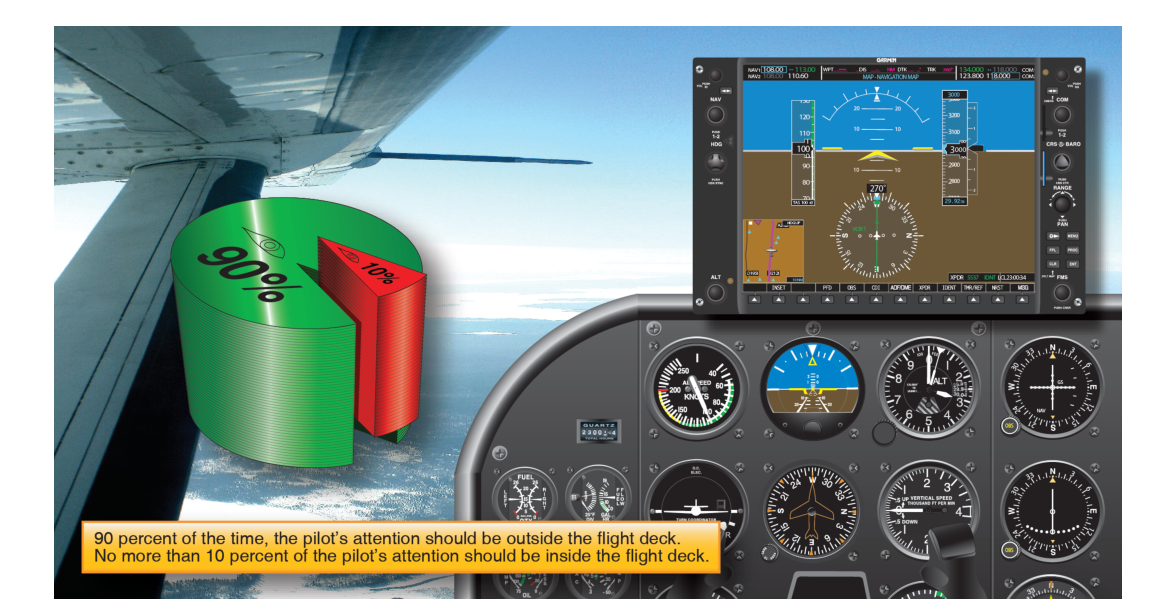
Integrated flight instruction is a teaching method in which the flight instructor introduces both outside visual references and cockpit flight instruments simultaneously from the very first lesson. Rather than treating instrument scanning as an advanced skill to be bolted on after a student has learned basic aircraft control, the integrated technique weaves instrument awareness into every maneuver from day one. The result is a pilot who naturally cross-checks both the external world and the instrument panel without having to consciously shift between two separate skill sets.
The concept is codified in the Aviation Instructor's Handbook (FAA-H-8083-9) and reinforced in the Airplane Flying Handbook (FAA-H-8083-3). Both handbooks emphasize that the technique does not aim to produce an instrument-rated pilot during primary training; rather, it builds the habit pattern of instrument cross-checking that makes pilots safer in all conditions, especially during inadvertent encounters with instrument meteorological conditions (IMC).
The Core Concept: Why Simultaneous, Not Sequential
Traditional flight instruction once taught outside reference flying first and instrument flying second — two distinct phases that students had to mentally integrate on their own. The problem with this sequential approach is that habits formed during the early lessons become deeply ingrained. A student who spends dozens of hours looking almost exclusively outside the cockpit must later unlearn that habit when instrument training begins, which is far harder than never forming the exclusionary habit in the first place.
Integrated instruction recognizes a fundamental truth about human learning: skills taught together from the outset become linked in memory and muscle memory. When a student simultaneously learns that a standard-rate turn looks like a 30-degree bank angle outside and a turn coordinator needle deflected to the standard-rate index, those two pieces of information become associated cues that reinforce each other. Neither cue alone is sufficient; together they build a complete situational picture.
How the Technique Is Applied in the Cockpit
The instructor introduces instrument cross-checking during the very first flight lesson, not as a separate exercise but as an integral part of every maneuver. Here is how this unfolds in practice:
- Attitude establishment: When the instructor demonstrates a climb, they verbally note both the outside pitch reference (a specific position of the nose relative to the horizon) and the attitude indicator reading simultaneously. For example: "Notice the nose is two bar-widths above the horizon — and the attitude indicator shows about ten degrees of pitch up."
- Cross-check during maneuvers: During turns, straight-and-level flight, and climbs and descents, the student is explicitly directed to divide attention between outside references and the key instruments (attitude indicator, altimeter, airspeed indicator, heading indicator, vertical speed indicator, and turn coordinator).
- Instructor narration: The CFI continuously narrates what both the outside scene and the instruments are showing, helping the student understand that both information sources are telling the same story — or alerting them when they are not.
- Error detection: When outside references and instrument indications disagree, the integrated technique helps the student identify an anomaly early, a skill that is especially valuable in low-visibility or inadvertent IMC situations.
The Role of Habit Formation
The Aviation Instructor's Handbook stresses that habit formation is both the goal and the mechanism of integrated instruction. Cognitive psychologists recognize that skills repeated consistently in the same context eventually become automatized — they require less conscious attention, freeing mental bandwidth for higher-order tasks like navigation, communication, and decision-making.
By building an instrument cross-check habit from the first lesson, the CFI ensures the student does not have to consciously remind themselves to check instruments. The scan becomes as natural as checking mirrors while driving. This has a measurable safety benefit: controlled flight into terrain and spatial disorientation — both associated with poor or absent instrument cross-checking — are widely recognized by the FAA and NTSB as leading causes of fatal general aviation accidents.
What Integrated Instruction Is NOT
It is important to distinguish integrated flight instruction from full instrument training:
- Integrated instruction does not teach students to fly solely by instruments under the hood for extended periods during early training (that comes later, as part of the aeronautical experience requirements under 14 CFR 61.109 and 61.65 for instrument time and the instrument rating).
- It does not replace or minimize outside visual reference flying. The primary method of aircraft control during visual conditions is still outside reference — instruments serve as a cross-check, not the primary source.
- It does not give a student an instrument rating. The student still needs the specified aeronautical experience, knowledge, and a practical test for an instrument rating.
The key distinction: outside visual references remain the primary control technique in visual conditions, while the instruments serve as an important secondary cross-check. In instrument conditions the hierarchy reverses, but the skill of reading the instruments is already present because it was built during primary training.
Practical Benefits for Student Pilots
Research and instructional experience identified in the FAA handbooks point to several concrete benefits of integrated instruction:
- Smoother aircraft control: Students who cross-check instruments maintain altitude and heading more precisely because instrument indications give immediate, quantified feedback that outside references alone sometimes cannot provide, especially in haze or flat light.
- Faster instrument training transition: When the student later pursues an instrument rating, they are not starting from scratch with instrument interpretation. The cognitive and psychomotor habits are already established.
- Better inadvertent IMC survival skills: A VFR pilot who inadvertently enters clouds and has a habit of instrument cross-checking has a dramatically better chance of recognizing the situation, maintaining controlled flight, and executing a 180-degree turn to escape IMC than one who has never developed that habit.
- Reduced susceptibility to spatial disorientation: Regular reference to the attitude indicator and other instruments counteracts the false sensory signals produced by the vestibular system during unusual attitudes or reduced visibility.
The CFI's Role and Teaching Responsibilities
The instructor applying integrated techniques must be deliberate and consistent. The Aviation Instructor's Handbook identifies several instructor responsibilities in this context:
- Introduce instruments early and explicitly: Do not wait until the student asks about the gauges. Point them out, explain their function, and direct the student's eyes to them during the first ground briefing and the first flight.
- Teach outside and instrument references simultaneously: For each new maneuver, present the outside visual picture and the corresponding instrument indication together, from the very first introduction of that maneuver — not outside reference first followed by instruments later, even within the same lesson.
- Provide immediate feedback: When the student's scan becomes fixated outside (a common early error), gently redirect attention to the instruments and back.
- Avoid overloading the student: Introduce the cross-check progressively. Early lessons may focus on altitude and heading instruments; as proficiency grows, the student expands the scan to include more instruments.
Memory Aid
To remember the core idea of integrated instruction, use the phrase "BOTH Eyes On" — Building Outside and The-cockpit Habit from day one. Every lesson, every maneuver: both the outside world and the instruments. Neither alone is complete; together they create a whole-picture pilot. Post this reminder mentally at the start of every flight lesson as a CFI.
Common Test Traps
- Trap 1 — "Integrated means instrument flying." False. Integrated instruction means using instruments as a cross-check during visual flight, not as the primary reference. The primary reference in VMC is still outside visual cues.
- Trap 2 — "Integrated instruction is only useful for instrument-rated students." False. It begins during private pilot primary training and benefits every student regardless of their rating goals, primarily by building safer habit patterns.
- Trap 3 — "The instructor should wait until the student masters outside reference flying before introducing instruments." False. The handbooks are explicit: instruments are introduced simultaneously from the very first lesson, not sequentially.
- Trap 4 — "Integrated instruction replaces the need for an instrument rating." False. It creates foundational habits but does not satisfy the legal aeronautical experience, training, or testing requirements for an instrument rating under 14 CFR Part 61.
- Trap 5 — "If a student fixates outside, that is acceptable during early training." False. Fixation outside is a habit error the CFI must correct early, because habits formed in early training are the hardest to break later.