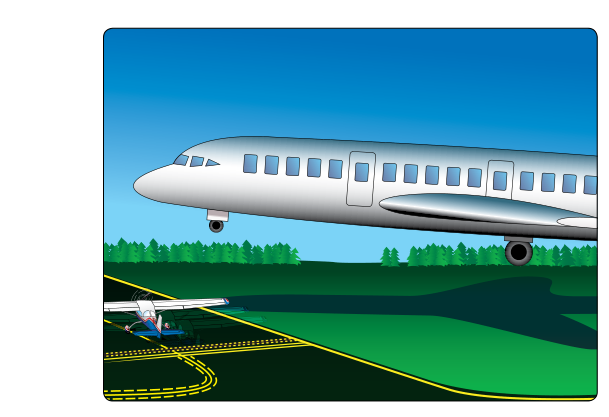
Ground operations are among the most demanding phases of flight. More than a dozen fatal runway incursions have occurred at towered airports in recent decades, and the vast majority trace back to a breakdown in radio communication — a missed clearance, a misunderstood instruction, or a pilot who simply did not read back what ATC expected to hear. Mastering runway crossing and taxi clearance radio calls is not just a test topic; it is a fundamental safety skill that every private pilot must own before taxiing at any controlled airport.
This article walks you through the exact phraseology, the regulatory backbone, and the practical judgment calls you will face on the ground. Whether you are departing from a Class D airport for the first time or reviewing for your knowledge test, the guidance here is grounded in the FAA's Aeronautical Information Manual (AIM) and 14 CFR Part 91.
The Regulatory Foundation
Under 14 CFR 91.129, when operating at an airport with an operating control tower, no pilot may taxi on a runway or enter a runway without ATC authorization. This is an absolute rule — good intentions, logical reasoning, and a clear-looking runway do not substitute for an explicit clearance. The AIM, Chapter 4, expands on this by laying out standard phraseology and readback expectations that ATC uses to verify pilot understanding.
The FAA also mandates that pilots read back all runway hold-short instructions. This readback requirement — which includes repeating the hold-short point and your aircraft call sign — is not optional courtesy; it is a required procedure that gives the controller an immediate error-detection opportunity. If your readback is wrong, the controller will correct you before you move.
Initial Taxi Clearance: The First Call
When you are ready to taxi, your first radio call goes to Ground Control (at airports that have a separate ground frequency) or to the tower controller at smaller facilities. The call follows a standard format:
- Who you are calling: e.g., "Centennial Ground"
- Who you are: Aircraft type and full tail number on first contact, e.g., "Cessna 172 November Two Three Four Sierra Foxtrot"
- Where you are: Your location on the airport, e.g., "at the Signature ramp"
- What you want: Your request, e.g., "request taxi for VFR departure to the northwest"
- ATIS received: e.g., "with Information Kilo"
A complete example sounds like this: "Centennial Ground, Cessna 172 November Two Three Four Sierra Foxtrot, at Signature ramp, request taxi, VFR departure to the northwest, Information Kilo." ATC will respond with taxi instructions that typically include a runway assignment, the taxi route, and any hold-short points.
Reading Back the Taxi Clearance
You are not required to read back every element of a taxi clearance verbatim — but you must read back any runway hold-short instruction. The AIM is explicit on this point. When ATC says "Taxi to Runway 28L via Taxiway Alpha, hold short of Runway 25," your readback must confirm the hold-short point:
"Taxi to 28L via Alpha, hold short of Runway 25, Four Sierra Foxtrot."
Notice the readback ends with your call sign. This closes the communication loop and confirms to the controller exactly which aircraft acknowledged the instruction. Omitting your call sign is a common student error and can create ambiguity on a busy frequency.
For the rest of the taxi instruction — taxiway routing and the destination runway — a simple readback is good airmanship even when not strictly required. If the route is complex, reading it back helps you internalize it and catches mistakes. Never be afraid to ask ATC to "say again" or "say again slowly" if you missed any part of a clearance. Controllers expect this and far prefer it over a confused pilot on the taxiway.
Runway Crossing Clearances
Perhaps the most critical radio call on the ground is the runway crossing clearance. Even if your routing takes you across an active runway on the way to your departure runway, you cannot cross without a specific clearance to do so. ATC may include a runway crossing in the initial taxi clearance ("Taxi to Runway 28L via Alpha, cross Runway 7"), or they may tell you to hold short and issue the crossing clearance separately when traffic allows.
When you reach a runway hold-short line — those two solid and two dashed yellow lines — you stop. You do not enter the runway until ATC says the words "cleared to cross" or "cross Runway XX." Ambiguous language like "continue" or "taxi to" without an explicit crossing clearance does not authorize you to enter a runway. This distinction has been the source of real incursions, and the FAA knowledge test will probe it.
Your readback of a crossing clearance must confirm the runway number: "Cross Runway 7, Four Sierra Foxtrot." Once you have crossed and are clear of the runway, you resume normal taxi to your destination. If ATC instructs you to hold short of multiple runways on the same route, treat each one as a separate event — cross only after receiving and reading back a clearance for that specific runway.
Departure Runway Clearance
When you arrive at your assigned runway and are ready for takeoff, your communication shifts to Tower frequency (if not already there). You report your position and readiness:
"Centennial Tower, Cessna Four Sierra Foxtrot, holding short of Runway 28L, ready for departure."
Tower may respond with "Runway 28L, cleared for takeoff," or may instruct you to "line up and wait" — meaning taxi onto the runway and hold in position without departing. This instruction replaced the older phrase "position and hold" in 2010 to align U.S. phraseology with international ICAO standards. Read back "line up and wait" with the runway number and your call sign. Do not depart until you hear the explicit words "cleared for takeoff."
Why It Matters: Runway Incursion Awareness
The FAA categorizes runway incursions by severity (A through D, with A being the most serious). Even a Category D event — a situation with no immediate safety effect — is investigated and documented, because incursion rates are a key safety metric. Pilot deviations, which often stem from poor radio technique or failure to read back hold-short instructions, are reportable events that can trigger FAA enforcement action under 14 CFR Part 91.
Beyond enforcement, the practical stakes are obvious: crossing an active runway without clearance can put you in front of a departing or landing aircraft. Tower controllers do an extraordinary job of sequencing traffic, but they rely on pilots to follow instructions precisely and to speak up when confused. Your voice on the radio is the last line of defense.
Key Numbers and Rules
- Hold-short lines: Two solid yellow lines (runway side) and two dashed yellow lines (taxiway side). You stop before the solid lines unless cleared to cross or enter.
- Readback required: All runway hold-short instructions must be read back per AIM 4-3-18, including the hold-short point and your call sign.
- Takeoff clearance: The word "cleared for takeoff" is the only authorization to depart the runway. "Line up and wait" is not a takeoff clearance.
- ATIS: Always have the current ATIS code before calling Ground. Forgetting to include it is a common omission on first radio calls.
- Call sign shortening: ATC may shorten your call sign after initial contact (e.g., "Four Sierra Foxtrot" becomes "Sierra Foxtrot"). You may then use the shortened version — but only after ATC initiates the abbreviation.
- Single-runway airports: At some Class D airports, one controller handles both ground and tower. Listen carefully for which frequency to use for each phase.
Common Test Traps
- Assuming taxi includes runway crossing: A taxi clearance to a runway does not automatically authorize you to cross any active runways along the route. Each active runway crossing requires an explicit clearance.
- Forgetting the call sign on readback: The FAA tests whether students know that readbacks of hold-short instructions must include the aircraft call sign. Omitting it is incorrect procedure.
- Confusing "line up and wait" with takeoff clearance: The test will present scenarios where a pilot departs after "line up and wait." This is a pilot deviation — you must wait for "cleared for takeoff."
- Not including ATIS on first contact: The knowledge test and practical test standards both expect pilots to report the current ATIS information when initiating contact with Ground Control.
- Crossing on a closed or non-movement-area runway without clearance: Even if a runway appears inactive, at a towered airport you still need authorization to cross it if it is inside the movement area. Do not assume a runway is inactive because you have not heard traffic on it.
Precise, confident radio communication on the ground is a hallmark of a professional pilot at any certificate level. Learn the phraseology, practice it before your first solo, and make the readback habit automatic. The few extra seconds it takes to read back a hold-short clearance have saved lives — and they will keep you off the FAA's incursion statistics list for your entire flying career.