Every time you key the microphone and speak to air traffic control for the first time on a frequency, that transmission is your initial contact. It is, in a very real sense, your introduction: ATC needs to know immediately who you are, where you are, and what you need. Getting this right the first time reduces frequency congestion, speeds up your clearance, and marks you as a competent, professional pilot — even while you are still a student. Getting it wrong wastes everyone's time and can create genuine safety hazards in busy airspace.
The good news is that initial contact follows a simple, predictable template defined by the FAA's Aeronautical Information Manual (AIM). Once you learn the structure, it applies at every facility — ground control, tower, approach, departure, center, or FSS. This article walks through that structure in detail, explains the reasoning behind each element, and highlights the most common mistakes student pilots make on the knowledge test and in the cockpit.
The Three-Part Formula
The AIM establishes a consistent format for initial radio contacts. Every first call on a new frequency should contain three essential components: who you are calling, who you are, and where you are / what you want. In practice, a complete call packs all three into a concise, flowing transmission. Think of it as giving ATC everything they need to pull up your data and respond intelligently — all in about ten seconds.
Part 1: Who You Are Calling
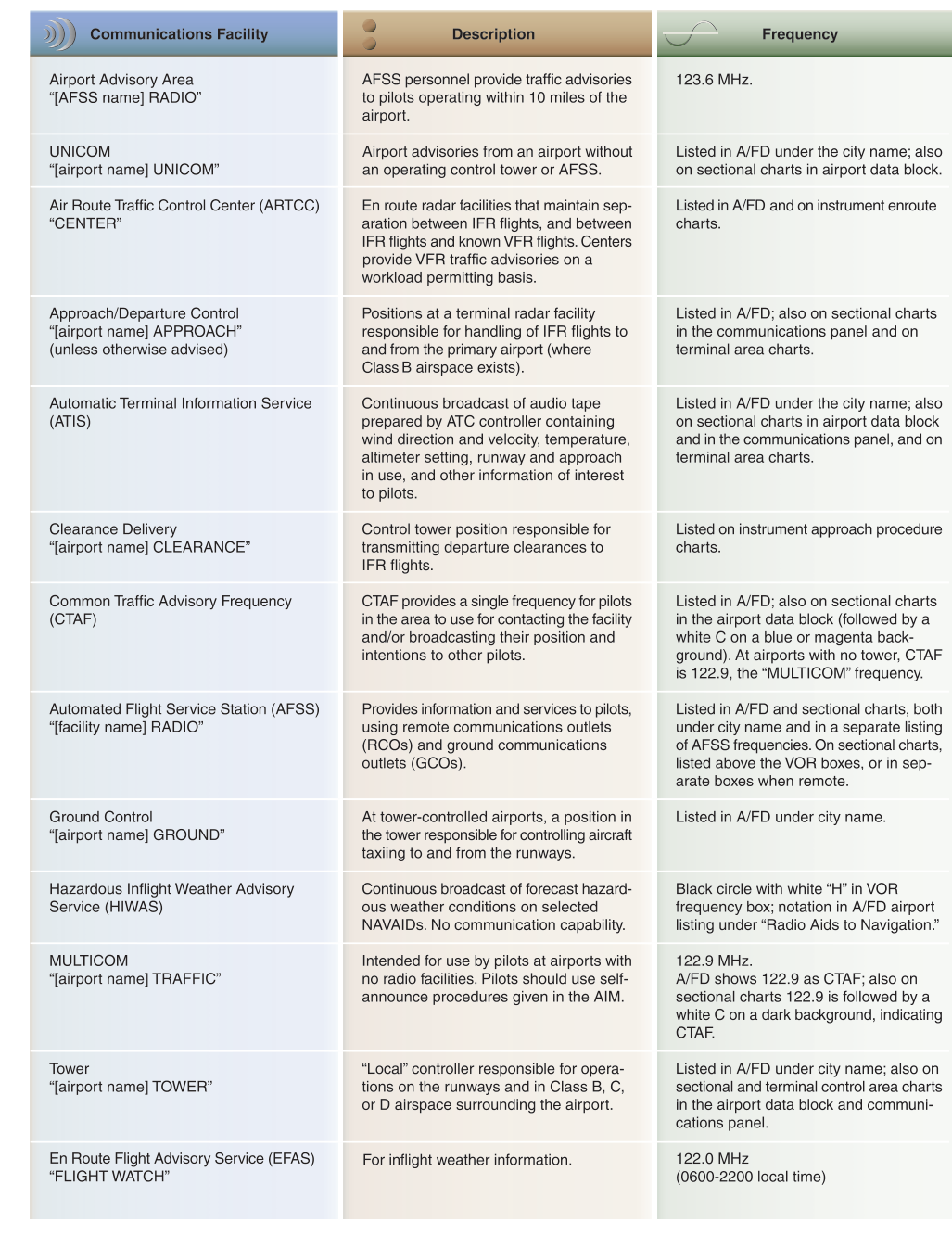
Begin every transmission by addressing the facility and the specific position you are calling. This alerts the controller — who may be monitoring several frequencies — that a call is coming their way. Use the airport name and the facility type together. For example: «Chicago Executive Ground», «Denver Approach», or «Kansas City Center.» If the airport name is long or commonly abbreviated locally, the AIM gives guidance on acceptable shortened forms, but when in doubt, use the full name. Never just say «Tower» without identifying which tower — there may be multiple airports in the region on adjacent frequencies.
Part 2: Who You Are
Immediately after addressing the facility, state your full aircraft identification. For most general aviation aircraft, this the letter N followed by the registration number: «Cessna One Seven Two, November Four Five Two Mike Alpha» or in the shorter form once your call sign is established, «November Four Five Two Mike Alpha.» On the very first call, however, always use the full call sign — never abbreviate it until the controller themselves abbreviates it first. This is recommended practice from the AIM, not a codified regulatory requirement: if ATC shortens your call sign in their response, you may then use that shortened version. If they have not done so, keep using the full registration. Using an unauthorized abbreviation can cause controllers to confuse your aircraft with another, a potentially serious safety issue in busy terminal airspace.
The aircraft type (Cessna, Piper, Beechcraft, etc.) is often included before the N-number on first contact at towered airports, especially at busier facilities, because it helps the controller visually identify the target on their scope and sequence traffic by aircraft performance category. It is not mandatory in all circumstances, but it is good practice when contacting approach or departure control.
Part 3: Where You Are and What You Want
The final portion of the initial call gives ATC the situational and operational information they need to respond. It typically contains your position (either on the ground or in the air), your altitude if airborne, and your request or intention. On the ground before departure, this might be your current location on the airport and the fact that you have the current ATIS information: «at the FBO, ready to taxi, with information Bravo.» In the air contacting approach control, it might be: «fifteen miles southeast of the field, six thousand five hundred, descending, with information Delta, requesting the ILS Runway 28 approach.»
Including ATIS information in your initial call is important. When you tell the controller which ATIS letter you have (e.g., «with information Juliet»), you confirm that you already know the active runway, altimeter setting, weather, and NOTAMs in that recorded broadcast. This allows the controller to skip re-reading all of that information and move straight to issuing your clearance or taxi instructions. If you do not have the current ATIS, tell them that too — do not pretend you have information you do not have.
A Complete Example, Step by Step
Here is a full example of an initial ground contact before departure from a towered airport:
«Centennial Ground, Cessna Seven Eight Four Lima Uniform, at Atlantic Aviation, VFR to Colorado Springs, with information Kilo, request taxi.»
Let's break this down: «Centennial Ground» — who you're calling. «Cessna Seven Eight Four Lima Uniform» — who you are (aircraft type plus full call sign). «At Atlantic Aviation» — your position on the airport. «VFR to Colorado Springs» — your intention and destination. «With information Kilo» — confirmation you have the ATIS. «Request taxi» — your specific ask. Everything ATC needs is right there; they can respond immediately with a taxi clearance without any back-and-forth.
Why This Format Matters
Radio frequency congestion is a real and growing problem at busy airports. The FAA and the AIM are explicit: transmissions should be as brief as possible while still conveying all necessary information. A rambling or incomplete first call forces the controller to ask follow-up questions, tying up the frequency. In a high-density traffic environment — a Class B airport on a Friday afternoon — unnecessary transmissions can delay multiple aircraft and create sequencing headaches.
There is also a safety dimension. If your initial call is unclear, the controller may respond to the wrong aircraft or hold all traffic while sorting out the confusion. Correct phraseology also builds mutual trust: a controller who hears a clean, professional initial call knows you are likely to comply with instructions correctly, reducing their workload and increasing safety margins for everyone on frequency.
Key Numbers and Rules
- Full call sign on first contact: Always use your complete N-number (and aircraft type where appropriate) until the controller abbreviates it — per the AIM, Chapter 4.
- Do not abbreviate until ATC does: If ATC calls you «Four Lima Uniform,» you may then use that shortened form. Until then, use the full call sign every time.
- State ATIS code: Include the ATIS letter in your initial call at any airport with an ATIS or D-ATIS broadcast, per AIM 4-2-3 guidance. If you do not have it, say so.
- Altitude when airborne: When contacting approach, departure, or center for the first time, always state your current altitude and, if applicable, the altitude you are climbing or descending to.
- Position first, then request: Give your position before your request; ATC needs to know where you are before they can grant or deny anything.
- Listen before transmitting: The AIM reminds pilots to listen to the frequency for a few seconds before making a call to avoid stepping on another transmission.
Common Test Traps
- Abbreviating the call sign without authorization: A very common knowledge test question asks who may first shorten a call sign — the answer is always the controller. Students who shorten their own call sign are departing from recommended AIM procedure.
- Omitting the ATIS code: Some test questions present a first call that is missing the ATIS letter and ask what is wrong. Know that reporting ATIS receipt is standard procedure and its absence is a procedural error at ATIS-equipped airports.
- Reversing the format — stating the request before identification: The correct order is always facility, then your identity, then your information and request. Questions sometimes present reversed formats as distractors.
- Confusing «initial contact» with «position report»: An initial contact follows the three-part AIM formula. A position report — required primarily for IFR operations, especially in non-radar environments, per AIM 5-3-2 — has a different structure entirely. Know which one applies to which situation.
- Not including current altitude when airborne: When calling approach or center for the first time in flight, you must state your altitude. Omitting it is a procedural error the FAA tests on because ATC may not yet have your radar target correlated.
Mastering the initial contact format is one of the easiest wins in your training. It requires no complex aerodynamics — just a reliable mental template and a little practice. Fly the pattern enough times while talking through your calls, and this three-part structure will become as automatic as your pre-landing checklist. The cockpit is not the place to improvise; the radio calls are a procedure just like everything else, and flying the procedure correctly every time is what good pilots do.