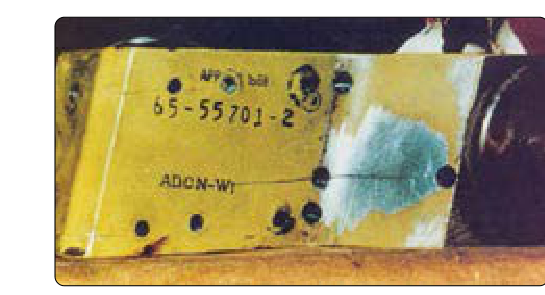
Of all the corrosion mechanisms an aviation maintenance technician will encounter, stress corrosion cracking (SCC) is among the most insidious. Unlike general surface corrosion that discolors paint and leaves chalky deposits, SCC progresses deep inside a metal part while the exterior may look nearly pristine. The result can be a structural member that appears airworthy right up to the moment it fails catastrophically under normal flight loads. Understanding how SCC initiates, how it propagates, and how to detect and prevent it is a core competency for any AMT working on aircraft structures.
SCC is not a single event — it is a process that unfolds over time when three conditions are simultaneously present: a susceptible metal alloy, a sustained tensile stress (either applied or residual), and exposure to a specific corrosive environment. Remove any one of those three legs and the process stops. That three-factor model is the foundation of every SCC prevention strategy.
How Stress Corrosion Cracking Works
The mechanism begins at the atomic level. When a metal is under tensile stress, the bonds between atoms at the surface are slightly stretched. In the presence of certain chemicals — even in very low concentrations — those strained atomic sites react more aggressively with the environment than an unstressed surface would. The corrosive agent attacks the crack tip preferentially, weakening the metal and allowing the applied stress to open the crack a tiny increment further. That freshly exposed crack tip is immediately attacked again. The cycle of chemical attack followed by mechanical advance continues, often at a rate far faster than either mechanism would produce alone, until the remaining cross-section can no longer support the load and fracture occurs suddenly.
A critical point is that the tensile stress causing SCC does not have to come from an external load. Residual stresses locked into a part during manufacturing are just as effective — and often more dangerous because they are invisible and permanent. Press-fit assemblies, over-torqued fasteners, improperly heat-treated forgings, and parts that were straightened or formed without proper stress relief all contain residual tensile stress. In many documented aircraft SCC failures, the part was not even carrying a significant flight load at the time cracking initiated; the residual stress alone was sufficient.
Crack Morphology
SCC cracks typically propagate perpendicular to the tensile stress direction and follow either an intergranular (between grains) or transgranular (through grains) path depending on the alloy and environment. In high-strength aluminum alloys — by far the most commonly affected material in aircraft structures — cracks are almost always intergranular and orient themselves perpendicular to the short transverse grain direction, which runs through the thickness of rolled plate and forgings. This orientation means SCC in aluminum structural components often progresses through the thinnest dimension of the part, which is especially alarming for spar caps, bulkhead fittings, and wing attachment lugs.
In high-strength steel components such as landing gear and actuator cylinders, SCC can progress rapidly once initiated, particularly in the presence of moisture. Titanium alloys are generally more resistant to SCC in most service environments but are not immune; certain titanium alloys have documented susceptibility to SCC in specific aggressive chemical environments, and technicians should always follow manufacturer guidance on chemicals that must never contact titanium hardware.
Susceptible Alloys and Environments
Not all metals are equally vulnerable. The FAA Aviation Maintenance Handbook emphasizes that susceptibility is a combination of alloy composition, temper condition, and the specific corrosive agent present.
- High-strength aluminum alloys (7000-series, particularly 7075-T6): Highly susceptible, especially in the short transverse direction. The T73 and T7351 tempers were developed specifically to improve SCC resistance compared to T6.
- 2024-T3 aluminum: Moderately susceptible; less so than 7075-T6 but must still be protected in corrosive environments.
- High-strength steel: Very susceptible, with susceptibility increasing as tensile strength increases. Landing gear, wing attachment bolts, and actuator rods are prime candidates. Hydrogen embrittlement, closely related to SCC, is a major concern during plating operations on these steels.
- Austenitic stainless steels (300-series): Susceptible to SCC in chloride environments — saltwater spray is a classic trigger. This is particularly relevant for seaplane structures and coastal-based aircraft.
- Titanium alloys: Generally resistant to most environments encountered in service, but must be protected from the specific chemicals noted above.
The corrosive environments most commonly implicated in aircraft SCC include salt water and salt-laden air, atmospheric humidity combined with industrial pollutants, battery acid vapors, residual cleaning chemicals not fully rinsed away, and hydraulic fluid contaminated with water. Coastal and carrier-based operations create the most aggressive environments, but even an aircraft hangared at an inland airport is not immune if moisture-trapping designs allow condensation to accumulate in contact with stressed members.
Detection Methods
Because SCC originates internally and the crack faces are held tightly closed by compressive residual stress on either side of the crack tip, visual inspection alone is almost never adequate. The FAA maintenance handbooks describe several nondestructive inspection (NDI) techniques that are effective for SCC:
- Dye penetrant inspection (DPI): Effective for detecting SCC cracks that have reached the surface, particularly on non-ferrous metals. The penetrant must be given adequate dwell time to wick into tight SCC crack faces.
- Magnetic particle inspection (MPI): Applicable to ferromagnetic steel parts; reveals surface and near-surface cracks with high sensitivity. Not usable on aluminum or titanium.
- Eddy current inspection: Can detect cracks at and slightly below the surface in conductive materials; widely used on aluminum airframe structures at fastener holes and in spar caps.
- Ultrasonic inspection: Can detect internal SCC that has not yet reached the surface; requires skilled operators and proper reference standards for meaningful results.
- Radiographic inspection (X-ray): Can reveal SCC in complex assemblies but requires that the crack be oriented favorably relative to the radiation beam to be detectable.
Prevention and Control
The most effective approach to SCC is prevention. FAA guidance points to several strategies that address one or more of the three required conditions.
Alloy and temper selection: Where design permits, selecting an alloy and temper with inherently better SCC resistance eliminates susceptibility at the source. The switch from 7075-T6 to 7075-T73 in critical structural applications is a textbook example.
Stress relief: Proper heat treatment after forming, welding, or machining removes or redistributes residual stresses. Shot peening introduces compressive residual stresses at the surface, counteracting tensile stresses and making it significantly harder for SCC to initiate.
Protective coatings and sealants: Anodizing, chemical conversion coating (Alodine), primer, and topcoat systems create a barrier between the metal and the corrosive environment. Sealants applied at faying surfaces, around fastener holes, and in moisture-trap areas are especially important. A coating system that is breached and not promptly repaired removes the environmental barrier while leaving the stress condition fully intact.
Drainage and design: Structural designs that eliminate moisture traps, ensure drainage, and provide ventilation reduce the time metal surfaces remain wet — directly shortening the window during which corrosive attack can occur.
Inspection and corrosion control programs: FAA-approved Corrosion Prevention and Control Programs (CPCPs) required for many transport-category aircraft specify inspection intervals and procedures designed to catch SCC before it reaches a critical crack length.
Key Numbers and Rules
- SCC requires all three factors simultaneously: susceptible alloy, sustained tensile stress, and corrosive environment.
- 7075-T6 aluminum is significantly more SCC-susceptible than 7075-T73 in the short transverse direction.
- High-strength steels are highly vulnerable to SCC and hydrogen embrittlement, with susceptibility increasing as tensile strength increases.
- Residual stresses from manufacturing can equal or exceed applied service stresses in magnitude.
- Shot peening introduces beneficial compressive residual stress at the surface, providing substantial SCC resistance.
- SCC cracks in aluminum are almost always intergranular and perpendicular to the short transverse grain direction.
- NDI methods must be specified for the material type — MPI works on steel but NOT on aluminum or titanium.
Common Test Traps
- Assuming SCC requires an external load: A favorite exam distractor. Residual manufacturing stresses alone are sufficient to drive SCC; the part never has to be loaded in service for cracking to initiate.
- Confusing SCC with fatigue cracking: Fatigue cracks require cyclic loading; SCC requires only sustained (static) tensile stress in a corrosive environment. The FAA exam distinguishes between these two mechanisms.
- Believing visual inspection is sufficient: SCC can progress significantly before it is visible to the naked eye. Always use the NDI method appropriate for the material and location.
- Misidentifying susceptible alloys: Remember that 7075-T6 is highly susceptible while 7075-T73 was specifically developed to reduce SCC risk — the temper designation matters as much as the alloy series.
- Overlooking the cleaning process as a corrosion trigger: Residual cleaning solvents, improper rinsing, or the use of chlorinated cleaners on stainless steel parts can introduce the corrosive environment component of SCC where none previously existed.