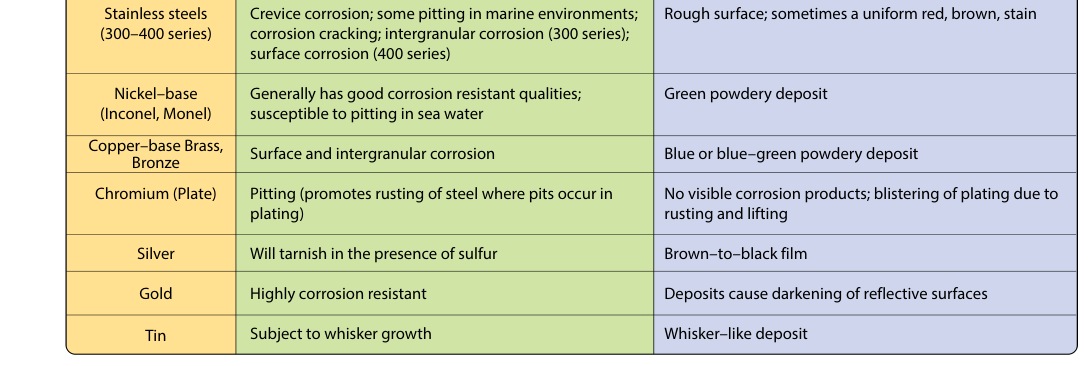
Iron and steel — collectively called ferrous metals — are used throughout aircraft structures, engines, and hardware for their superior strength and hardness. Unfortunately, these same metals carry a significant liability: they corrode rapidly when exposed to moisture, oxygen, and contaminants. The reddish-brown flaking we call rust is actually iron oxide, a product of an electrochemical reaction that steadily weakens the base metal. For an Aviation Maintenance Technician (AMT), understanding how to detect, treat, and prevent corrosion on ferrous components is not merely academic — it is a fundamental airworthiness responsibility grounded in FAA guidance and 14 CFR Part 43.
This article covers the types of corrosion that attack ferrous metals, how to identify them, the approved methods for removing and treating corrosion, and the preventive coatings and practices that keep steel components serviceable for the long term.
Why Ferrous Metals Are Especially Vulnerable
Where steel and iron sit in the galvanic series depends on what metal they are paired with — steel is anodic relative to metals like copper and brass, but it is actually cathodic relative to aluminum, zinc, and magnesium, the metals most commonly used in airframe structure. Unlike aluminum, which forms a tightly bonded, self-limiting oxide layer that actually protects the base metal, iron oxide (rust) is porous and non-adherent. It flakes away continuously, constantly exposing fresh metal to attack. This makes corrosion on steel components a self-accelerating process that can progress from a surface stain to structural compromise remarkably quickly if left untreated.
Environmental factors that dramatically speed ferrous corrosion include coastal salt air, industrial pollution, standing water or condensation, and battery acid fumes near steel structural members. Dissimilar-metal contact — such as steel hardware embedded in aluminum structure — creates galvanic cells that attack both metals, but because aluminum is anodic relative to steel in this pairing, it is the aluminum that sacrificially corrodes while the steel is comparatively protected.
Types of Corrosion Found on Ferrous Components
Uniform Surface Corrosion (Rust)
The most common form on steel is uniform oxidation across an exposed surface. It typically appears as a red-brown stain or powdery deposit. While it looks alarming, early-stage uniform rust that has not pitted the base metal is the easiest form to treat and is often repairable in the field following approved procedures.
Pitting Corrosion
When corrosion penetrates beyond the surface and begins eating into the base metal, it creates small craters called pits. Pitting is more serious because it acts as a stress concentrator: under cyclic loading, cracks initiate at the bottom of pits. Even shallow pitting on highly stressed components — control cables, landing gear springs, engine crankshafts — can be cause for rejection per applicable manufacturer's limits.
Intergranular Corrosion
Certain heat-treated steels can experience corrosion that travels along the boundaries between metal grains. This form is insidious because the surface may look intact while the metal's interior is seriously degraded. It is associated with improper heat treatment or exposure to specific corrosive agents and is identified through metallographic examination rather than visual inspection.
Fretting Corrosion
Where two mating steel surfaces experience slight relative motion under load — such as splined shafts, press-fit bearings, or bolted joints subject to vibration — fretting corrosion produces fine red-brown powder (iron oxide debris) and surface pitting. It is common on aircraft control system components and requires careful inspection of mating surfaces during overhaul.
Inspection: Finding Corrosion Before It Finds You
Effective corrosion control begins with thorough, systematic inspection. The AMT should use adequate lighting, magnification when needed, and clean, degreased surfaces. Key inspection steps for ferrous components include:
- Remove all dirt, grease, and old coatings in the inspection area — corrosion hides under contamination and failing paint.
- Look for paint bubbling, blistering, or cracking — these are surface indicators of corrosion working underneath.
- On control cables, fan the cable strands and inspect for broken wires, pitting, and rust. A rusted, pitted cable that passes through a conduit is particularly dangerous because the damage may be hidden from direct view.
- Inspect threaded fasteners, especially in low-drainage areas and around battery compartments where acid fumes concentrate.
- Use a borescope to inspect interior steel tubing in welded steel-tube fuselage structures where direct visual access is impossible.
Corrosion Removal from Ferrous Metals
The FAA Aviation Maintenance Handbook (FAA-H-8083-30) makes clear that the goal of corrosion treatment is to remove all corrosion products and then restore a protective surface to prevent recurrence. For ferrous metals, approved removal methods include:
- Mechanical abrasion: Hand tools such as stiff bristle brushes, abrasive pads (aluminum oxide or silicon carbide), and fine sandpaper are used for surface rust on non-critical components. Steel wire brushes can be used on steel but should never contact aluminum or magnesium, where they would cause contamination.
- Powered tools: Rotary wire wheels, grinding discs, or flap wheels may be used on heavy rust, but care is essential to avoid removing excessive base metal and to respect dimensional tolerances on precision parts.
- Chemical removal (rust removers): Phosphoric acid-based compounds convert iron oxide into iron phosphate — a more stable compound — and etch the surface to improve coating adhesion. These treatments must be thoroughly neutralized and rinsed per manufacturer instructions before any protective coating is applied.
After removal, the technician must evaluate the remaining metal dimensions against manufacturer limits. Deep pitting or corrosion that has removed material beyond allowable tolerances is cause for part rejection. No amount of filler or coating can restore structural integrity lost to corrosion.
Protective Treatments and Coatings
Once corrosion is removed and the surface is clean and dry, a protective barrier must be immediately applied to prevent recurrence. Delay between cleaning and coating allows fresh oxidation to begin within minutes in humid conditions.
Chemical Conversion Coatings
Phosphate conversion coatings (commonly known by the trade process name Parkerizing) are widely used on steel components. The phosphoric acid bath creates a crystalline iron phosphate layer that, while not corrosion-proof by itself, provides excellent adhesion for subsequent paint or oil coatings and offers modest corrosion resistance. It is the standard base treatment for steel structural parts before priming.
Primers and Topcoats
Zinc chromate primer was historically the standard corrosion-inhibiting primer for aircraft steel components, and it remains common on legacy aircraft. Newer formulations use zinc-rich or epoxy-based primers with corrosion-inhibiting pigments. The primer is always followed by a compatible topcoat — typically an enamel or polyurethane finish — that provides the primary barrier against moisture and contaminants.
Preservative Oils and Waxes
Internal steel structures (such as welded steel tube fuselage members) that cannot be painted on their interior surfaces are treated with corrosion-preventive compounds (CPCs) — typically oil-based or wax-based materials that displace moisture and coat metal surfaces. These are introduced through drain holes or inspection openings and must be reapplied at intervals per the maintenance program.
Cadmium Plating
Many steel fasteners and hardware items are cadmium-plated. Cadmium is anodic to steel, meaning it sacrificially corrodes to protect the steel beneath — a principle similar to zinc galvanizing on structural steel. Damaged cadmium plating should be noted and the affected fastener evaluated for replacement.
Key Numbers and Rules
- Corrosion removal and treatment on primary structure must comply with the aircraft manufacturer's Structural Repair Manual (SRM) or applicable FAA-approved data — general-practice limits alone are not sufficient.
- Steel control cables must be inspected per AC 43.13-1B guidance by fanning the strands and checking for broken wires, pitting, and corrosion; a cloth rubbed along the cable helps snag broken wire ends, but the decision to replace a cable is based on the broken-wire count, pitting severity, and corrosion found during this visual and tactile inspection — not on rubbing with an oiled cloth alone.
- Phosphoric acid treatments must be completely neutralized before any coating is applied; residual acid under a coating accelerates, rather than prevents, further corrosion.
- Dissimilar-metal contact between steel and aluminum must be isolated with approved sealants, insulating tape, or non-metallic washers to interrupt galvanic cells.
- Corrosion work on pressurized fuselage structure, primary flight control components, and engine mounts generally requires return-to-service approval per 14 CFR Part 43 — the AMT must confirm authority before proceeding.
Common Test Traps
- Steel wire brushes on aluminum: A common distractor answer is to use a steel wire brush for all corrosion removal. Steel wire brush contact with aluminum or magnesium embeds ferrous particles that cause accelerated galvanic corrosion — always use brushes compatible with the base metal.
- Treating without removing: Painting over rust does not stop corrosion — it hides it. FAA guidance is unambiguous: all corrosion products must be removed before protective coatings are applied.
- Rust equals rejection: Not necessarily. Early-stage, non-pitting surface rust on non-critical components can often be treated and returned to service. The decision depends on component criticality and manufacturer limits — blanket rejection of any rust is incorrect.
- Fretting vs. fatigue: Red-brown powder at mating steel surfaces is a fretting corrosion indicator, not simple surface rust. Fretting also creates surface damage that promotes fatigue cracking, so both the corrosion and the underlying fit problem must be addressed.
- Cadmium plating and galvanic protection: Some students confuse cadmium plating as simply decorative. Remember it is a sacrificial anodic coating — when the plating is damaged, the protection is lost and the exposed steel corrodes rapidly.
Maintaining vigilance over ferrous metal corrosion is one of the most impactful things an AMT can do to preserve an aircraft's structural integrity and extend its service life. A systematic inspection schedule, prompt treatment following approved methods, and consistent application of protective barriers form the foundation of an effective corrosion control program — one that keeps aircraft safe, airworthy, and out of the corrosion repair shop.