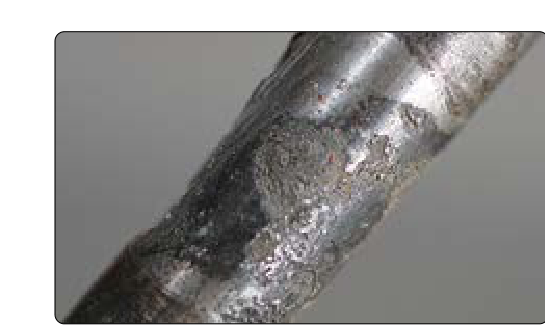
Aircraft are built from a carefully engineered mix of metals: aluminum alloys in the skin and structure, steel in bolts and fittings, magnesium in gearboxes and housings, titanium in high-stress areas, and copper in electrical systems. Under dry, clean conditions these metals coexist without issue. But introduce moisture — even humidity alone — and an electrochemical reaction can silently destroy metal at the joints between them. This is galvanic corrosion, and it is one of the most insidious threats an Aviation Maintenance Technician (AMT) will face throughout an aircraft's service life.
Understanding galvanic corrosion is not merely academic. The FAA's Aviation Maintenance Handbook (FAA-H-8083-30) places galvanic corrosion prominently in the study of aircraft corrosion because it can progress rapidly and invisibly beneath paint, sealant, or fastener heads, causing structural degradation that goes undetected until it becomes a serious airworthiness concern. Every AMT must be able to identify susceptible material combinations, recognize the signs of attack, and apply correct preventive and corrective measures.
How Galvanic Corrosion Works
Galvanic corrosion is fundamentally an electrochemical process. When two metals with different electrochemical potentials are in direct contact and exposed to an electrolyte — any conductive liquid, including rainwater, condensation, salt spray, or even humid air — they form a simple electrical cell, much like a battery. The metal with the lower electrochemical potential (the more active or anodic metal) acts as the anode and gives up electrons. Those electrons flow through the metallic contact to the more noble (cathodic) metal, which is protected in the process. The electrolyte completes the circuit by carrying ionic current between the two surfaces.
The result: the anodic (less noble) metal corrodes — it oxidizes and loses material — while the cathodic (more noble) metal is effectively protected from corrosion. This is the same principle deliberately exploited in sacrificial anodes on marine vessels, but in aircraft it is entirely unwanted.
The Galvanic Series
Metals and alloys can be ranked by their electrochemical activity in a list called the galvanic series. Metals near the active (anodic) end of the series — magnesium, zinc, aluminum alloys, and cadmium — corrode preferentially. Metals near the noble (cathodic) end — gold, platinum, titanium, stainless steel, and copper — are relatively protected. The further apart two metals are in the galvanic series, the greater the potential difference between them, and the more aggressive the corrosion of the anodic member.
In practical aircraft terms, some of the most common and damaging pairings include:
- Aluminum and steel: A very common structural pairing. Aluminum is anodic to steel and will corrode at the joint, especially around steel fasteners in aluminum structure.
- Aluminum and copper: An extreme mismatch. Copper tubing or copper-containing compounds in contact with aluminum cause severe galvanic attack on the aluminum. This is why copper-based compounds must never be used as lubricants or anti-seize agents on aluminum components.
- Magnesium and almost anything else: Magnesium is the most active structural metal used in aircraft. It is anodic to virtually all other common aircraft metals, making it extremely susceptible to galvanic attack when improperly mated or if its protective coating is breached.
- Cadmium-plated steel and aluminum: Cadmium plating places steel fasteners close to aluminum in the galvanic series, dramatically reducing the potential difference and making cadmium-plated hardware the preferred choice for use in aluminum structure.
The Role of Surface Area
A critically important and frequently tested concept is the area effect. The severity of galvanic corrosion is heavily influenced by the relative surface areas of the two metals in contact. The worst possible scenario is a large cathodic area coupled with a small anodic area. In this configuration, the relatively large noble metal surface drives a high corrosion current density through the small anodic surface, concentrating the attack and causing rapid, deep pitting of the anodic metal.
Consider a steel rivet in an aluminum sheet: the large aluminum sheet (anode) is coupled to a small steel rivet (cathode). The corrosion current is spread over the vast aluminum surface, so the attack is slow. Reverse the geometry — an aluminum rivet in a steel structure — and the small aluminum anode is attacked aggressively by the large steel cathode. This is why the selection of fastener material relative to the surrounding structure is not arbitrary; it follows strict engineering logic to keep any galvanic attack as slow and distributed as possible.
Why It Matters in Aviation
Galvanic corrosion is particularly dangerous in aircraft for several reasons. First, aircraft operate across wide temperature and humidity ranges, often providing the moisture necessary to sustain the electrochemical reaction. Condensation alone, forming overnight in an unheated hangar, is sufficient electrolyte. Second, the joints and fastener holes where dissimilar metals touch are precisely the locations of highest structural stress — galvanic pitting at these points reduces fatigue life disproportionately. Third, the corrosion often hides beneath paint and sealant, requiring deliberate inspection methods such as probing, tapping, and removal of fasteners to find it.
The FAA maintenance handbooks note that magnesium components deserve special attention because even brief exposure to moisture at a dissimilar-metal joint can initiate rapid corrosion. Any breach in the protective finish on magnesium must be treated and resealed promptly.
Key Numbers and Rules
- Three conditions must be present simultaneously for galvanic corrosion to occur: (1) two metals of different electrochemical potential, (2) direct electrical contact between them, and (3) an electrolyte bridging the surfaces. Eliminate any one of these and galvanic corrosion stops.
- Cadmium plating on steel fasteners is the FAA-approved standard for use in aluminum structure precisely because cadmium sits close to aluminum in the galvanic series, minimizing the driving voltage.
- Zinc chromate primer and other approved corrosion-inhibiting compounds are applied at faying surfaces (metal-to-metal joints) to exclude moisture and interrupt the electrolyte path.
- Magnesium must be kept isolated from all other structural metals using anodizing, chemical film treatment, primer, and sealant as multiple layers of protection.
- Aluminum and copper represent one of the largest galvanic potential differences among common aircraft metals — direct contact must always be avoided. Copper-containing compounds are prohibited as lubricants on aluminum.
- Dissimilar metal insulation: Where dissimilar metals must be joined, non-conductive washers, sleeves, sealants, or tapes are used to break the electrical path and prevent direct metallic contact.
Prevention and Corrective Measures
Prevention is always preferred over repair, because galvanic corrosion weakens metal before it becomes visible. The AMT's primary tools for prevention are:
- Material selection: Whenever possible, use fasteners and fittings made of or plated with metals compatible with the surrounding structure. Follow the aircraft manufacturer's approved data and the applicable structural repair manual (SRM).
- Surface preparation: Ensure mating surfaces are clean and properly primed before assembly. Zinc chromate or other approved primers applied to faying surfaces provide a chemical barrier and displace moisture.
- Sealants and coatings: Approved sealant compounds applied to lap joints, fastener holes, and skin overlaps exclude moisture from the joint. On magnesium, multi-layer protection — anodize, chemical film, primer, topcoat — is mandatory.
- Insulating materials: Non-metallic washers, grommets, and tapes can electrically isolate dissimilar metal components where design permits.
- Drainage and ventilation: Aircraft structure must be kept free of water traps. Drain holes must be kept open, and moisture must not be allowed to pool in bilge areas or beneath floor panels.
When galvanic corrosion is discovered, the corrective action depends on depth and extent. Light surface corrosion on aluminum may be mechanically removed and the area treated with an approved conversion coating (such as Alodine) before repriming and painting. Deeper pitting must be evaluated against structural limits in the SRM or with engineering disposition. Corroded fastener holes may require reaming to oversize and installation of oversized or sleeved fasteners. Severely corroded magnesium components often require replacement rather than repair.
Common Test Traps
- Forgetting the electrolyte requirement: Galvanic corrosion cannot occur without an electrolyte. Two dissimilar metals in perfectly dry contact will not galvanically corrode — moisture is the trigger. Tests may describe dry conditions and ask whether corrosion will occur.
- Confusing anode and cathode: The anodic (less noble, more active) metal corrodes. The cathodic (more noble) metal is protected. Students sometimes reverse this, especially under pressure.
- The area effect reversal: The most dangerous configuration is a large cathode with a small anode, not the reverse. This is counterintuitive and a frequent trap — a small piece of the wrong metal in a large fitting corrodes fastest.
- Copper compounds on aluminum: A test question may describe using a copper-based anti-seize compound on aluminum threads. This is incorrect and dangerous — the copper acts as a large cathode, aggressively attacking the aluminum anode.
- Assuming paint alone is sufficient: Paint provides a moisture barrier but is not permanent. The AMT handbook emphasizes that the faying surface treatment (primer, sealant) is the critical layer — topcoat paint alone is not an acceptable substitute for proper surface preparation at dissimilar metal joints.