The Evolution of Cockpit Technology
The Evolution of Cockpit Technology: From Steam Gauges to Glass Cockpits
The evolution of cockpit technology stands as one of aviation's most remarkable stories. In just over a century, the pilot's workspace has transformed from a handful of mechanical gauges bolted to a wooden panel into a sophisticated, integrated digital environment capable of processing thousands of data points every second. Understanding this evolution isn't just fascinating history—it's directly relevant to today's student pilots preparing for FAA written exams, where cockpit systems, avionics, and instrumentation are consistently tested topics.
The Early Days: Mechanical Instruments and Basic Navigation
Aviation's first cockpits were stripped-down affairs. Early pilots relied on little more than a tachometer, an altimeter, and an airspeed indicator—each a standalone mechanical device with no connection to the others. Navigation was often accomplished by looking out the window, following roads and railways, and trusting a compass that was easily affected by engine vibration and nearby metal components.
As aviation matured through the 1920s and 1930s, instrument flying became a serious discipline. The introduction of the attitude indicator (then called the artificial horizon) and the directional gyro gave pilots the ability to fly safely in clouds and low visibility. These gyroscopic instruments were groundbreaking, though they required regular manual correction and were prone to precession errors over time.
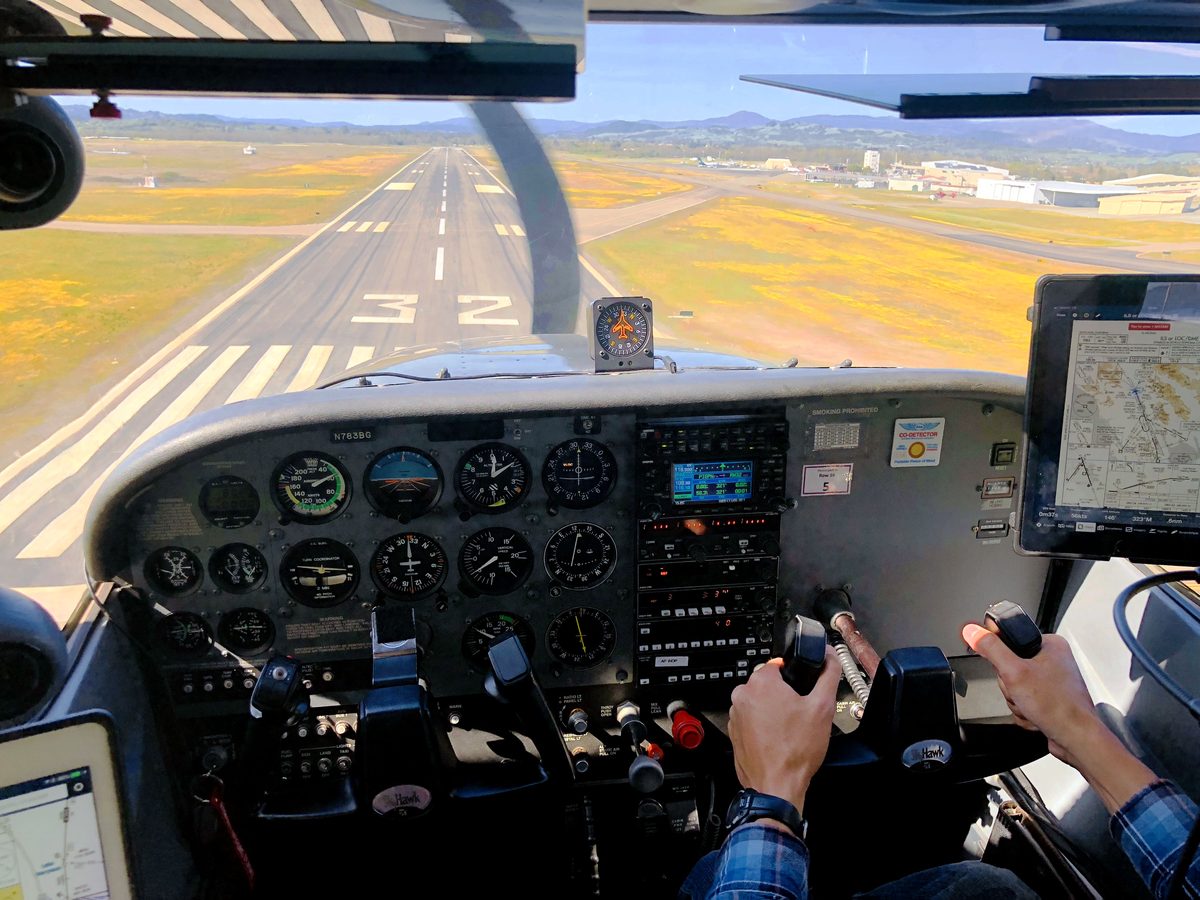
By the post-World War II era, commercial and military cockpits had grown considerably more complex. The classic six-pack layout—airspeed indicator, attitude indicator, altimeter, turn coordinator, heading indicator, and vertical speed indicator—became a standard arrangement that student pilots still learn today. These analog, vacuum-driven or electrically-powered instruments formed the backbone of aviation for decades.
The Transistor Era and Early Avionics
The 1960s and 1970s brought solid-state electronics into the cockpit. Navigation radios, transponders, and early autopilot systems began appearing in general aviation aircraft. VOR navigation became widespread, allowing pilots to track radio beacons and fly defined airways with far greater precision than dead reckoning alone could provide.
The introduction of the Flight Management System (FMS) in commercial aviation during the late 1970s and early 1980s was a watershed moment. For the first time, pilots could pre-program entire routes, fuel loads, and performance parameters into a computerized system that would then guide the aircraft with minimal manual input. The cockpit was becoming less a collection of individual instruments and more an interconnected system.
General aviation lagged somewhat behind, but even smaller aircraft began seeing improvements. Loran-C navigation, digital comm radios, and early moving-map displays started showing up in cockpits of Cessnas and Pipers, giving private pilots capabilities that would have seemed futuristic just a generation earlier.
The Glass Cockpit Revolution
The most dramatic transformation in the evolution of cockpit technology came with the widespread adoption of glass cockpit avionics beginning in the 1990s and accelerating through the 2000s. Instead of dozens of individual instruments, large LCD primary flight displays (PFDs) and multi-function displays (MFDs) consolidated critical information onto a small number of screens.
Systems like the Garmin G1000 brought glass cockpit technology to general aviation aircraft at an accessible price point, fundamentally changing how student pilots learn to fly. A modern glass cockpit integrates:
- Primary Flight Display (PFD): Airspeed, altitude, attitude, heading, and vertical speed all on one screen
- Multi-Function Display (MFD): Moving map, weather overlay, traffic, terrain awareness, and engine monitoring
- GPS/WAAS Navigation: Precision approach capability with sub-meter accuracy
- Autopilot Integration: Tightly coupled flight directors and autopilot systems
- Datalink Weather: Real-time weather radar and PIREP data piped directly to the cockpit
These advances dramatically improved situational awareness—the pilot's continuous understanding of aircraft position, weather environment, traffic, and terrain. Studies in the aviation community have consistently shown that enhanced situational awareness is a key factor in accident prevention, though student pilots must also guard against over-reliance on automation, a well-documented human factors concern.
Synthetic Vision, ADS-B, and the Connected Cockpit
The evolution didn't stop with glass displays. Synthetic Vision Systems (SVS) now generate a three-dimensional computer-generated depiction of terrain, obstacles, and traffic, displayed on the PFD in real time. Even in zero-visibility conditions, a pilot using SVS can see a graphical representation of the mountains, valleys, and runways ahead—a remarkable safety tool when used appropriately.
ADS-B (Automatic Dependent Surveillance–Broadcast) technology transformed how aircraft see and are seen. Rather than relying solely on radar returns, ADS-B-equipped aircraft broadcast their GPS-derived position, altitude, and velocity to ground stations and other aircraft. In the United States, ADS-B Out compliance became required for flight in certain airspace, and ADS-B In provides pilots with free, real-time weather and traffic information in the cockpit.
Tablet-based Electronic Flight Bags (EFBs) have also reshaped the cockpit environment. Apps running on consumer tablets now handle weight and balance calculations, approach chart display, and even weather briefings—tasks that once required bulky paper charts and separate computing devices. These tools, while not certified avionics in most cases, are widely accepted for use in general aviation operations when used within the framework of FAA guidance.
Artificial Intelligence and the Future Cockpit
We are now witnessing the earliest stages of artificial intelligence entering aviation. AI-enhanced flight planning tools, predictive maintenance systems, and voice-controlled avionics interfaces are moving from research labs into certified aircraft. Some modern aircraft feature envelope protection systems that can override pilot inputs to prevent structural damage or aerodynamic stalls, blurring the line between pilot and automation even further.
The rise of Urban Air Mobility (UAM) and electric vertical takeoff and landing (eVTOL) aircraft is pushing cockpit design in entirely new directions. Many eVTOL concepts feature highly automated systems with simplified interfaces designed for pilots transitioning from traditional aircraft—or even for eventual autonomous operation.
For today's student pilots, understanding both the history and the trajectory of cockpit technology is invaluable. FAA written exams regularly test knowledge of avionics systems, human factors related to automation dependence, and the operational concepts behind technologies like ADS-B and WAAS. Grounding yourself in these concepts gives you a real advantage on test day and in the cockpit.
How to Study Cockpit Technology for Your FAA Written Exam
The FAA's Airman Certification Standards (ACS) outline exactly which cockpit systems and avionics concepts you're expected to understand at each certificate level. Knowing where these topics fit within the ACS is the first step in efficient, targeted studying. You can explore ACS codes at Aviation Test Prep to see precisely which knowledge areas are mapped to exam questions.
At Aviation Test Prep, our 5-step study method is designed to help you build genuine understanding, not just memorize answers:
- Learn the concept using structured study materials aligned to the ACS
- Practice with ACS-aligned practice questions targeting specific knowledge areas
- Review explanations from our AI-enhanced question bank to understand why each answer is correct or incorrect
- Identify weak areas using performance tracking across topic categories
- Reinforce and repeat until you demonstrate consistent mastery across all tested areas
Our AI tutor, Ace, is available throughout your study sessions to answer follow-up questions, clarify confusing concepts, and help you connect the dots between related topics—like how glass cockpit integration relates to human factors, or why ADS-B matters for both situational awareness and regulatory compliance.
Our platform is built by FAA-certified instructors who have reviewed our question library for alignment with current ACS standards, so you can study with confidence that you're preparing for the right material. You can browse all available exams to find the test that matches your certificate goal, whether that's Private Pilot, Instrument Rating, Commercial Pilot, or beyond. You can also explore more aviation knowledge articles on our Aviation Test Prep blog.
Conclusion: Appreciate the Past, Master the Present
The evolution of cockpit technology reflects aviation's relentless drive toward safety, efficiency, and capability. From gyroscopic attitude indicators to AI-assisted avionics, each technological leap has demanded that pilots adapt, learn, and maintain a clear understanding of both the tools at their disposal and their limitations. As a student pilot, embracing that same mindset—curiosity, rigor, and respect for the fundamentals—will serve you well on your written exam and throughout your flying career.
Ready to take the next step? Start your free practice test at Aviation Test Prep and see how well you know the systems shaping modern aviation.
Ready to pass your FAA written exam?