The Instrument Checkride: Key Focus Areas
What to Expect on the Instrument Checkride
The instrument checkride is one of the most rewarding—and demanding—milestones in a pilot's training journey. Unlike the private pilot checkride, which leans heavily on visual flying and local procedures, the instrument rating practical test places you inside the clouds (or under the hood) and asks you to demonstrate precision, situational awareness, and sound aeronautical decision-making using only your instruments. Understanding the key focus areas ahead of time is the single best thing you can do to walk into the examiner's office with confidence.
This guide breaks down what FAA-certified instructors consistently identify as the make-or-break topics on the instrument checkride—from the oral exam to the flight portion—so you can structure your study sessions and sim time around what genuinely matters.
The Oral Exam: Where the Instrument Checkride Begins
Many candidates underestimate the depth of the oral examination. The Designated Pilot Examiner (DPE) will draw directly from the Instrument Rating Airman Certification Standards (ACS), which is the official document governing what you must know, understand, and demonstrate. Before you pick up a single approach chart, make sure you have the current ACS in hand and have read it cover to cover.
Currency and Regulatory Requirements
One of the first areas a DPE is likely to probe is instrument currency—the requirements that keep you legal to fly in instrument meteorological conditions (IMC) after you hold the rating. The specifics are spelled out in the FARs, and you should be able to explain not just the raw requirements but also what happens when currency lapses and how you restore it. Rather than cite a specific number here (regulations can be revised), review the current rules on faa.gov/training_testing/testing and know them cold.
Weather and Meteorology
The DPE will expect you to decode METARs, TAFs, PIREPs, AIRMETs, and SIGMETs fluently. You should understand icing conditions, thunderstorm avoidance, and how to interpret prog charts. Beyond reading the products, be ready to explain the why—why does icing form at certain temperatures? Why does wind shear matter on an approach? Conceptual understanding separates a well-prepared candidate from someone who memorized answers.
Aircraft Systems and the IMSAFE / PAVE Framework
Know your aircraft's avionics, autopilot, and pitot-static system thoroughly. The DPE may ask you to trace the instrument air or pitot-static circuit and explain what fails if a particular component is blocked or inoperative. Pair this with a solid command of aeronautical decision-making frameworks like IMSAFE and PAVE—examiners appreciate candidates who can articulate a structured go/no-go thought process.
Key Flight Focus Areas on the Instrument Checkride
The flight portion of the instrument checkride is designed to evaluate not just whether you can fly an approach, but whether you can manage an IFR flight from clearance to landing under realistic pressures. Here are the areas that consistently trip up candidates—and what you should prioritize.
Holding Patterns
Holding pattern entries remain a classic stumbling block. You need to recognize quickly which of the three entry types applies to a given holding instruction, then fly the hold with proper timing, wind correction, and EFC (Expect Further Clearance) awareness. Practice entries from varied headings during sim sessions until your mental math becomes automatic. Sloppy entries at protected airspace boundaries are one of the fastest ways to start a checkride on the wrong foot.
Instrument Approaches: Precision and Non-Precision
Expect to fly at least one precision approach (typically an ILS) and at least one non-precision approach. On the ILS, the DPE is looking for stable glideslope and localizer tracking, proper bracketing technique, and a timely, decisive missed approach if you reach minimums without the required visual references. On non-precision approaches—VOR, RNAV/GPS, or LOC—demonstrate that you understand descent profiles, step-down fixes, and the Continuous Descent Final Approach (CDFA) technique where applicable.
Memorizing approach plates is not the goal. Understanding how to read, brief, and execute any standard approach is. Spend time on ACS code breakdowns to see exactly which instrument approach tasks the ACS evaluates and at what performance standard.
Partial-Panel Flying
The DPE will almost certainly cover partial-panel scenarios—flying with the attitude indicator and heading indicator inoperative, or simulated as failed. You must be comfortable using the magnetic compass, turn coordinator, and VSI together to maintain aircraft control. This is a skill that deteriorates quickly without practice, so log dedicated partial-panel time in both the airplane and the sim before your checkride date.
En Route Navigation and Intercepting Courses
Demonstrate clean intercepts and tracking of VOR radials, GPS courses, and airways. The DPE wants to see you use your avionics purposefully—setting up the CDI correctly, managing FMS pages without heads-down time that compromises safety, and cross-checking against other navigation sources. Situational awareness at all times is the expectation; the DPE may introduce unexpected reroutes or heading changes to see how you respond.
Unusual Attitudes and Stall Awareness
Under the hood, the DPE may induce an unusual attitude and ask you to recover using instruments. Recovery must be prompt and in the correct sequence—power, level the wings, pull or push to reach level flight attitude. Review the instrument scan technique for both nose-high and nose-low scenarios. Related to this, be prepared for questions or demonstrations around stall recognition and avoidance in IMC.
Linking Written Test Knowledge to the Checkride
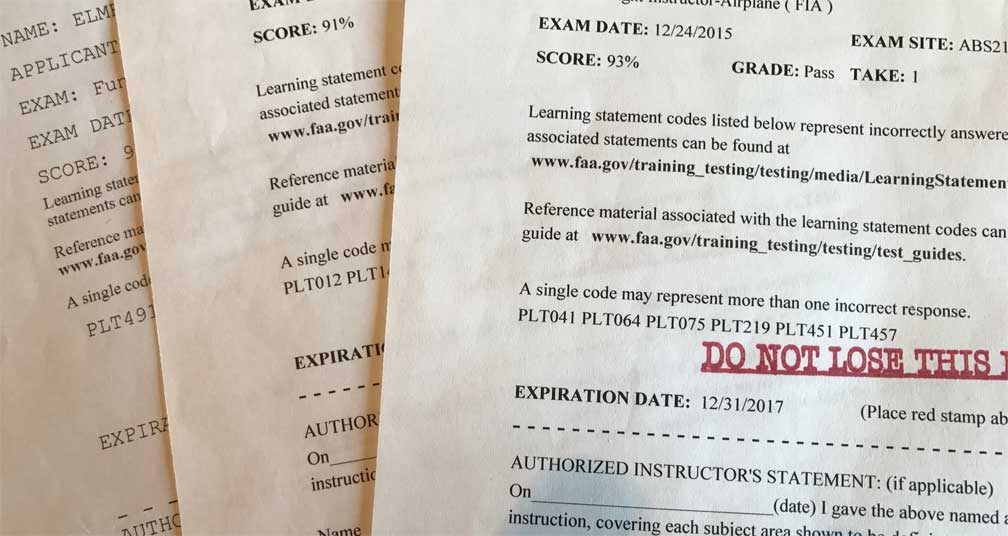
Your instrument rating written test (the Instrument Rating – Airplane knowledge test) must be completed with a passing score before you sit for the checkride—but the knowledge doesn't stop being relevant once you have that passing slip in hand. The oral exam draws from much of the same material. Candidates who treated the written test as a box to check rather than a genuine learning opportunity often find themselves caught off-guard during the oral.
That's why Aviation Test Prep structures its platform around genuine understanding, not rote answer memorization. Our ACS-aligned practice questions mirror the depth of knowledge the ACS demands, and each question comes with an AI-enhanced explanation written to reinforce the concept—not just reveal the answer. Our AI tutor, Ace, is available throughout your study sessions to answer follow-up questions, help you visualize procedures, and guide you through areas where you feel shaky—just like a patient study partner available at any hour.
If you want to see how your knowledge stacks up right now, try our free practice test and identify the gaps before they become surprises on your checkride day.
Building a Smart Instrument Checkride Study Plan
Structured preparation beats cramming every time. Aviation Test Prep's 5-step study method is designed around this principle:
- Assess your baseline with a diagnostic practice session to see which ACS areas need the most work.
- Study the underlying concepts using the FAA Instrument Flying Handbook, approach charts, and AIM chapters relevant to IFR operations.
- Practice with ACS-aligned questions on our platform, letting Ace guide you through any explanations that need deeper context.
- Simulate real checkride conditions—timed, full-length sessions without hints—to build test-day resilience.
- Review your weakest ACS codes repeatedly until your confidence on every task is solid.
You can explore the full range of available exams, including the Instrument Rating – Airplane knowledge test, on our exam browser. Browse the categories, check current ACS alignment notes, and build a study schedule that fits your training timeline.
Final Thoughts on Passing the Instrument Checkride
The instrument checkride is not designed to trick you—it is designed to confirm that you can safely manage an IFR flight from departure to destination, including the inevitable surprises. Examiners are looking for a pilot who understands the system, flies with precision, communicates clearly, and makes sound decisions when things don't go as planned. That kind of readiness doesn't come from skimming the ACS the night before; it comes from months of deliberate practice on the ground and in the air.
Use every resource available: your FAA-certified flight instructor, the current ACS, the FAA Instrument Flying Handbook, and a quality digital study platform that keeps your preparation honest. Think of Aviation Test Prep as the study partner that keeps your ground knowledge sharp between flights, so that when you climb into the airplane with the DPE, your brain is free to fly.
Ready to take the next step? Start your free account at Aviation Test Prep and begin working through ACS-aligned practice questions today—your instrument checkride preparation starts now.
Ready to pass your FAA written exam?