Fabric covering has been part of aviation since the Wright brothers stretched muslin over their first Flyer. Today, certified aircraft still use cotton, linen, and synthetic fabrics stretched over fuselage frames and wing structures, and the doping process remains the primary method for sealing, tightening, and weatherproofing those surfaces. For Aviation Maintenance Technician (AMT) candidates, mastering fabric and dope processes is essential both for the General written knowledge test and for safe hands-on work in the field.
This article walks through every stage of the fabric finishing sequence — from raw fabric selection through final topcoat — explaining the chemistry behind each step, the critical inspection points, and the testable details the FAA expects you to know.
What Is Aircraft Dope?
Aircraft dope is a lacquer-like coating applied to fabric-covered surfaces. It performs three primary jobs: it seals the fabric against moisture and air, it tightens the weave by causing the fabric fibers to shrink slightly as the dope dries and cures, and it strengthens the surface so it can withstand aerodynamic loads. Without dope, fabric would remain porous and loose, unable to generate the smooth aerodynamic surface that safe flight requires.
Types of Aircraft Dope
Nitrate Dope
Nitrate dope is based on nitrocellulose dissolved in organic solvents. It was the original aviation dope and is still used today as a first coat on natural fabrics because it bonds exceptionally well to cotton and linen fibers. However, nitrate dope is highly flammable — both in liquid form and when dried — which is a significant safety and regulatory consideration. Because of this fire hazard, many modern operations limit the total number of nitrate coats applied.
Butyrate Dope
Butyrate dope (cellulose acetate butyrate) replaced nitrate as the primary finishing dope in most modern applications. Butyrate dope is less flammable than nitrate dope, more resistant to UV degradation, and produces a tougher, more durable film. A common practice is to apply one or two coats of nitrate dope first for superior adhesion to the fabric, then follow with multiple coats of butyrate dope for strength and protection. This combination approach is widely used and endorsed in FAA-approved data and Supplemental Type Certificates (STCs).
Rejuvenator
When aged dope becomes brittle and begins to crack or peel, a product called rejuvenator can be applied to soften the existing film and restore some flexibility. Rejuvenator is a blend of plasticizers and solvents compatible with the existing dope. It is not a substitute for a proper recovering job when the fabric itself has deteriorated below acceptable limits, but it extends the service life of sound fabric that has surface dope degradation only.
Common Fabric Materials
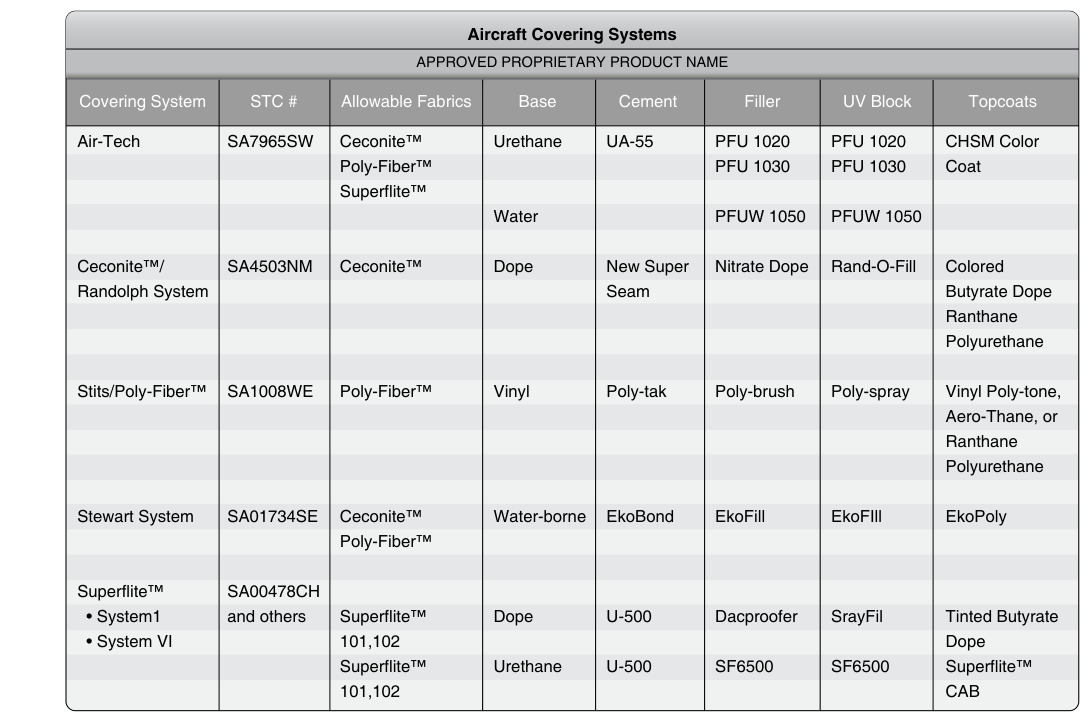
The three main fabric types approved for aircraft use are Grade A cotton, linen, and synthetic fabrics such as polyester (often marketed under trade names like Dacron or Ceconite). Grade A cotton and linen are natural fabrics that accept nitrate and butyrate dopes well. Synthetic fabrics are stronger for a given weight and do not rot, but they require special primers or tie-coats because standard dope does not bond as readily to synthetic fibers. Always verify that the fabric, dope, and application process are covered by an FAA-approved data source — either the original Type Certificate Data Sheet, an STC, or an Advisory Circular such as AC 43.13-1B.
The Fabric Covering and Doping Sequence
The application sequence is just as important as the materials selected. Skipping steps or applying coats in the wrong order produces a finish that may look acceptable on the surface while failing structurally under aerodynamic stress.
- Surface preparation: All metal and wood structure must be primed, treated, or otherwise protected before fabric is applied. Bare steel should be coated with zinc chromate or an equivalent primer. Wood should be varnished. Any sharp edges on ribs or formers must be padded with rib lace tape or edge tape to prevent the fabric from chafing through.
- Fabric attachment: Fabric is stretched over the structure and secured. Attachment methods include sewing, gluing with fabric cement, or a combination. The fabric must be cut on the bias (45 degrees to the weave) at curved sections to reduce puckering. Envelope-style coverings are slipped over a wing panel; blanket-style coverings are draped and cemented in place.
- Shrinking: For cotton and linen, the fabric is shrunk to remove slack. Heat shrinking with a household iron (typically around 250–350°F depending on the fabric type and manufacturer data) tightens the weave before any dope is applied. Synthetic fabrics are heat-shrunk at temperatures specified by their manufacturer — usually lower than those for cotton.
- First dope coat (clear): A thinned coat of clear dope — usually nitrate for cotton or the appropriate tie-coat for synthetics — is brushed on. Thinning is critical; a too-thick first coat seals the outer fibers before penetrating through, resulting in poor bonding. The first coat also causes additional fabric tightening.
- Reinforcing tape: Before the second coat, reinforcing tape is applied over all rib cap strips and along all fabric seams. This tape distributes the load of rib lacing across a wider area of fabric, preventing the lacing cord from cutting through under aerodynamic pressure.
- Rib lacing: On wing panels, the fabric is secured to each rib with rib lacing cord using approved knots and spacing. Lacing spacing is determined by the aircraft's never-exceed speed (Vne). Higher Vne values require closer lacing intervals. AC 43.13-1B contains the standard spacing tables.
- Additional dope coats: Multiple additional clear dope coats are applied, typically three to five in total before pigmented coats, allowing each coat to dry thoroughly before the next. Each coat is lightly sanded after it cures to reduce surface roughness and improve adhesion of the next coat.
- Dope-proof paint: Areas around inspection rings, drain grommets, and openings are coated with dope-proof paint (aluminum paint) to prevent dope from bonding in places where the fabric or fittings must remain accessible or where dope could cause chemical damage to underlying materials.
- Aluminum-pigmented dope: One or two coats of aluminum-pigmented dope are applied over the clear coats. This aluminum coating reflects UV radiation, significantly slowing the degradation of both the dope film and the underlying fabric. UV is one of the primary enemies of aircraft fabric.
- Color coats: Pigmented topcoat dope or compatible lacquer is applied for the final color finish. If non-dope topcoats (such as polyurethane enamels) are used, they must be confirmed compatible with the underlying dope system to avoid lifting or chemical reaction.
Why the Process Matters for Safety
Fabric failures in flight are catastrophic. A large blowout in a control surface fabric can immediately change the aerodynamic balance of the aircraft and may make control impossible. The FAA's maintenance standards are therefore strict: the fabric must meet minimum tensile strength requirements at all times during its service life. AC 43.13-1B specifies that fabric must be replaced when its tensile strength falls below 70% of the original specification for new fabric. The standard test for in-service fabric strength is the Maule Fabric Tester or similar penetrometer device, which measures the force required to puncture the fabric and correlates that to tensile strength.
Key Numbers and Rules
- Grade A cotton minimum new tensile strength: 80 pounds per inch width (both warp and fill directions).
- Replacement threshold: Fabric must be replaced when strength drops below 70% of new specification (approximately 56 lb/in for Grade A cotton).
- Nitrate dope fire hazard: Nitrate dope is highly flammable; proper ventilation and fire suppression are mandatory during application.
- Rib lacing spacing: Determined by Vne; consult AC 43.13-1B tables — closer spacing required at higher speeds.
- Heat shrinking temperatures: Cotton typically 250–350°F; verify with manufacturer data for synthetics (often lower).
- UV protection: Aluminum-pigmented dope coats are required before color coats to retard UV degradation.
- Drain grommets: Must be installed at the lowest point of each fabric bay to allow moisture to escape and prevent pooling inside the fabric envelope.
Common Test Traps
- Confusing flammability ratings: Many students incorrectly assume butyrate dope is non-flammable. It is less flammable than nitrate dope, but it is still flammable. Neither type is safe around open flames or sparks.
- Missing the 70% rule: A common distractor question will state a fabric has 75% of original strength and ask if it must be replaced. At 75% it is still airworthy by the standard (above 70%), but any answer that ignores the 70% threshold entirely is wrong.
- Forgetting aluminum coats before color coats: The aluminum-pigmented dope is not optional decoration — it is a UV barrier that is part of the approved finishing system. Applying color directly over clear dope omits this protection.
- Incorrect dope viscosity for first coat: The first coat must be thinned significantly (often 1:1 dope to thinner) so it penetrates the fabric. Applying undiluted dope for the first coat is a very common error and a frequent test question.
- Synthetic fabric compatibility: Standard nitrate or butyrate dope does not bond well to polyester fabric without an approved primer or tie-coat. Applying dope directly to bare synthetic fabric without proper surface preparation results in delamination.