Fabric covering is one of the oldest and most enduring methods of constructing aircraft surfaces. From the earliest biplanes to modern ultralight and experimental aircraft, woven textile materials stretched over a frame provide a lightweight, aerodynamically smooth surface. For the Aviation Maintenance Technician (AMT), understanding the types, grades, and specifications of approved aircraft fabric is not just a test requirement — it is a fundamental airworthiness responsibility. Choosing the wrong material or misidentifying a grade can compromise structural integrity and lead to catastrophic failure in flight.
This article covers the major fabric types approved for aircraft covering, how grades and specifications are defined, how to evaluate fabric condition, and the regulatory framework that governs fabric selection and installation. Whether you are restoring a classic Piper Cub or maintaining a fabric-covered homebuilt, these principles form the foundation of safe fabric work.
Types of Approved Aircraft Covering Fabrics
The FAA recognizes several categories of fabric material for aircraft covering, each with its own characteristics, advantages, and limitations. The two primary categories are natural fiber fabrics and synthetic fiber fabrics.
Grade A Cotton
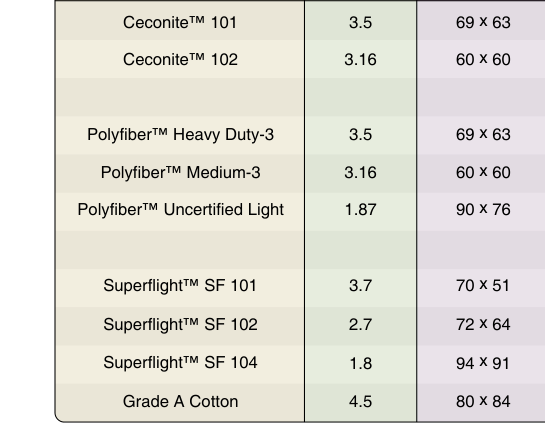
For many decades, Grade A cotton was the standard aircraft covering material and remains an FAA-approved option today. It is a high-quality, tightly woven, unbleached cotton muslin. The FAA specifies minimum requirements for Grade A cotton in terms of thread count and tensile strength. Grade A cotton must have a minimum tensile strength of 80 pounds per inch when new, measured using standard testing methods. The thread count requirement is a minimum of 80 threads per inch in both the warp (lengthwise) and fill (crosswise) directions. These specifications ensure the fabric can withstand the aerodynamic loads placed on covered surfaces during normal flight operations.
Grade A cotton is relatively easy to work with, shrinks predictably when dope is applied, and has a long history of use. Its main disadvantages are susceptibility to rot, mildew, and ultraviolet (UV) degradation if not properly treated and maintained. It also tends to have a shorter service life than synthetic alternatives when exposed to moisture over time.
Linen
Linen, woven from flax fibers, was widely used on early aircraft and is still approved for use, particularly on antique aircraft restorations where historical authenticity is required. Linen is stronger than cotton for a given weight and has good dimensional stability, but it is expensive and less commonly available than cotton or synthetics. Its properties and application requirements are similar to Grade A cotton.
Synthetic Fabrics
Modern aircraft fabric covering has largely transitioned to synthetic polyester fabrics. These materials are approved under FAA Technical Standard Orders (TSOs) or through Supplemental Type Certificates (STCs) and Approved Model Lists (AMLs). Synthetic fabrics offer several significant advantages over natural fibers:
- Resistance to rot and mildew — polyester does not absorb moisture the way cotton does, greatly extending service life.
- UV resistance — synthetics are inherently more resistant to ultraviolet degradation.
- Consistent strength — synthetic fibers have more predictable and uniform tensile characteristics.
- Lighter weight — for equivalent strength, polyester fabrics are often lighter than cotton.
The most commonly used synthetic fabric in general aviation is polyester (Dacron)-based fabric. Well-known commercial systems such as Ceconite, Stits Poly-Fiber, and others use polyester fabric as their base material. These systems are approved through STCs and come with specific instructions that must be followed precisely — the fabric, tapes, cements, and finishing products within a given system are tested as a complete assembly and must not be arbitrarily mixed with products from other systems.
Fabric Grades and Specifications
The grade of a fabric refers to its weight and strength characteristics, which determine what aircraft it is appropriate to cover. The FAA groups aircraft by never-exceed speed (Vne) for the purpose of determining the minimum acceptable fabric grade.
- Aircraft with Vne up to 100 mph — may use Grade A cotton or an approved equivalent synthetic fabric meeting the same minimum 80 lb/inch tensile strength standard.
- Aircraft with Vne between 100 and 160 mph — require fabric with a higher tensile strength, typically rated at a minimum of 100 pounds per inch.
- Aircraft with Vne above 160 mph — require even heavier fabric with higher tensile and tear strength, often in the range of 120 pounds per inch or greater, depending on the aircraft manufacturer's data.
These thresholds are general guidance drawn from FAA Advisory Circular AC 43.13-1B, Acceptable Methods, Techniques, and Practices — Aircraft Inspection and Repair, which is the AMT's primary reference for fabric work on certificated aircraft. Always consult AC 43.13-1B and the specific aircraft's Type Certificate Data Sheet (TCDS) or manufacturer's maintenance manual to confirm the required fabric specification for a given aircraft.
Synthetic fabric systems also carry their own internal grade designations. For example, a given manufacturer may offer a standard-weight and a heavy-weight version of their polyester fabric, each intended for different Vne ranges. The STC or AML documents will specify which grade applies to which aircraft.
Fabric Condition and Serviceability Standards
An equally important skill for the AMT is evaluating the condition of fabric already installed on an aircraft. Fabric degrades over time due to UV exposure, flexing, chemical exposure, and age. The FAA and AC 43.13-1B define minimum strength requirements for fabric that is to remain in service.
The standard serviceability limit for aircraft fabric is that it must retain at least 70 percent of the minimum tensile strength required for that aircraft's Vne fabric grade (not necessarily the fabric's original as-new strength). For an aircraft in the Grade A cotton category, where the required new-fabric strength is 80 lb/inch, the minimum acceptable in-service strength is therefore approximately 56 pounds per inch. Once fabric falls below this threshold, it must be replaced regardless of its outward appearance.
Testing Methods
Field testing of fabric condition can be performed using several methods:
- The punch test — a calibrated fabric tester (such as a Seyboth or similar device) measures the force required to puncture the fabric. Specific pass/fail values are established for each tester and fabric type.
- The tear test — a small sample strip is removed from a non-critical area and pulled to determine actual tensile strength in a laboratory or using a calibrated gauge.
- Visual and tactile inspection — experienced technicians can identify brittleness, crystallization, or powdering of the fabric coating as signs of advanced degradation, although these are supplemental indicators, not substitutes for strength testing.
Why Fabric Selection Matters
Using fabric that does not meet the minimum strength or grade requirement for a specific aircraft is a direct airworthiness violation. Aerodynamic loads on a fabric-covered control surface, for instance, can be substantial during maneuvering flight. Fabric failure in flight can cause loss of control authority or sudden asymmetrical drag, both of which can be catastrophic at low altitudes or during critical phases of flight. The AMT must also remember that fabric covering work on a certificated aircraft constitutes a major repair, which must be properly documented on FAA Form 337 and approved by either an A&P mechanic with Inspection Authorization (IA) or an FAA-approved repair station.
Key Numbers and Rules
- Grade A cotton minimum tensile strength (new): 80 lb/inch
- Grade A cotton minimum thread count: 80 threads per inch in warp and fill
- In-service serviceability limit: 70% of the minimum required tensile strength for that aircraft's fabric grade
- Vne up to 100 mph: Grade A cotton or equivalent synthetic (80 lb/inch minimum)
- Vne 100–160 mph: heavier fabric, minimum ~100 lb/inch
- Vne above 160 mph: consult TCDS/manufacturer data, typically 120+ lb/inch
- Primary reference: AC 43.13-1B, Chapter 2 (fabric covering)
- Fabric work on certificated aircraft = major repair requiring FAA Form 337
- Synthetic covering systems must be used as a complete, STC-approved system — do not mix components between systems
Common Test Traps
- Confusing new vs. in-service strength standards. The 80 lb/inch figure applies to new Grade A cotton; the 70% rule gives you the 56 lb/inch in-service floor. The FAA exam may present both numbers and expect you to know which situation each applies to.
- Assuming visual inspection is sufficient. Fabric can look good but be well below the 70% strength threshold. Only a calibrated punch test or tensile test definitively establishes serviceability.
- Mixing components from different synthetic covering systems. Each STC-approved system is tested and approved as a unit. Using Stits fabric with Ceconite dope, for example, is not covered by either STC and is not airworthy.
- Overlooking the major repair documentation requirement. Students sometimes assume fabric work is a minor repair. On a certificated aircraft, it is a major repair requiring Form 337 and IA or repair station sign-off.
- Applying Grade A cotton to a high-speed aircraft. Grade A cotton is only appropriate for aircraft with Vne at or below 100 mph. Using it on a faster aircraft violates airworthiness standards even if the fabric is brand new.