Fabric covering has been a fundamental part of aircraft construction since the earliest days of aviation, and it remains a relevant, FAA-approved repair and re-covering technique for many certificated aircraft today. Whether you are restoring a classic tube-and-fabric taildragger or covering a newly constructed ultralight-category aircraft, understanding the two primary methods of applying fabric — the pre-sewn envelope method and the blanket method — is a core competency for any AMT seeking airframe certification. Both methods are discussed in the FAA's Aviation Maintenance Technician Handbook – Airframe (FAA-H-8083-31), and both are accepted techniques when performed in accordance with an approved data source such as FAA-approved Supplemental Type Certificates (STCs), manufacturer instructions, or AC 43.13-1B.
These two methods differ in how the fabric is shaped, attached, and finished before the coating process begins. Choosing the right method depends on the geometry of the component being covered, the type of fabric being used, the approved data being followed, and practical shop considerations. Knowing the advantages, limitations, and procedural details of each method will help you both ace the AMT knowledge test and make sound decisions on an actual aircraft.
The Pre-Sewn Envelope Method
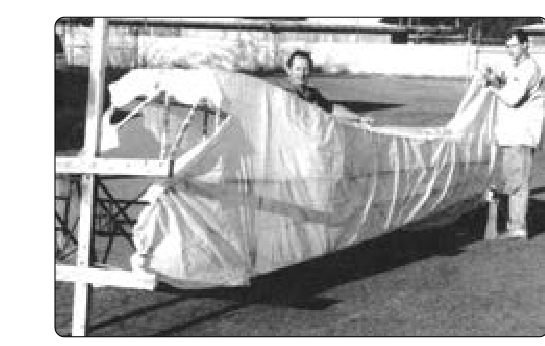
The pre-sewn envelope method involves constructing a fabric covering that is essentially a custom-fitted fabric sleeve or bag, sewn together on a sewing machine before it is ever placed on the aircraft structure. The finished envelope is then slipped over the component — most commonly a wing panel, control surface, or fuselage section — while the fabric is still loose and uncoated. Once correctly positioned, the envelope is secured to the structure and then treated with the appropriate fabric dope, sealant, or heat-shrink process depending on the fabric system approved for that aircraft.
How the Envelope Is Constructed
To build a pre-sewn envelope, the technician first measures the component carefully and cuts fabric panels to match its dimensions, allowing generous margins for seams. The panels are then sewn together using a baseball stitch, a plain stitch, or another approved seam type, depending on the fabric system's instructions. Seams must be positioned to fall on or near structural members when the envelope is installed, so they are supported and not located in a high-stress unsupported area of the covering. The finished envelope looks somewhat like a large fabric pillowcase tailored to the shape of the component.
Once the envelope is slipped onto the structure, it is usually slack and baggy. The technician then applies the coating process — for polyester fabrics such as Poly-Fiber or Ceconite systems, heat from an iron causes the fabric to shrink uniformly and draw tight across the structure, creating a drum-tight, smooth surface. Traditional Grade A cotton fabric systems use dope to both shrink and seal the fabric. The key advantage here is that the sewing takes place away from the aircraft, on a clean workbench with a sewing machine, which is generally easier and produces more consistent, stronger seams than hand-sewing on an installed structure.
Advantages of the Envelope Method
- Stronger, more uniform seams: Machine-sewn seams are consistent and can be easily inspected before installation.
- Cleaner workmanship: Fabric cutting and sewing on a flat workbench is easier than working around a mounted component.
- Well-suited for regular shapes: Wings and control surfaces with consistent cross-sections lend themselves naturally to a sleeve-style envelope.
- Reduced gluing on the structure: The fabric fits over the part and is secured primarily at the edges, simplifying the attachment process.
Limitations of the Envelope Method
- Complex or highly irregular shapes, such as compound-curved fuselages or unusual nacelles, are difficult to fit with a pre-sewn envelope without excessive fabric fullness or puckering at seams.
- The technician must have accurate measurements and sewing skills; a poorly fitted envelope may not shrink evenly or may create unsupported seam placement.
- Re-covering large fuselages using this method on top and bottom separately may result in a visible seam along the longerons that requires careful finishing.
The Blanket Method
The blanket method — sometimes called the pull-and-cement method or the one-piece method — takes a fundamentally different approach. Rather than constructing a pre-fitted sleeve, the technician begins with a single sheet (or blanket) of fabric that is large enough to wrap completely over the component. The fabric is laid over the top of the structure, pulled snugly down and around the edges, and then cemented or glued directly to the structural members, ribs, and framework using the approved fabric cement for the system being used.
How the Blanket Is Applied
The process begins by cutting a piece of fabric that is wider and longer than the component, ensuring enough excess to wrap under and adhere to the opposite side. The fabric is positioned on top of the structure and then pulled over the leading edge (on a wing), around the trailing edge, or around the fuselage framework while maintaining even tension. As the technician pulls the fabric into place, fabric cement is applied to the contact points — typically the cap strips of ribs, the leading edge, trailing edge, and any other structural members. The fabric is pressed firmly into the cement and held or clamped until the adhesive cures.
Once the main blanket is cemented down on all sides, any remaining slack or wrinkles are dealt with using careful trimming or, on heat-shrink fabrics, by applying heat to tighten the covering uniformly. Finishing tapes are then applied over seams, ribs, and edges just as they would be in the envelope method, and the same doping or coating process follows to seal and protect the fabric.
Advantages of the Blanket Method
- Better for complex shapes: Because the fabric conforms as it is pulled around curves and compound surfaces, the blanket method handles irregular fuselage shapes and curved structures more gracefully than a pre-sewn envelope.
- No sewing required initially: The primary attachment is accomplished with cement, which is particularly useful when working with fabric systems or repair situations where machine sewing is impractical.
- Flexibility in the field: The blanket method can be adapted on the fly, making it a practical choice for repair work in hangars or field settings that may not have a full sewing setup.
- Minimal seam placement concerns: Because there are no pre-positioned seams to worry about, the technician has more freedom in how the fabric is oriented and positioned.
Limitations of the Blanket Method
- Achieving perfectly even tension across the blanket requires skill and experience; uneven pulling can result in wrinkles or distortion after shrinking.
- More fabric cement is used on the structure itself, which adds weight if not applied carefully, and excess cement must be cleaned up before finishing.
- On very large flat surfaces such as long wing panels, managing a large blanket of fabric without distortion or uneven tension can be challenging.
Why It Matters: Airworthiness and Approved Data
The distinction between these two methods is not merely academic — it directly affects airworthiness. Regardless of which method is used, the technician must follow the approved data for the specific aircraft and fabric system. FAA-approved STCs for modern fabric systems such as Poly-Fiber and Ceconite specify which methods are acceptable, what types of cement and coatings to use, the required thread types and stitch counts for any sewn seams, and the finishing sequence. AC 43.13-1B provides additional acceptable data for fabric repair on aircraft where no specific manufacturer data exists.
Both methods, when performed correctly and in accordance with approved data, produce a covering that is structurally sound, weather-resistant, and airtight. Either method done incorrectly — with poor seam quality, wrong fabric orientation relative to the warp and fill threads, inadequate cement adhesion, or incorrect shrinkage temperature — can result in a covering that fails in service, creating a serious flight safety hazard.
Key Numbers and Rules
- Fabric must meet minimum tensile strength requirements before covering is accepted; the FAA specifies that new (unused) Grade A cotton aircraft fabric must have a minimum tensile strength of at least 80 pounds per inch of width before treatment, while fabric already in service must be recovered or replaced once its strength deteriorates to 56 pounds per inch of width.
- Seams on pre-sewn envelopes must generally fall over a structural member so they are supported — floating seams in unsupported bays are not acceptable.
- The overlap of fabric when using the blanket method at attachment points must meet the minimum specified by the approved data — typically at least 1 inch of overlap onto the structural member.
- Rib lacing cord spacing and the type of finishing tape applied over ribs must comply with the approved data and are not interchangeable between fabric systems.
- Heat shrinking with an iron must be done at the temperature specified by the fabric manufacturer — typically between 250°F and 350°F depending on the system — to achieve proper tautness without damaging the fabric.
Common Test Traps
- Confusing which method requires sewing: The envelope method uses machine sewing to construct the sleeve before installation; the blanket method relies on cement for primary attachment. The test may describe a scenario and ask you to identify which method is being used.
- Seam placement requirements: Many students forget that sewn seams must be positioned over structural members. A seam floating between ribs in an unsupported bay is not airworthy, regardless of the seam's own strength.
- Fabric orientation: On any method, the fabric's selvage edge (the factory-finished edge of the cloth) runs spanwise on a wing, and the warp threads run in the direction of the greatest stress. Getting this backwards is a common knowledge-test error.
- Approved data specificity: The test frequently emphasizes that you must follow the data approved for that specific aircraft and fabric system — you cannot freely mix techniques from different STCs or swap cement brands between systems.
- Tensile strength and condition of fabric: Students sometimes assume any fabric sold for aviation use is automatically airworthy. The technician must verify that new fabric meets the required minimum tensile strength of 80 lbs/in before application, and fabric already in service that has deteriorated to the 56 lbs/in minimum must be replaced or recovered — regardless of its appearance.