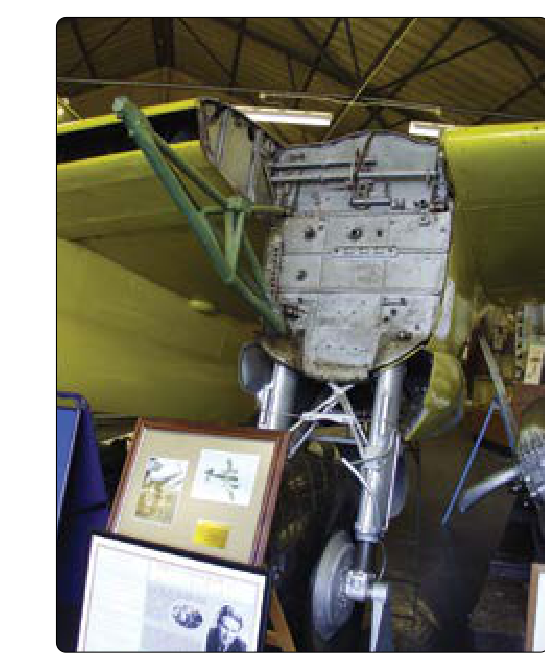
When an aircraft engine is running, it generates not only thrust and power but also tremendous heat, flammable vapors, and the constant risk of fire. The nacelle — the streamlined housing that surrounds an aircraft engine — is engineered as a carefully balanced system: it must allow enough airflow to cool components and purge flammable vapors, while at the same time containing any fire long enough for the crew to detect it and take action. Equally important, the firewall that separates the engine compartment from the rest of the airframe must resist flame and heat penetration. Together, nacelle ventilation and firewall construction form the backbone of aircraft engine fire protection, and they are heavily tested topics on the FAA AMT Powerplant knowledge exam.
Understanding these systems requires more than memorizing a list of approved materials. An aircraft maintenance technician must understand why each design feature exists, what regulations govern it, and how to inspect and maintain these elements so they continue to perform their life-safety function throughout the aircraft's service life.
The Purpose and Design of Engine Nacelle Ventilation
Nacelle ventilation serves two distinct but interrelated functions: cooling and vapor dilution. Engine accessories such as magnetos, carburetors, fuel-injection systems, and hydraulic components all generate heat, and in the confined space of a nacelle the temperature can rise rapidly. Without adequate airflow, heat-sensitive components fail prematurely and the risk of a fire starting increases dramatically.
More critically from a fire-protection standpoint, fuel and oil lines that pass through the nacelle can develop small leaks. These leaks produce flammable vapors that, if allowed to accumulate, can ignite from a hot surface or an electrical spark. Nacelle ventilation is specifically designed to keep these vapor concentrations well below their flammable limits by continuously flushing the compartment with fresh air. The FAA refers to these areas as designated fire zones, and the ventilation design must ensure that any leaked flammable fluid is swept overboard before it can pool or concentrate.
Ventilation airflow is typically provided by ram air entering through openings at the front of the nacelle, flowing rearward through the engine compartment, and exiting through controlled openings at the aft end. The differential pressure created by forward motion of the aircraft drives this flow. On many designs, the exit openings are placed on the lower surface of the nacelle so that any liquid that did leak will be carried away by gravity and airflow rather than pooling near ignition sources.
Design engineers must balance ventilation airflow against drag. Too little ventilation risks vapor accumulation and overheating; too much wastes thrust and creates structural complexity. The arrangement of baffles within the cowling directs airflow specifically around cylinders (in air-cooled engines) and over accessories, ensuring that dead spots — areas where air does not circulate — are minimized. Maintenance technicians must ensure that cowling baffles are intact and properly sealed, because damaged baffles dramatically reduce cooling efficiency and can redirect hot air toward components not designed to withstand elevated temperatures.
Firewall Construction Requirements
The firewall is the single most important structural element in engine fire protection. Its purpose is to act as a barrier that prevents fire originating in the engine compartment from spreading into the cockpit, cabin, wheel wells, fuel tanks, or other areas of the aircraft. Title 14 of the Code of Federal Regulations (14 CFR) Part 23 (for normal-category aircraft) and Part 25 (for transport-category aircraft) establish the certification standards that govern firewall design and material selection, and the FAA's Aviation Maintenance Handbook series elaborates on these for AMT training purposes.
Approved Firewall Materials
The FAA requires that firewalls and firewall components be constructed from fireproof materials. Under FAA definitions, a fireproof material is one that can withstand the effects of fire at least as well as steel. The most commonly used materials include:
- Stainless steel — The most prevalent firewall material. Commonly referenced repair guidance (AC 43.13-1B) cites 0.015 inch (No. 27 gauge corrosion-resistant steel) as typical firewall sheet material, though the actual thickness requirement for a given aircraft depends on its type design data. Stainless steel combines excellent corrosion resistance with the ability to withstand sustained flame impingement without structural failure during the time needed for the crew to shut down the engine and activate fire suppression.
- Titanium — Used in high-performance and transport aircraft where weight savings are critical. Titanium is an approved firewall material because it meets the fireproof standard and offers an excellent strength-to-weight ratio, making it well suited to firewall applications.
- Inconel and other nickel alloys — Found in turbine-powered aircraft where temperatures are extreme. These alloys maintain structural integrity at temperatures that would cause conventional steel to weaken.
Aluminum and magnesium alloys are not acceptable firewall materials because they melt or burn at temperatures that can be reached in an engine compartment fire. This is a commonly tested distinction on the AMT Powerplant exam. Composite materials may be used adjacent to the firewall in non-fire-zone areas, but the firewall itself must meet the fireproof standard.
Firewall Integrity: Penetrations and Sealing
A firewall is only as effective as its weakest point, and its weakest points are almost always the penetrations — the holes made to allow fuel lines, hydraulic lines, electrical wires, control cables, and other systems to pass through. Each penetration must be fitted with a fireproof grommet, fitting, or feedthrough that seals the opening against the passage of flame and fluids. Common solutions include stainless steel bulkhead fittings for fluid lines and fireproof grommets or feedthrough connectors for electrical wiring.
Control cables that pass through the firewall typically use a close-tolerance hole with a fireproof seal or a metal sleeve. The FAA requires that no penetration leave an unsealed gap, because even a small opening can allow hot gases and flame to jet through under the pressure differential that exists during flight.
During maintenance inspections, technicians should carefully examine every firewall penetration for condition. Grommets that have hardened, cracked, or shrunk no longer provide an adequate seal. Fluid line fittings that have been replaced with non-approved hardware compromise the entire firewall system. Any sealant used must be a certified fireproof compound — not a general-purpose silicone that might burn away in a fire.
Firewall Attachment and Structural Role
The firewall is not merely a flat plate bolted to the airframe; in most single-engine aircraft designs it is a primary structural member that carries engine mount loads into the fuselage. This means firewall corrosion, cracks, or deformation are not merely cosmetic defects — they represent both a structural and fire-protection failure. Technicians must inspect firewalls for corrosion at attach points, cracking from vibration, and any distortion caused by previous heat exposure or improper repairs. Any repair to the firewall must restore both its structural integrity and its fireproof characteristics.
Why These Requirements Matter
Engine compartment fires are among the most dangerous emergencies a flight crew can face. A well-designed nacelle ventilation system and an intact firewall can mean the difference between a successful emergency landing and a catastrophic structural failure in flight. The FAA's fire protection requirements are not conservative for the sake of bureaucracy — they are derived from accident investigations and careful analysis of the time required to detect a fire, execute emergency procedures, and land safely.
An improperly maintained ventilation system — blocked exit louvers, damaged baffles, or a missing access panel — can allow flammable vapors to accumulate even when there is no active fire. Inadequate firewall sealing around a replaced wiring harness can turn what might have been a contained engine fire into a cockpit emergency. Every item a technician touches in this area has direct bearing on flight safety, and that is why these topics receive such emphasis in FAA certification testing.
Key Numbers and Rules
- Firewall materials must be fireproof — capable of withstanding the same conditions as steel in a fire environment.
- Stainless steel firewall sheet is commonly referenced at 0.015 inch (No. 27 gauge) per AC 43.13-1B repair guidance, though aircraft type design data governs the specific requirement for a given airframe.
- All firewall penetrations must be sealed with fireproof grommets, fittings, or sealing compounds — not standard rubber or general-purpose silicone.
- Aluminum and magnesium are not acceptable firewall materials.
- Nacelle ventilation must prevent accumulation of flammable vapors in designated fire zones; airflow typically runs front-to-rear and exits at the aft lower nacelle.
- Repairs to firewalls must restore both structural and fire-protection capability and must use approved materials and methods per the aircraft's maintenance manual or FAA-approved data.
- Under 14 CFR Part 23 and Part 25 (e.g., §§23.1191/25.1191 fire zones and §§23.1193/25.1193 cowling and fire zone construction), fire zone components and firewalls must be designed and constructed to confine and prevent the spread of fire between zones.
Common Test Traps
- Confusing fireproof with fire-resistant. The FAA defines these differently. Fireproof means capable of withstanding the effects of fire at least as well as steel. Fire-resistant means capable of withstanding heat and flame at least as well as aluminum alloy. Firewalls must be fireproof; some other components in adjacent zones need only be fire-resistant. Mixing these up is a very common exam mistake.
- Thinking aluminum is acceptable for firewalls. Aluminum is widely used throughout aircraft structure, so students sometimes assume it can be used everywhere. It cannot be used in firewall construction because its melting point is too low.
- Overlooking penetration sealing. Exam questions often describe a firewall repair scenario where new lines or wires were routed through the firewall without proper fireproof grommets. Students must recognize this as a code violation and an airworthiness defect.
- Assuming cowling damage only affects cooling. Damaged nacelle baffles and cowling panels affect not just cylinder head temperatures but also vapor-purging airflow in the engine compartment — a fire protection concern, not just a cooling concern.
- Ignoring the structural role of the firewall. Some students focus solely on the heat-barrier function and forget that the firewall often carries engine mount loads. Any firewall repair must address both functions, and a structurally compromised firewall is an airworthiness issue independent of its fire-protection status.