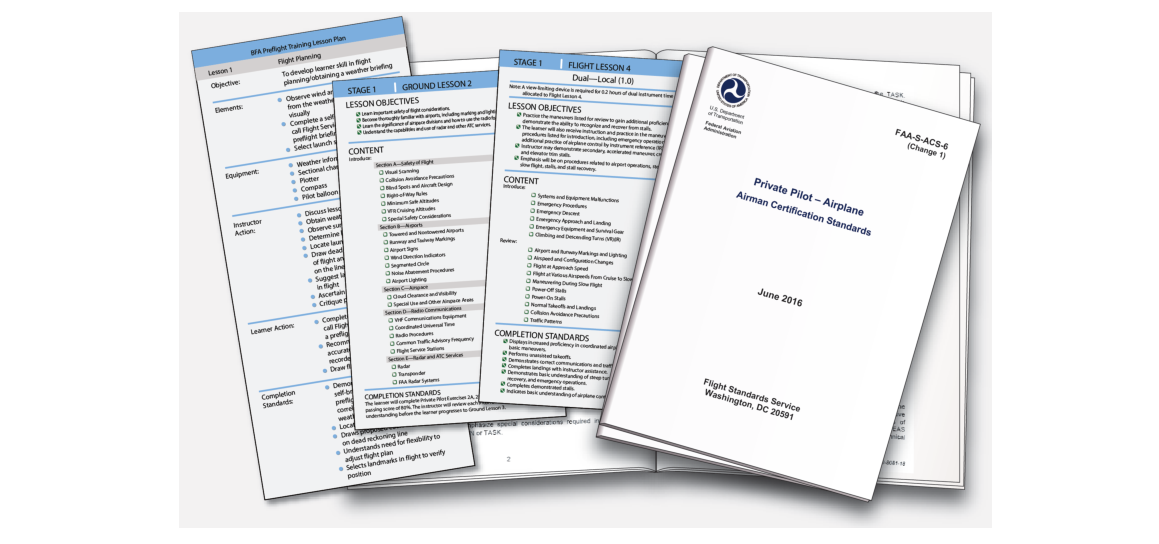
Every flight instructor faces a fundamental question that shapes every lesson, every debrief, and every endorsement decision: How do I know whether my student is truly learning — and whether that learning has reached the standard required for safety? The FAA's Aviation Instructor's Handbook (FAA-H-8083-9) identifies two complementary and essential types of assessment as the backbone of effective instruction: formative assessment and summative assessment. These are not merely academic categories. They define the instructor's entire feedback strategy, structure the student's learning arc, and directly influence cockpit safety. Mastering the distinction — and knowing precisely when to apply each — is one of the most practically powerful skills a flight or ground instructor can develop.
What Is Formative Assessment?
Formative assessment is any evaluation conducted during the learning process with the explicit purpose of improving that process while it is still underway. The defining feature is intent: formative assessment does not judge final achievement. It gathers diagnostic information so the instructor can adjust teaching strategies and so the student can correct errors, fill knowledge gaps, or refine motor skills before they calcify into bad habits.
In a flight training context, formative assessment appears in many forms. An instructor asking a student to explain the relationship between angle of attack and lift during preflight briefing is performing formative assessment. Watching a student's rudder coordination during slow flight and immediately providing a correction is formative. Conducting a structured debrief after a cross-country leg — noting what went well and what must improve before the next flight — is formative. Even a short, ungraded quiz on airspace dimensions at the midpoint of a ground lesson is formative, provided its purpose is to reveal gaps for the instructor to address, not to assign a final mark.
The Aviation Instructor's Handbook emphasizes that the ultimate goal of any assessment is to improve student performance, not merely to measure it. Formative assessment operationalizes that philosophy continuously. It is the feedback loop that keeps instruction calibrated to the student's actual needs rather than to some imagined average learner.
What Is Summative Assessment?
Summative assessment is a formal evaluation conducted after a defined period of instruction to determine whether the student has achieved a specified standard. Where formative assessment asks, How is the student progressing?, summative assessment asks, Has the student arrived? The result typically has direct consequences: a student progresses to the next stage, receives a solo endorsement, or earns a certificate — or does not.
Classic summative assessments in aviation training include the FAA Knowledge Test (written examination), a stage-check oral given at the end of a syllabus stage, the pre-solo knowledge test required by 14 CFR 61.87(b), and most definitively, the FAA Practical Test (the checkride) evaluated against the Airman Certification Standards (ACS). Each of these measurements is taken at a defined endpoint, scored against a published standard, and results in a consequential decision. The emphasis is on whether the student meets the minimum acceptable performance level — a gate through which they either pass or must continue training before attempting again.
How the Two Types Work Together
The most effective flight training programs deliberately integrate both types. Think of formative assessment as the continuous course corrections a pilot makes while navigating cross-country, and summative assessment as the final fix confirming the destination was actually reached. Neither replaces the other. Without ongoing formative feedback, errors accumulate invisibly until they surface dangerously at a stage check or practical test. Without a rigorous summative checkpoint, there is no reliable confirmation that accumulated instruction has actually produced competent, safe performance.
A well-designed lesson sequence illustrates the integration clearly. During a unit on instrument approaches, the instructor might ask informal questions at each preflight briefing to probe understanding of approach plate symbology — formative. Mid-unit, the instructor may give a short written quiz on briefing an ILS approach to identify which students are confused about decision altitude versus minimum descent altitude — still formative, because the purpose is remediation. At the end of the instrument approaches stage, the instructor administers a formal stage-check oral and flight evaluation scored against instrument ACS standards — summative. The formative work feeds the summative result; the summative result validates whether the formative feedback loop actually worked.
The Critique as Formative Tool
The post-flight critique deserves special attention because the Aviation Instructor's Handbook treats it as one of the primary instructional tools available to a flight instructor. A critique is fundamentally formative: its purpose is to help the student understand what happened, why it happened, and what to do differently next time. Effective critiques, as described in FAA-H-8083-9, are specific, objective, and constructive. They reference observable behavior rather than character, and they prioritize the most safety-critical items first. A critique that merely lists failures without guiding future improvement has abandoned its formative function and done the student a disservice. The instructor should always close a critique with a clear, actionable plan for the next lesson — that forward-looking element is the essence of formative purpose.
Why Confusing the Two Creates Problems
When instructors blur the boundary between formative and summative assessment, predictable problems emerge. An instructor who treats every debrief like a checkride — rendering verdicts instead of offering guidance — produces anxious students who stop taking the productive learning risks that genuine skill development requires. Research cited in the Aviation Instructor's Handbook supports the view that a supportive, feedback-rich environment accelerates learning. Conversely, an instructor who never formally measures whether a student has reached a required standard before a solo endorsement or stage progression erodes safety margins and undermines the intent of the regulatory framework. Title 14 CFR Part 61 requires instructors to make specific findings — such as satisfactory completion of required training, knowledge, or skill — before granting endorsements; in practical terms, these regulatory findings function much like summative judgments, confirming a standard has been met before progression is authorized.
Key Numbers, Rules, and Reference Points
- 14 CFR 61.87(b) requires that before a student pilot's first solo flight, the student pass a pre-solo knowledge test administered and graded by the authorizing instructor, covering applicable regulations and the training aircraft's flight characteristics — a regulatory assessment that functions in a summative way, confirming a standard has been reached.
- ACS standards define the summative bar for practical tests. Each task specifies knowledge, risk management, and skill elements that must be demonstrated to an acceptable level.
- FAA-H-8083-9 addresses assessment, distinguishing the diagnostic (formative) and evaluative (summative) functions, and describes characteristics of an effective critique, including being objective, flexible, acceptable, comprehensive, constructive, organized, specific, and thoughtful.
- Stage checks within a structured syllabus are summative relative to the completed stage but may include formative elements if the check instructor identifies items for remediation before approving progression.
- The FAA Practical Test (checkride) is purely summative. Although a Designated Pilot Examiner (DPE) may explain certain regulatory points during the oral, the official evaluation is a standardized, consequential judgment — it is not a teaching session.
Common Test Traps for Flight and Ground Instructor Applicants
- Judging by timing alone. A test question may describe a mid-lesson quiz and ask whether it is formative or summative. The correct answer depends on purpose, not timing. A quiz given to guide ongoing instruction is formative even if it looks like a test.
- Assuming formative means informal. Structured, graded quizzes can still be formative if the intent is diagnostic and the results are used to adjust instruction rather than to assign a final evaluation.
- Forgetting that the critique is formative. Questions about post-flight critiques often appear on the Flight Instructor Knowledge Test. The critique is a formative tool by definition — it feeds improvement, not a pass/fail determination.
- Treating the checkride as partly formative. The practical test is entirely summative. Do not select answer choices suggesting the DPE is there to teach or that the test simultaneously guides learning.
- Overlooking the solo endorsement requirement. The pre-solo knowledge test under 14 CFR 61.87(b) functions as a regulatory summative checkpoint, not merely a teaching exercise. An instructor who treats it casually is misunderstanding both the law and the type of assessment it represents.
Memory Aid
A widely used contrast that maps to the FAA handbook's intent: Formative = Feeds growth (ongoing, diagnostic, improvement-focused); Summative = Sums up achievement (endpoint, consequential, standard-referenced). Some instructors extend this to the phrase "Formative forms the student; Summative sums up the result" — a straightforward reminder that matches the handbook's treatment of each type's distinct purpose.