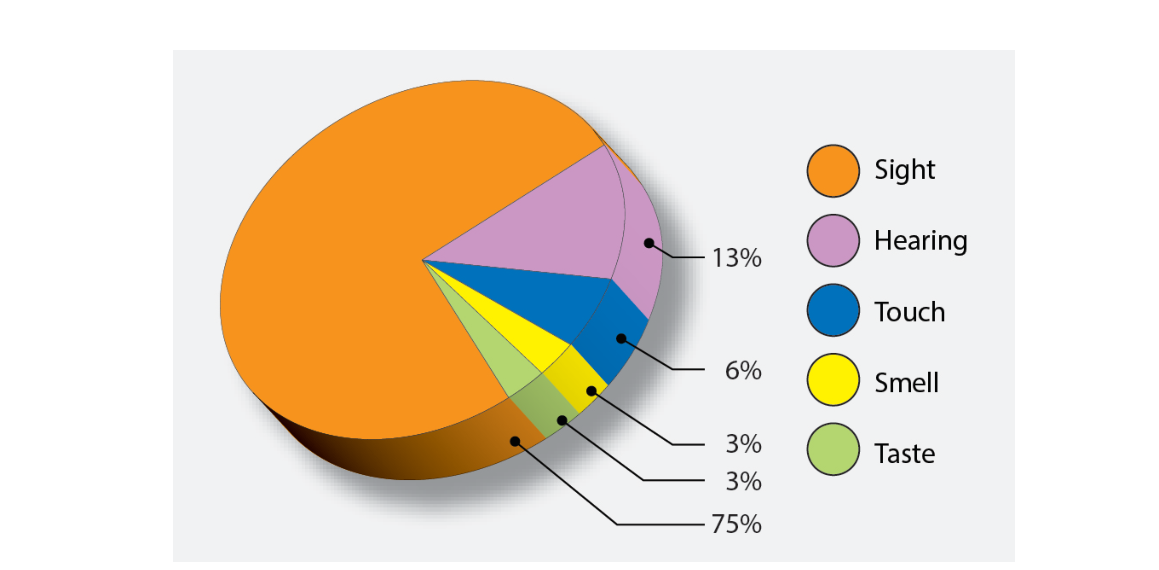
Before a student can truly learn to fly, something must happen in the mind before any skill is practiced or fact memorized. According to the FAA's Aviation Instructor's Handbook (FAA-H-8083-9), learning begins with perception—the process by which a person takes in raw sensory data and gives it meaning. Every time a student sits in the cockpit, they are bombarded with sights, sounds, smells, and physical sensations. But raw sensation alone is not learning. It is only when the brain filters, organizes, and attaches meaning to those stimuli that perception occurs. In other words, a student does not simply "see" the airspeed indicator—they perceive what the needle's position means relative to their current flight situation.
Perception is heavily shaped by prior experience, physical condition, and emotional state. A student who is anxious, fatigued, or distracted will perceive the same cockpit environment very differently than one who is rested and focused. This is why instructors must pay close attention to the whole student, not just the maneuver being demonstrated. Equally important is the fact that people tend to perceive what they expect to perceive. If a student has a strong preconception about how a stall feels, they may misinterpret early buffet cues or ignore instrument indications that contradict their expectation. The instructor's job is to guide students toward accurate, relevant perceptions rather than letting faulty ones take root.
Why it matters
Once meaningful perceptions accumulate, the learner can reach insight—the sudden or gradual recognition of how individual pieces of knowledge fit together into a larger, unified understanding. Insight is more than memorizing facts; it is the "aha" moment when a student realizes, for example, that angle of attack, not airspeed alone, determines when a wing stalls. That conceptual connection allows the student to apply the principle across many different aircraft, altitudes, and configurations—not just repeat a memorized answer on a test.
Insight is the bridge between isolated facts and genuine airmanship. Without it, a student may pass a knowledge test yet still make dangerous decisions in the airplane because they lack the mental framework to connect cause and effect. Instructors accelerate insight by presenting information in a meaningful context, drawing comparisons to things the student already understands, and asking questions that prompt the student to discover relationships rather than simply receive them. When a student says, "Oh—that's why we add power in a turn to maintain altitude," that is insight in action.
The Aviation Instructor's Handbook also notes that insight frequently involves the reorganization of experience. A student who once thought of each checklist item as a separate task may suddenly perceive the entire pre-takeoff flow as an integrated safety system. That reorganization is a sign of genuine learning progress and a direct result of the instructor crafting lessons that build on prior perceptions meaningfully.
Memory aid
Think of learning as a two-step ladder: P → I (Perception then Insight). You must perceive before you can integrate. Every rung of the ladder depends on the one below it—no accurate perception means no reliable insight.
Common test traps
- Perception is not the same as sensation. Sensation is the raw input from the senses; perception is the meaning the brain assigns to it. Test questions often try to blur this distinction.
- Insight cannot be forced by simply repeating information. Telling a student the same fact louder or more times does not automatically create insight—the instructor must present information in a way that reveals relationships and context.
- Emotional and physical state directly affects perception. A stressed or fatigued student may perceive the same situation inaccurately, which is why the IMSAFE checklist applies to students as well as pilots-in-command.
- Insight can be negative. If a student develops an incorrect conceptual framework—such as believing that adding back pressure always prevents a stall—that faulty insight can be harder to correct than no insight at all. Early accuracy in instruction matters enormously.