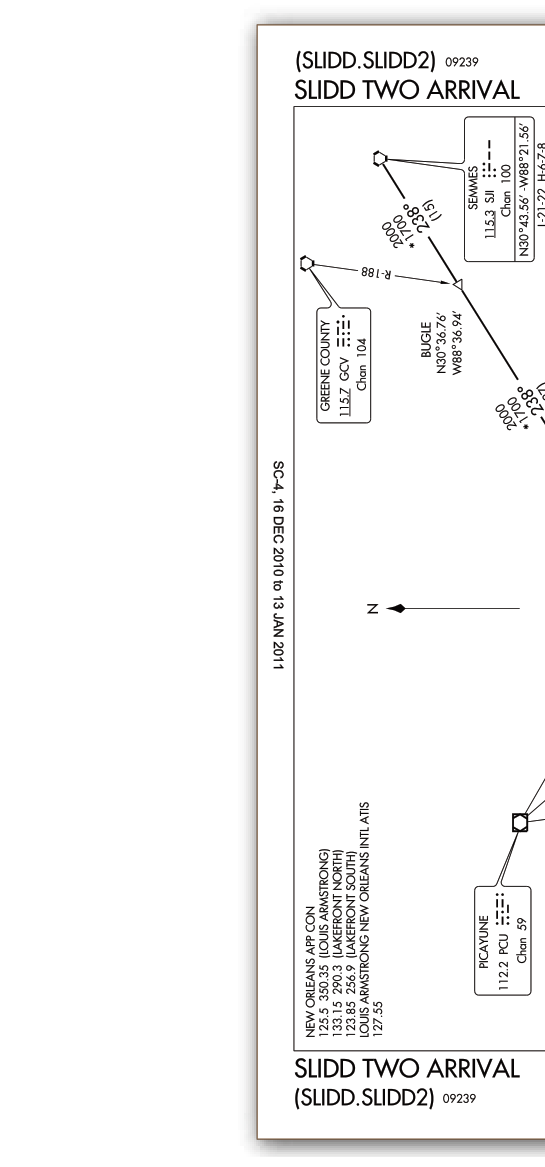
A Standard Terminal Arrival Route, universally abbreviated as STAR, is a published, FAA-designed flight procedure that bridges the gap between the en route airway structure and the initial approach fix (IAF) or meter fix at a destination airport. Just as a Standard Instrument Departure (SID) organizes the flow of aircraft leaving a busy terminal area, the STAR organizes arrivals — reducing controller workload, cutting down on lengthy verbal clearances, and helping pilots anticipate the routing before they ever leave the ground. For instrument-rated pilots and those studying for the instrument rating, understanding STARs is not optional; they appear on the FAA knowledge test, in the oral exam, and in everyday IFR operations at most major and mid-size airports.
This article walks through exactly what a STAR is, how to interpret one, when you are required to comply with it, and the specific pilot responsibilities that come with its acceptance. We will also cover altitude and speed restrictions, the meaning of expect altitudes, and the critical distinctions the FAA loves to test.
What a STAR Is and How It Works
A STAR is a charted procedure published in the FAA's Terminal Procedures Publication (the same binder or digital package that contains approach plates). Each STAR has a name — typically a proper noun followed by a number and a letter, such as "HAWKZ ONE ARRIVAL" (a hypothetical example, not an actual published procedure) — and covers a specific geographic area around a given airport or group of airports. One arrival procedure can serve multiple transition fixes, allowing aircraft converging from different directions to join a common route that eventually funnels them into the terminal area in an organized, predictable sequence.
On the chart itself, you will find: the name of the procedure and airports it serves, a planview (top-down map) of the routing with fixes, airways, and radials labeled, altitude restrictions at specific fixes (either mandatory, minimum, maximum, or "expect" altitudes), speed restrictions at specific fixes, and notes about equipment requirements or special procedures. You may also see a transition name — a named segment that connects a specific en route fix to the main STAR trunk route.
Altitude Restriction Symbology
Altitude restrictions on STARs use standardized symbols. An altitude printed alone (e.g., 11,000), without an underline or overline, is typically a planning or recommended altitude rather than a mandatory crossing restriction; mandatory crossing altitudes are specifically annotated per chart convention. An altitude with an underline indicates at or above. An altitude with an overline indicates at or below. When both an underline and overline appear, or the altitude is expressed as a range (e.g., "at or above 8,000, at or below 10,000"), it means cross within that window. These restrictions are mandatory when the STAR has been accepted, unless ATC issues an amendment.
When Is a STAR Required?
Under 14 CFR Part 91, no regulation outright requires a pilot to accept a STAR. However, ATC may assign one, and once you accept the clearance that includes a STAR, you are legally obligated to fly it as published — including all charted altitude and speed restrictions — unless ATC amends the clearance or you request and receive an amendment. If you do not want a STAR, you must notify ATC with the phrase "No STAR" in your flight plan remarks; this is the standardized method, as "Unable STAR" is not standardized AIM/Pilot-Controller Glossary phraseology. ATC will generally accommodate you if traffic allows, but in a high-density environment you may be asked to accept it anyway.
One important prerequisite: to accept a STAR, you must have the chart on board. As a matter of standard operating practice and sound judgment, pilots should not accept a STAR unless they have the procedure available in printed or electronic form and can comply with it. This is directly analogous to the requirement for instrument approach procedures — you cannot fly a procedure you cannot reference.
Speed Restrictions on STARs
Many STARs include charted speed restrictions at specific fixes. A common example is a restriction such as "250 knots or less" at a particular fix, or a more specific value like "210 knots" printed directly on the chart. These restrictions are mandatory when the STAR is in effect. Additionally, recall that 14 CFR 91.117 prohibits flight below 10,000 feet MSL at speeds exceeding 250 KIAS in the contiguous U.S. (with limited exceptions for certain aircraft), so that regulatory speed limit also applies throughout the descent. ATC can issue a "resume normal speed" instruction to cancel a charted speed restriction, or they can assign a specific speed, which supersedes the charted value.
Expect Altitudes — A Critical Distinction
One of the most important and frequently tested concepts on STARs is the meaning of an "expect altitude." A STAR may contain language such as "Expect 10,000 feet 10 miles before FIXXX." This phrasing does not authorize the pilot to descend to that altitude. It is planning information — published so that you can anticipate the clearance, brief it, and use it for lost-communications planning. You may not descend to an "expect" altitude until ATC actually clears you to that altitude (or lower) or until you lose communications and your lost-comm procedure requires it.
This distinction separates "expect" altitudes from mandatory crossing restrictions. A mandatory fix crossing restriction (e.g., "cross HAWKZ at 11,000") is an active requirement the moment you accept the STAR. An expect altitude is future planning information only. Getting these mixed up on the written exam — or in the cockpit — can lead to an altitude deviation.
Pilot Responsibilities When Flying a STAR
Accepting a STAR comes with clear responsibilities:
- Chart requirement: Have the current procedure on board (paper or electronic) and brief it before departure or well before arrival.
- Comply with all altitude restrictions: Unless ATC amends them, cross all mandatory fixes at the charted altitude or within the charted window.
- Comply with all speed restrictions: Reduce to or maintain the charted speed at the specified fix unless ATC assigns a different speed.
- Fly the routing: Track the published course from fix to fix. Do not deviate from the charted routing without ATC authorization.
- Monitor for amendments: ATC routinely vectors aircraft off the STAR in busy environments. Listen carefully and comply with each instruction. If you receive radar vectors, you are no longer flying the charted routing and must await further ATC guidance to join the approach or be re-cleared.
- Communicate equipment limitations: If you cannot comply with any portion of the STAR (e.g., a required navigational fix your equipment cannot identify, or a speed restriction your aircraft cannot meet), advise ATC immediately so they can issue amended instructions.
RNAV STARs and Equipment Requirements
Modern STARs are frequently RNAV (Area Navigation) procedures, requiring GPS or other approved RNAV equipment. An RNAV STAR will be labeled as such in the title and notes. If your aircraft is not RNAV-equipped or your equipment is inoperative, you cannot accept an RNAV STAR. The notes section of the chart will specify required equipment, and the FAA's NOTAM system may also publish temporary restrictions or amendments. Always check NOTAMs during preflight planning.
Key Numbers and Rules
- Charted altitude restrictions on an accepted STAR are mandatory unless ATC amends them.
- "Expect" altitudes are planning information only — not a clearance to descend.
- Speed below 10,000 feet MSL is limited to 250 KIAS by 14 CFR 91.117, regardless of STAR content.
- You must have the STAR chart on board to accept and fly the procedure.
- To decline a STAR, note "No STAR" in flight plan remarks or advise ATC verbally.
- ATC may vector you off a STAR at any time; once vectored, you are no longer flying the published routing and must follow ATC instructions to rejoin.
- RNAV STARs require appropriate navigation equipment — verify before accepting.
Common Test Traps
- Confusing "expect" with a clearance: The FAA loves questions where the pilot sees an "expect 8,000 feet" note and incorrectly descends. Remember: expect altitudes are for planning and lost-comm only — never descend until cleared.
- Assuming altitude restrictions are optional: Once you accept a STAR, all charted fix-crossing altitudes are mandatory. Many students think ATC will always repeat them verbally — they will not.
- Forgetting the chart requirement: You cannot accept a STAR you do not have. ATC is not required to re-read the entire procedure to you in your clearance.
- Speed restrictions beneath the surface: Students sometimes apply STAR speed restrictions only to en route portions. Remember that 14 CFR 91.117's 250-knot limit applies below 10,000 feet regardless, and charted STAR speeds may be even more restrictive.
- Radar vectors as a STAR cancellation: When ATC says "fly heading 270, vectors for the ILS," they have effectively taken you off the STAR. You are no longer bound by subsequent STAR waypoints — follow the vectors and await further clearance for the approach.