What Is Turbine Inlet Temperature and Why Does It Define Engine Life?
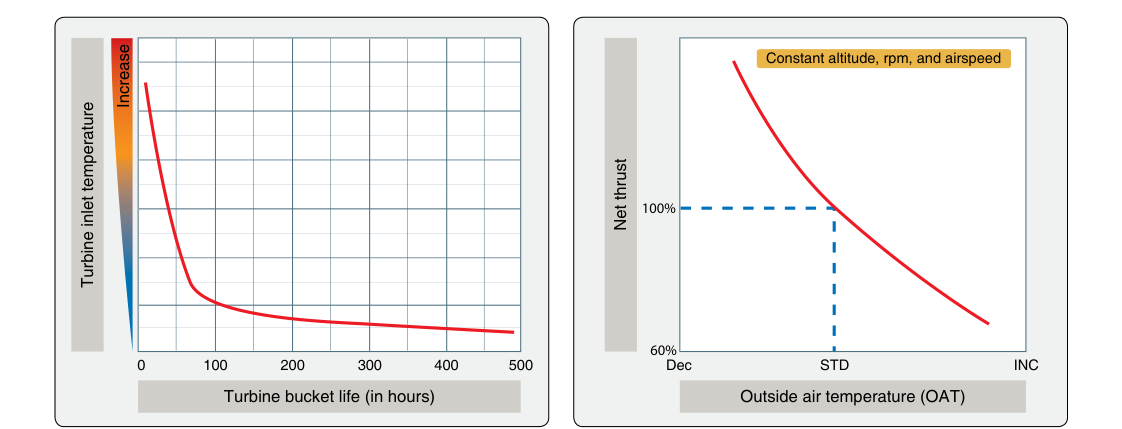
Turbine Inlet Temperature (TIT)—also called Turbine Entry Temperature (TET) in some manufacturer documentation, or represented indirectly by Exhaust Gas Temperature (EGT) in many certified installations—is the temperature of the hot combustion gases at the point they first contact the first-stage turbine rotor blades. This single parameter is arguably the most operationally critical number a turbine pilot monitors, because the first-stage turbine operates in the most thermally and mechanically severe environment inside the entire engine. The blades must simultaneously endure extreme heat, high centrifugal stress from rotation, and corrosive oxidizing gases—all while maintaining dimensional stability within fractions of a millimeter. Every degree above the approved limit accelerates three primary degradation mechanisms: oxidation of the blade surface, thermal fatigue from cyclic heating and cooling, and creep, which is the slow plastic deformation of metal under sustained high temperature and stress. Understanding TIT limits is therefore not just a regulatory compliance issue—it is the foundation of turbine engine longevity and flight safety.
How Turbine Temperature Is Measured in Practice
A key technical subtlety that appears on the Airline Transport Pilot written test is that TIT is rarely measured directly at the turbine inlet in production engines. Thermocouple sensors capable of surviving indefinitely at true first-stage turbine inlet conditions—temperatures that can exceed 2,500 °F (1,370 °C) in some high-performance turbofan designs, though the exact figure varies considerably by engine type and is not a standardized value—do not exist as durable production hardware. Instead, EGT probes (chromel-alumel thermocouples arranged in a harness around the exhaust section or turbine exit) measure gas temperature at a cooler downstream location. The engine manufacturer then establishes a calibrated relationship between EGT and the actual turbine inlet condition, and the AFM limit is expressed in terms of whichever parameter the cockpit gauge actually displays. Pilots must consult the AFM carefully: in some turboprops, TIT is the displayed and limiting parameter; in many turbofans, EGT is. They are not interchangeable values, and confusing them is a classic test trap.
AFM Power Settings and Their Temperature Limits
The FAA-approved Airplane Flight Manual (AFM) and the associated engine Type Certificate Data Sheet establish distinct temperature limits for each recognized power regime. Understanding the hierarchy is essential:
- Maximum Takeoff Thrust (TO): The highest approved power rating. It corresponds to the highest approved TIT or EGT. Because sustained operation at this thermal level would consume blade life at an unacceptable rate, this rating is time-limited—five minutes is a common limit on many engines, but the specific time is always AFM-specific and can vary by engine and aircraft type. The intent of this window is to get the aircraft safely airborne and through the initial climb segment, not to serve as a cruise power setting.
- Maximum Continuous Thrust (MCT): Set at a lower power and lower temperature than takeoff thrust. This rating has no time limit and may be used indefinitely as long as system parameters remain within limits. It is the ceiling for en-route engine-out operations in multi-engine aircraft.
- Maximum Climb Thrust: Typically below MCT and often the normal setting used for climb segments. It is also not time-limited and is optimized for the thermal budget of a sustained climb profile.
- Ground Idle and Flight Idle: The lowest power states. TIT at idle is well within limits, but proper monitoring during engine starting is critical because the transition from ignition to stable idle is when thermal exceedances most frequently occur.
Starting: Hot Starts and Hung Starts
Ground-run thermal events are among the most common and costly sources of turbine damage. A hot start occurs when TIT or EGT rises above the AFM starting limit before the engine reaches self-sustaining speed—meaning the turbine is absorbing heat faster than the compressor can provide cooling airflow. Causes include residual fuel in the combustion chamber from a prior start attempt, insufficient starter motoring time, contaminated fuel nozzles producing uneven combustion, or attempting a start with a weak battery that cannot spin the engine to adequate motoring speed. The correct response to a rising temperature approaching or reaching the start limit is immediate engine shutdown, followed by a mandatory motoring cycle to purge the combustor and a maintenance inspection before another attempt.
A hung start (also called a false start) occurs when the engine lights successfully and EGT rises normally, but the engine fails to accelerate to idle speed. The compressor is not delivering sufficient airflow, fuel continues to flow, and heat builds rapidly. Like a hot start, this requires immediate shutdown. Both conditions must be documented in the aircraft maintenance logbook and evaluated by a certificated mechanic before the next flight. There is no pilot authority to clear a TIT exceedance and continue; that determination belongs to maintenance personnel using the engine manufacturer's approved inspection procedures.
High-Altitude and Hot-and-High Operations
Altitude introduces a subtle but important thermal challenge. As an aircraft climbs, ambient air density decreases. Lower density means lower mass airflow through the engine for a given throttle position. To maintain a specific thrust level, the fuel control unit (FCU or FADEC) must increase the fuel-to-air ratio, which raises combustion temperature. During a step-climb to a higher flight level at or near maximum cruise thrust, pilots will observe TIT or EGT creeping upward as density decreases—even if the throttle lever does not move. This is expected behavior, but it demands active monitoring. If the temperature approaches the limit, power must be reduced, and the planned altitude may need to be delayed until the aircraft is lighter and the engines can carry the altitude without over-temping.
Hot-and-high ground operations compound the risk from the opposite direction. High density altitude reduces mass airflow on the ground just as it does aloft, which limits the engine's ability to cool itself through airflow. During takeoff roll at a high-elevation airport on a hot day, the pilot must set power precisely using the AFM performance charts, which may call for a derate (a deliberately reduced thrust setting) or a reduced-thrust takeoff (also called assumed temperature or flex thrust in some type-specific procedures). These techniques deliberately keep TIT below the maximum limit, trading a small performance margin for significantly extended engine life and reduced risk of an exceedance event.
Key Numbers, Rules, and Regulatory References
- TIT and EGT limits are type-specific and found in the FAA-approved AFM; no universal redline value applies to all engines.
- Maximum takeoff thrust is often time-limited to around five minutes on many engines, but always verify the AFM for the specific aircraft, since this figure is not a universal FAA-mandated standard.
- Maximum continuous thrust is not time-limited; it may be used for the duration of a flight segment as conditions require.
- Any TIT or EGT exceedance—no matter how brief—requires a logbook entry and engineering review per the engine manufacturer's maintenance manual before further flight.
- 14 CFR Part 91.7 places responsibility on the pilot in command for determining that the aircraft is in condition for safe flight; operating with an uncleared exceedance is inconsistent with that responsibility and should be treated as a maintenance-hold item pending certificated mechanic review.
- FADEC-equipped engines automatically record exceedance data in a non-volatile memory that maintenance personnel download during inspections—pilots cannot erase the record by simply logging the event themselves.
Common Test Traps
- TIT vs. EGT are not the same value: EGT is measured downstream of the turbine inlet, after the gas has given up energy to the turbine stages, and the AFM specifies which gauge is the limiting parameter—do not assume they are interchangeable across engine types.
- The five-minute limit applies only to maximum takeoff thrust: A common distractor implies that any high-power setting is time-limited. Maximum continuous and climb ratings have no time restriction.
- Reducing power after an exceedance does not clear it: Test questions frequently offer