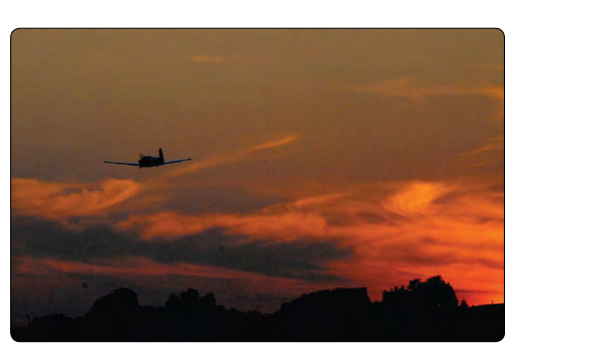
Of all the senses a pilot relies on, vision is the most critical — and the most vulnerable to environmental change. Shifting from bright sunlight into a dark cockpit or flying into an unlit sky at night triggers a cascade of physiological adjustments inside your eyes that directly affect what you can and cannot see. Understanding these changes is not just an academic exercise; the FAA knowledge test will probe this topic repeatedly, and more importantly, misunderstanding your own visual limitations at night is a proven contributor to aviation accidents.
This article unpacks exactly how your eyes work in daylight versus darkness, how the adaptation process unfolds, what its practical limits are, and how you can fly smarter because of that knowledge.
The Two Visual Systems: Cones and Rods
Your retina contains two types of photoreceptor cells, and each dominates a different lighting environment. Cones are concentrated in and around the fovea — the small central pit at the back of the eye that delivers sharp, color-rich detail. Cones require relatively high light levels to function well, which is why daytime vision is so sharp and colorful. They come in three varieties, each sensitive to different wavelengths corresponding roughly to red, green, and blue light, and the brain blends their signals to produce the full spectrum of color perception.
Rods, by contrast, are distributed across the peripheral retina and are almost entirely absent from the fovea itself. Rods are far more light-sensitive than cones — capable of responding to just a handful of photons — but they do not distinguish color. They produce only shades of gray. Rods contain a pigment called rhodopsin (sometimes called visual purple), and it is the regeneration of this pigment in darkness that drives the night-adaptation process. When exposed to bright light, rhodopsin bleaches out rapidly. In darkness, it slowly regenerates, progressively increasing your ability to detect dim objects.
Dark Adaptation: How It Works and How Long It Takes
Dark adaptation is not instantaneous. When you move from a brightly lit environment into darkness, your eyes undergo a two-stage process. In the first roughly five to ten minutes, your cones adapt as best they can, providing a modest improvement in sensitivity. Then, over the following 20 to 30 minutes, rod adaptation dominates as rhodopsin regenerates, and your overall light sensitivity increases dramatically — by a factor of roughly 10,000 compared to full daylight. The FAA Pilot's Handbook of Aeronautical Knowledge notes that full dark adaptation requires approximately 30 minutes in complete darkness, though meaningful improvement begins much sooner.
The critical practical point: a single flash of bright white light — even a few seconds of exposure — can bleach the regenerated rhodopsin and set the adaptation process back significantly. This is why bright cockpit lighting, a searchlight, or even a poorly timed flashlight can temporarily ruin your hard-won night vision. Protecting dark adaptation before and during night flights is a deliberate skill.
The Foveal Blind Spot at Night: Off-Center Vision
Because the fovea is almost devoid of rods, staring directly at a dim object at night will cause it to disappear — a phenomenon called night blind spot or central blind area. The very area of the retina you habitually use for precise daytime vision becomes a liability in the dark. The solution is off-center viewing: deliberately looking 5 to 10 degrees to the side of whatever you want to see at night, so that its image falls on the rod-rich peripheral retina. With practice this becomes a natural scanning habit, but it must be consciously developed.
A related concept is empty-field myopia — in a dark, featureless environment (think flying over water on a moonless night), the eye has nothing to focus on and defaults to a resting focal point of roughly one to two meters in front of you. Objects at greater distances, including terrain or other aircraft, may go completely unnoticed even though your visual acuity is theoretically adequate. Actively scanning and searching for reference points counters this effect.
Light Adaptation: The Return to Daylight
Moving from dark to bright conditions is a much faster process than the reverse. Light adaptation — the adjustment from night to full daylight sensitivity — takes only a few seconds to a few minutes because bright light rapidly regenerates the cone pigments. However, the transition can be temporarily blinding and disorienting. Pilots flying from a dark cruise environment into a brightly lit sunrise, or intercepted by a landing light or spotlight, may experience temporary visual incapacitation. While short-lived, this can be dangerous during a critical phase of flight.
Factors That Degrade Night Vision
Several physiological and environmental factors can significantly impair night vision beyond normal adaptation limits. Every pilot should know these:
- Hypoxia: The retinal rods are among the most oxygen-hungry cells in the body. Even mild hypoxia — possible at altitudes as low as 5,000 feet MSL at night — measurably reduces night vision. The FAA recommends supplemental oxygen above 10,000 feet MSL at night for this reason, even though the regulatory requirement for supplemental oxygen applies at higher altitudes during the day.
- Carbon monoxide (CO): CO bonds with hemoglobin far more readily than oxygen, reducing the blood's ability to carry oxygen to all tissues including the retina. CO exposure, such as from a defective heater exhaust, impairs night vision even before other symptoms become obvious.
- Smoking: Cigarette smoke introduces CO and causes vasoconstriction that reduces retinal oxygenation. Studies cited in FAA materials indicate that a smoker's night vision can be meaningfully worse than a non-smoker's even at sea level.
- Bright light exposure: As discussed above, exposure to unfiltered white light before or during night flight bleaches rhodopsin and degrades adaptation.
- Certain medications and alcohol: Some antihistamines, tranquilizers, and other medications degrade visual performance. Alcohol impairs dark adaptation even after the acute intoxicating effects have passed.
- Vitamin A deficiency: Rhodopsin synthesis depends on vitamin A. While rare in well-nourished populations, severe deficiency causes night blindness.
Practical In-Cockpit Strategies
Knowledge of visual physiology translates directly into cockpit habits. Before a night flight, avoid bright lights for at least 30 minutes when possible. If pre-flight briefing or chart review is unavoidable under bright light, wearing red-tinted goggles or glasses can help — red light minimally bleaches rhodopsin, allowing the rods to remain largely adapted. Cockpit lighting should be set as dimly as practical while maintaining readability of instruments. Use a red-filtered flashlight for any exterior or chart illumination.
During flight, maintain an active scanning technique using off-center viewing. When checking instruments, shift your gaze frequently back outside to maintain situational awareness; prolonged staring at any one item costs you precious scan time. If you must use a bright white light in the cockpit (such as during an emergency), close one eye first — that eye will retain its adaptation and help you recover your night vision faster afterward.
Key Numbers and Rules
- ~30 minutes required for full dark adaptation in complete darkness.
- 5 to 10 degrees off-center for optimal use of peripheral rods (off-center viewing).
- ~5,000 feet MSL at night — altitude at which hypoxia begins to measurably degrade night vision according to FAA aeromedical guidance.
- Red light minimally affects rhodopsin — the preferred cockpit lighting color for preserving night adaptation.
- Rods absent from fovea — direct foveal viewing at night causes dim objects to disappear.
- Rhodopsin — the rod pigment whose regeneration drives dark adaptation; bleaches instantly in bright light.
Common Test Traps
- Confusing adaptation time: The FAA knowledge test may present 20 minutes or 45 minutes as distractors. The correct answer is approximately 30 minutes for full dark adaptation.
- Mixing up cones and rods: Remember — cones are for color and daylight, concentrated at the fovea; rods are for dim light, absent from the fovea, and contain rhodopsin.
- Thinking bright red light is harmless at any intensity: Dim red light preserves adaptation, but a very bright red light can still cause some bleaching. The advantage of red is relative, not absolute.
- Underestimating hypoxia's effect on vision: Test questions sometimes ask which sense is first affected by hypoxia at altitude — night vision is consistently identified by FAA materials as among the very first faculties impaired.
- Forgetting off-center viewing: A question may describe a pilot unable to see a dim star or aircraft light when staring directly at it — the correct remedy is to look slightly to the side, not to squint or widen the eyes.
Mastering these concepts gives you more than test points — it changes how you actually fly at night, protecting yourself, your passengers, and other aircraft sharing the sky. The eyes that kept your ancestors alive on the savanna were designed for a world without cockpits, and it is your responsibility as a pilot to work with their limitations rather than against them.