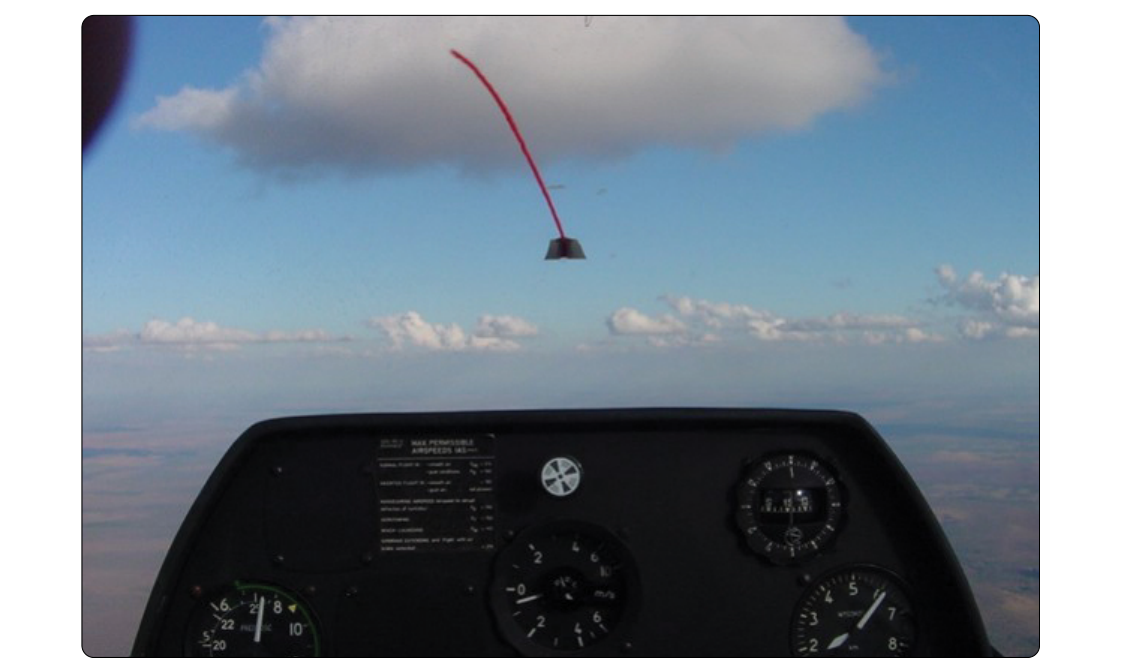
Every year, spatial disorientation claims the lives of experienced and inexperienced pilots alike. It is a silent, insidious threat because the victim usually has no idea anything is wrong — the body feels perfectly level while the aircraft spirals toward the ground. Understanding spatial disorientation and the vestibular illusions that drive it is not just an exam topic; it is the difference between life and death when clouds close in or night falls over a featureless landscape.
Spatial disorientation is defined as a state in which a pilot's perception of the aircraft's position, attitude, or movement does not match reality. The FAA's Pilot's Handbook of Aeronautical Knowledge (PHAK) explains that the human body evolved to navigate a world where we are always upright, always slow-moving, and always able to see the horizon. The cockpit violates all three of those assumptions simultaneously.
How the Sensory Systems Work — and Fail
Pilots rely on three sensory systems to maintain orientation: the visual system, the vestibular system (inner ear), and the proprioceptive system (pressure receptors in skin, joints, and muscles, sometimes called the "seat of the pants" sense). In VMC, the eyes dominate and easily override confusing signals from the other two. In IMC or at night without a visible horizon, vision loses its external reference, and the inner ear — which was never designed for flight — takes on an outsized and treacherous role.
The Vestibular System in Detail
The inner ear contains two types of motion-sensing structures. The semicircular canals detect angular acceleration (changes in rotation), and the otolith organs (the utricle and saccule) detect linear acceleration and the pull of gravity. Both systems share a critical flaw: they detect changes in motion, not sustained motion. Once a constant rate is established, the sensation fades. This adaptation period is the root cause of nearly every classic vestibular illusion in flight.
The Major Vestibular Illusions
The Leans
The leans is the most common vestibular illusion. It occurs when the aircraft rolls into a bank gradually enough that the semicircular canals do not detect the initial roll. The pilot's brain registers wings-level. When the pilot then corrects to actual wings-level (perhaps prompted by the attitude indicator), the sudden return to level flight is detected as a roll — in the wrong direction. The pilot feels as though the aircraft is now banked the other way. The result is a pilot who knows intellectually what the instruments say but feels strongly tilted. The urge to lean the body in the direction that feels level can be overwhelming and may lead to re-entering the bank.
The Graveyard Spiral
The graveyard spiral is a life-threatening progression of events. A pilot enters an undetected banked turn. After about 20 seconds, the semicircular canals adapt and the turn feels level. When the pilot eventually notices the nose is dropping (from the aerodynamic effects of the bank), they pull back on the controls — which in a banked aircraft only tightens the turn and increases the G-load rather than raising the nose. Airspeed and G-forces build. The aircraft spirals steeply downward while the pilot sincerely believes they are in level flight. Recovery requires leveling the wings first, then gently pulling out of the dive.
The Graveyard Spin
Similar in name and concept, the graveyard spin occurs when a pilot in a prolonged spin adapts to the rotation and perceives it as stopped. If they then apply opposite rudder to stop what they now sense as a spin in the other direction, they may actually re-enter or accelerate the original spin.
The Coriolis Illusion
The Coriolis illusion is particularly dangerous because it is triggered by a perfectly ordinary cockpit action: moving the head to look at a chart or adjust a control while the aircraft is in a prolonged turn. Because two semicircular canals are being stimulated simultaneously (one for the sustained turn, one for the head tilt), the brain synthesizes a tumbling or rolling sensation in a completely different plane than actual aircraft movement. The pilot may make abrupt, large control inputs in response to this false sensation. Avoiding the Coriolis illusion means keeping head movements slow and deliberate in IMC.
The Somatogravic Illusion
This illusion involves the otolith organs. A rapid forward acceleration — as experienced during a go-around or a catapult launch — pushes the otoliths backward in the same way that pitching the nose up would. The pilot perceives a nose-high attitude and instinctively pushes forward on the controls, potentially driving the aircraft into the ground. The same illusion in reverse can occur during rapid deceleration: the pilot senses a nose-down pitch and pulls back. This illusion has contributed to accidents during instrument approaches when pilots applied power aggressively during a missed approach at low altitude.
The Elevator Illusion
An abrupt upward gust or updraft causes a sudden positive G sensation similar to an upward linear acceleration. The pilot senses a climb and may push forward on the controls. The opposite — an abrupt downdraft — creates the sensation of descending, prompting a back-pressure response. Both reactions can be dangerous at low altitudes.
The Leans Variant: The G-Excess Illusion
When a pilot pulls G during a banked turn, the increased G-force stimulates the otolith organs beyond normal. The brain may perceive the bank angle as greater than it actually is, causing the pilot to reduce or roll out of the bank, potentially resulting in a dangerous unbanked or shallow-bank attitude when a steeper bank was actually needed.
Why Spatial Disorientation Matters
The FAA and NTSB data consistently show that spatial disorientation is a major contributor to fatal general aviation accidents, particularly those involving VFR pilots who inadvertently fly into instrument meteorological conditions (IMC). A commonly cited figure — originating from a University of Illinois study and widely popularized by aviation safety organizations such as the AOPA Air Safety Institute, rather than the PHAK itself — suggests the average VFR pilot who enters IMC without training has approximately 178 seconds before loss of control, less than three minutes. Even rated instrument pilots are not immune; spatial disorientation has claimed airline crews in simulatable, recoverable situations when the workload was high and situational awareness broke down.
The key physiological reality is that there is no safe threshold of exposure. Every human being, regardless of experience, is susceptible to vestibular illusions. Experience only helps because trained pilots know to distrust their senses and trust their instruments.
Key Numbers and Rules
- ~20 seconds: The approximate time for semicircular canal adaptation to a sustained constant-rate turn — after which the turn may no longer be felt.
- ~178 seconds: A widely cited (though not FAA handbook-sourced) figure for the average time before loss of control for an untrained pilot who enters IMC, originating from a University of Illinois study popularized by aviation safety organizations.
- The fundamental rule: When spatial disorientation is suspected, believe the instruments, not your body. Cross-check the attitude indicator, altimeter, and turn coordinator immediately.
- Graveyard spiral recovery order: Level the wings first, then ease out of the dive. Pulling back while still banked worsens the spiral.
- Slow head movements: Moving the head slowly and deliberately in IMC is the primary prevention for the Coriolis illusion.
- Avoid flight into IMC without an instrument rating: 14 CFR Part 91 establishes VFR weather minimums precisely because IMC dramatically elevates the risk of spatial disorientation and collision with terrain or obstacles.
Memory Aid
When it comes to trusting your senses versus your instruments, remember the phrase: "Trust the gauges, not the feelings." It can also help to keep the four most dangerous illusions in the instrument environment in mind:
- Somatogravic illusion — false pitch sensation from linear acceleration or deceleration
- The Leans / Graveyard Spiral — vestibular adaptation to an undetected bank or turn
- G-excess illusion — exaggerated perception of bank angle under increased G-load
- Elevator illusion — false climb/descent sensation from updrafts and downdrafts acting on the otolith organs
Pair this with the instrument scan habit, and each illusion reminds you which sensory shortcut to distrust.
Common Test Traps
- "The leans means the plane is banked." Not necessarily. The aircraft may be perfectly wings-level while the pilot feels banked. The leans is a sensory illusion, not an aircraft attitude. The FAA test may describe the pilot leaning in the cockpit — recognize this as the leans illusion, not a weight-and-balance issue.
- Confusing the Coriolis illusion with simple dizziness. The Coriolis illusion is specifically triggered by moving the head while in a sustained turn. Recognize the trigger (head movement in IMC or sustained turn) to identify the illusion correctly on the test.
- Graveyard spiral recovery — pulling back first. Many students instinctively choose "pull back to raise the nose," but this is wrong. The correct answer is to roll wings-level first, then pull out of the dive to avoid worsening the spiral and over-stressing the airframe.
- Thinking experienced pilots are immune. The FAA is clear: all pilots are susceptible. Experience helps only through trained discipline — trusting instruments over sensations. Test questions sometimes offer "instrument-rated pilots do not experience spatial disorientation" as a distractor; this is false.
- Confusing the somatogravic illusion with the elevator illusion. The somatogravic illusion involves linear acceleration/deceleration (fore-and-aft), mimicking pitch. The elevator illusion involves vertical gusts, mimicking a climb or descent. Both fool the otolith organs, but the triggers and corrective instincts differ — know which is which.