The Four Forces of Flight Explained
Understanding the Four Forces of Flight
Whether you are just beginning your aviation journey or preparing to sit for your FAA written exam, a solid grasp of the four forces of flight is absolutely essential. Lift, weight, thrust, and drag are the fundamental aerodynamic forces acting on every aircraft in motion. Understanding how they interact—and what happens when they fall out of balance—is not only a cornerstone of safe flying, but a guaranteed topic on your FAA knowledge test. Let's break each one down clearly and practically.
Lift: The Force That Gets You Airborne
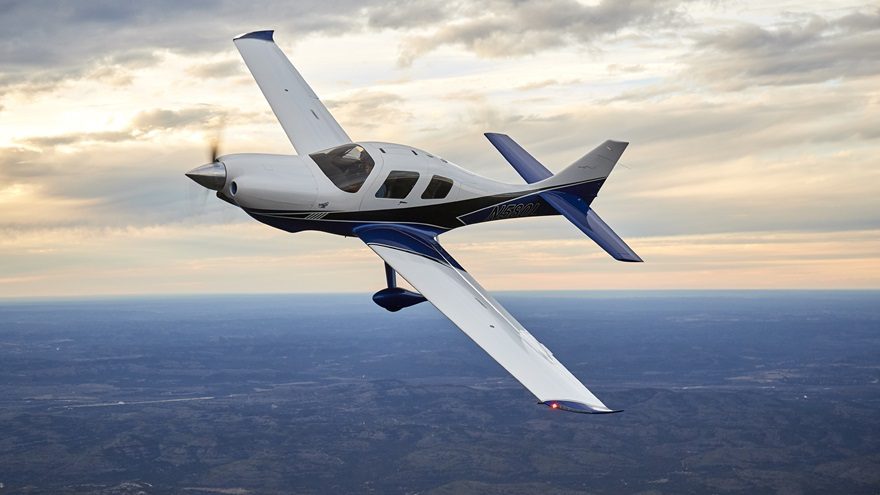
Lift is the aerodynamic force generated primarily by the wings, acting perpendicular to the relative wind and opposing the downward pull of gravity. It is produced when air flowing over the curved upper surface of the wing accelerates, creating lower pressure above the wing compared to below it. This pressure differential pushes the wing—and the aircraft—upward.
Several factors directly affect the amount of lift produced:
- Angle of attack (AOA): Increasing the angle at which the wing meets the oncoming air increases lift—up to a critical point called the stall angle.
- Airspeed: Lift increases with the square of airspeed, so even small speed changes have a significant effect.
- Wing shape and area: Larger or more cambered wings generally produce more lift.
- Air density: Thinner air at high altitudes or on hot, humid days reduces lift, which is why density altitude matters so much to pilots.
Weight: Gravity Always Pulls Down
Weight is the force of gravity acting on the aircraft's total mass, always directed straight toward the center of the Earth. For an aircraft to maintain level flight, lift must equal weight. For a climb, lift must exceed weight. For a descent, weight exceeds lift.
Weight is not a fixed number during a flight. As fuel burns, the aircraft becomes lighter, which affects performance, balance, and handling. Weight and balance calculations are a critical pre-flight responsibility for every pilot, and this topic appears frequently in FAA knowledge test questions.
Thrust: Overcoming Resistance to Move Forward
Thrust is the force that propels the aircraft forward, generated by the engine and propeller (or jet engine in turbine-powered aircraft). Thrust acts roughly parallel to the aircraft's longitudinal axis, pushing it through the air and overcoming drag.
In level, unaccelerated flight, thrust equals drag. When a pilot advances the throttle to climb, thrust exceeds drag and the aircraft accelerates. When power is reduced, drag exceeds thrust and the aircraft slows or descends. Understanding this relationship helps pilots manage energy and aircraft performance efficiently.
Factors That Affect Thrust
- Engine power setting: More throttle generally means more thrust.
- Propeller efficiency: Blade pitch, RPM, and airspeed all affect how effectively the propeller converts engine power into forward force.
- Air density: Just like lift, thrust is reduced in lower-density air, making high-altitude and hot-day performance a concern.
Drag: The Force That Resists Motion
Drag is the aerodynamic force that opposes the aircraft's motion through the air, acting parallel to the relative wind but in the opposite direction to flight. There are two primary types of drag every student pilot must understand:
- Parasite drag: Caused by the non-lifting parts of the aircraft—the fuselage, landing gear, antennas, and any surface that disrupts smooth airflow. Parasite drag increases as airspeed increases.
- Induced drag: A byproduct of lift itself. As the wing generates lift, wingtip vortices and pressure differences create drag. Induced drag decreases as airspeed increases.
The combination of parasite and induced drag produces a U-shaped total drag curve. The bottom of that curve—where total drag is at its minimum—corresponds to the aircraft's most aerodynamically efficient airspeed, often referenced as L/Dmax or best glide speed. Knowing this point is crucial for emergency procedures and fuel efficiency.
How the Four Forces Interact in Flight
In steady, level, unaccelerated flight (often called equilibrium), the four forces are balanced: lift equals weight, and thrust equals drag. Any disturbance to this balance requires a pilot input to restore it. For example:
- To climb: Increase thrust and/or increase angle of attack to boost lift above weight.
- To descend: Reduce thrust, allowing drag and weight to overcome lift and thrust.
- To accelerate: Increase thrust beyond drag.
- To decelerate: Reduce thrust below drag, or increase drag intentionally (flaps, spoilers).
A deep understanding of these interactions also underpins more advanced concepts like load factor in turns, maneuvering speed, and stall/spin awareness—all of which appear on FAA knowledge tests across multiple certificate levels.
Studying the Four Forces for Your FAA Exam
The four forces of flight are tested across multiple FAA written exams, from the Private Pilot through the Instrument Rating and beyond. Questions may ask you to identify which forces are in balance during a specific flight condition, calculate the effect of density altitude on lift and thrust, or recognize how drag types change with airspeed.
At Aviation Test Prep, our ACS-aligned practice questions are built by FAA-certified instructors and reviewed for alignment with the current Airman Certification Standards. Our AI Tutor provides instant, plain-English explanations for every question—so when you get an aerodynamics question wrong, you understand exactly why before you move on. Our 5-step study method guides you from foundational knowledge through timed practice and weak-area review, giving you a structured path to test-day confidence.
Aviation Test Prep is a study aid designed to complement—not replace—the guidance of a certificated flight instructor and official FAA publications like the Pilot's Handbook of Aeronautical Knowledge.
You can explore how each question maps to specific ACS knowledge areas using our ACS code reference tool, making it easy to target your weakest aerodynamics topics. Ready to put your knowledge of the four forces to the test? Browse our full list of FAA practice exams and find the one that matches your certificate goal.
Conclusion
The four forces of flight—lift, weight, thrust, and drag—are the building blocks of aerodynamics and a recurring topic on every FAA knowledge test. Master their definitions, their interactions, and the factors that affect each one, and you will have a strong foundation for both your written exam and your life as a pilot. Start studying for free at Aviation Test Prep and let our ACS-aligned practice questions and AI Tutor guide you to test-day success.
Ready to pass your FAA written exam?