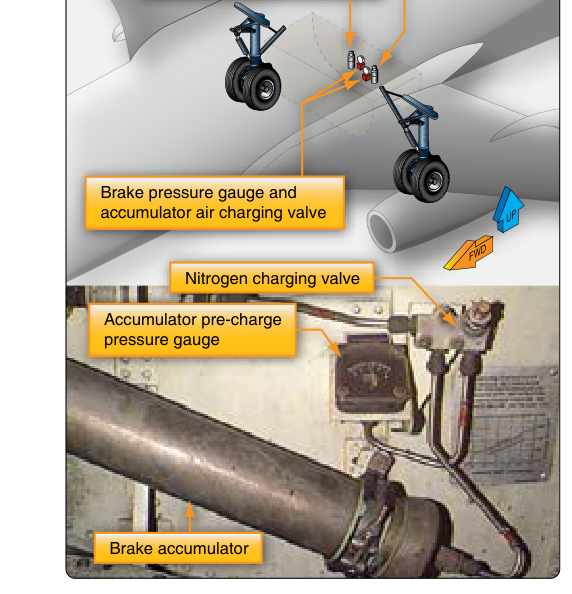
Every aircraft hydraulic system must deal with two uncomfortable realities: fluid demand can spike far faster than a pump can respond, and pumps can fail entirely. The hydraulic accumulator addresses both challenges in a single elegant device. Found on everything from light piston trainers to wide-body airliners, accumulators act as energy reservoirs, surge dampeners, and emergency power sources — all at once. For the Airframe Mechanic candidate, understanding how an accumulator works, why the nitrogen precharge is critical, and how to service the device correctly is not just exam knowledge; it is hands-on shop knowledge that directly affects flight safety.
This article covers accumulator construction, the physics behind precharge pressure, troubleshooting symptoms, and the step-by-step servicing logic the FAA expects a certificated airframe technician to know.
Construction and Types
An accumulator is essentially a pressure vessel divided into two chambers by a flexible separator. One chamber connects to the hydraulic system and holds pressurized hydraulic fluid. The other chamber holds a compressible gas — almost always dry nitrogen — at a carefully specified precharge pressure. The separator keeps the two media apart while allowing energy exchange between them.
Three separator designs appear on certificated aircraft:
- Bladder type: A synthetic rubber bladder inside a spherical or cylindrical shell holds the nitrogen. Hydraulic fluid surrounds the outside of the bladder. When fluid pressure rises, the bladder is compressed inward, storing energy. This is the most common modern design because the bladder provides a very positive seal between gas and fluid.
- Diaphragm type: A flexible diaphragm divides a spherical or cylindrical shell into a gas side and a fluid side. As with the other designs, the diaphragm keeps the nitrogen charge separated from the hydraulic fluid while permitting energy exchange between them.
- Piston type: A free-floating piston separates gas from fluid inside a cylindrical body. The piston design handles higher flow rates and larger fluid volumes, making it common on transport-category aircraft with high-demand actuators like landing gear and brakes.
Regardless of design, the accumulator body is a pressure vessel rated well above system operating pressure, and it must be inspected for corrosion, cracks, and secure mounting at every major inspection interval.
How an Accumulator Functions
To understand accumulator operation, picture a simple spring-loaded reservoir analogy. When the hydraulic pump is running and system pressure climbs to normal operating pressure, fluid is forced into the accumulator's fluid side, compressing the nitrogen charge. The nitrogen behaves as a coiled spring, absorbing that energy. When actuators suddenly demand a large volume of fluid — landing gear extension, for example — the compressed nitrogen pushes fluid out of the accumulator and into the system almost instantaneously, supplementing pump output and preventing a pressure dip that could cause sluggish or incomplete actuator travel.
This same stored energy is available if the hydraulic pump fails entirely. The accumulator can supply enough pressurized fluid for a limited number of brake applications or a single gear extension, giving the crew time to manage the emergency. The exact number of operations supported by accumulator pressure alone depends on accumulator size, precharge, and system design — the aircraft flight manual and maintenance manual specify these limits precisely.
A secondary but equally important function is surge dampening. Hydraulic pumps — especially piston-type constant-pressure pumps — create small pressure pulses with every piston stroke. Without an accumulator, these pulses travel through the plumbing as vibration and noise, fatiguing fittings and seals over time. The nitrogen-filled accumulator absorbs these micro-surges, smoothing system pressure.
The Nitrogen Precharge: Why It Is Critical
The precharge pressure is the dry nitrogen pressure placed in the gas side of the accumulator before the hydraulic system is pressurized. It is specified by the aircraft or system manufacturer and is typically expressed as a cold, unpressurized value. The precharge determines the point at which fluid begins to enter the accumulator and sets the lower limit of usable stored energy.
If the precharge pressure is too low, fluid will enter the accumulator at a lower-than-intended pressure. The accumulator fills prematurely, the nitrogen is compressed beyond its design range when full system pressure is reached, and the useful pressure range available for emergency use is reduced. A severely low precharge may allow the bladder or diaphragm to be forced against the fluid port, damaging or rupturing the separator.
If the precharge pressure is too high, the nitrogen pressure exceeds hydraulic system pressure or opens too close to it. Fluid cannot enter the accumulator at all, or enters only in small amounts. The accumulator provides almost no surge-dampening benefit and no meaningful emergency fluid reserve.
For these reasons, precharge must be checked with the hydraulic system fully depressurized and the fluid side vented. Checking precharge with the system pressurized gives a false reading because the hydraulic pressure masks the true gas pressure. Always use a calibrated nitrogen servicing gauge and follow the maintenance manual exactly. Precharge values are aircraft- and system-specific, set by the manufacturer, but a commonly cited rule of thumb is roughly one-third of system operating pressure — for example, about 1,000 psi of precharge against a 3,000 psi system is a plausible figure. Always verify the exact precharge value against the applicable AMM rather than relying on a general number.
Why Nitrogen, Not Air?
Dry nitrogen is used exclusively as the precharge gas for three reasons. First, nitrogen is chemically inert and will not support combustion. Compressed air contains roughly 21% oxygen; when that oxygen contacts hydraulic fluid under pressure and heat, the mixture becomes potentially explosive — a catastrophic hazard. Second, dry nitrogen contains virtually no moisture, preventing internal corrosion of the accumulator shell. Third, nitrogen is readily available, inexpensive, and has predictable pressure-temperature behavior. Never service an accumulator with compressed air or shop air, regardless of the apparent urgency.
Key Numbers and Rules
- System depressurized before precharge check: Always verify zero hydraulic pressure and bleed fluid pressure before attaching a nitrogen gauge to the gas valve.
- Dry nitrogen only: Compressed air is prohibited; oxygen is prohibited; CO₂ is prohibited.
- Precharge checked cold: Precharge specifications are typically given at ambient temperature; temperature affects gas pressure per the ideal gas law, so record ambient temp and correct if required by the manual.
- Nitrogen cylinder color and labeling: Nitrogen cylinders used in aviation must be clearly labeled; never assume cylinder contents by color alone — verify the label.
- Accumulator as emergency source: The number of brake or actuator operations available on accumulator pressure alone is specified in the Aircraft Maintenance Manual (AMM); do not exceed that count without recharging.
- Separator inspection: If hydraulic fluid appears at the nitrogen service valve (Schrader valve), the separator (bladder, diaphragm, or piston seals) has failed and the accumulator must be removed and overhauled or replaced.
- Pressure relief valve: Many accumulators incorporate a thermal relief valve or are protected by a system relief valve; verify it is functional and set correctly during servicing.
Servicing Procedure Logic
While every aircraft has its own specific procedure, the general logic for accumulator precharge servicing follows a consistent sequence. First, depressurize the hydraulic system completely using the system bleed procedure in the AMM — do not rely on gauge indication alone; operate a bleed valve or allow the system to cycle down. Second, confirm zero pressure on the hydraulic side. Third, attach a calibrated nitrogen servicing gauge to the accumulator's gas valve (typically a Schrader-type valve protected by a metal cap). Fourth, read the existing precharge. If it is within the specified range, no service is needed. If it is low, slowly add dry nitrogen from a regulated nitrogen bottle until the specified precharge is reached. If it is high, slowly release gas through the valve while monitoring pressure until within limits. Fifth, remove the servicing gauge, reinstall the protective cap, then repressurize the hydraulic system and verify normal system pressure and operation. Sixth, document the service in the aircraft maintenance records with the precharge pressure found, pressure set, date, and technician signature and certificate number.
Common Test Traps
- Checking precharge with hydraulic pressure applied: The most common exam trick. Hydraulic pressure compresses the nitrogen, so the reading you see includes both the precharge and the hydraulic contribution — it is not the true precharge. Always depressurize first.
- Using compressed air instead of nitrogen: A knowledge-test favorite. Compressed air is never acceptable; the oxygen content creates a fire/explosion hazard with hydraulic fluid.
- Confusing precharge pressure with system operating pressure: Precharge is a fraction of system operating pressure, not equal to it. Knowing the general relationship (precharge is commonly cited as roughly one-third of system pressure, though the exact ratio is design-specific) helps eliminate wrong answers.
- Fluid at the nitrogen valve means low precharge: Actually it means separator failure. Do not simply add nitrogen — the accumulator must be removed for overhaul.
- Assuming accumulator provides unlimited emergency braking: The accumulator is a finite reserve. The AMM specifies maximum brake applications available; beyond that, hydraulic pressure is exhausted and brake effectiveness is severely degraded or lost.