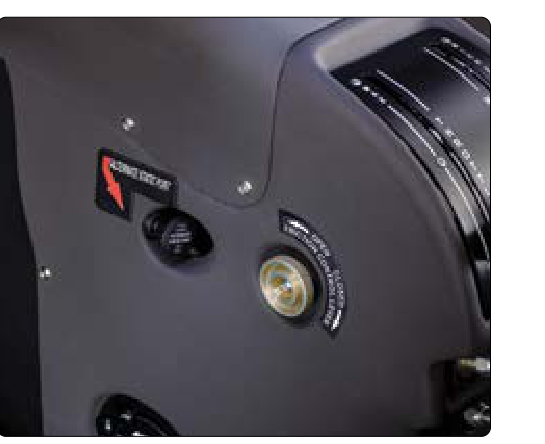
Among the IFR emergency procedures every instrument-rated pilot must master, the alternate static source ranks near the top for both frequency of appearance on the knowledge test and real-world importance. The pitot-static system is the backbone of basic instrument flight: airspeed, altitude, and vertical speed all depend on accurate static pressure samples. When that static pressure pathway is interrupted—by ice, moisture, a bug, or even a misplaced hand during a preflight—your three most fundamental instruments begin lying to you simultaneously. Understanding how the alternate static source works, and exactly how each instrument behaves when you use it, lets you make confident, safe decisions in the cockpit rather than reacting blindly to unexpected instrument readings.
This article covers the mechanics of the alternate static system, the predictable instrument errors introduced when you switch sources, and the practical steps to manage this emergency during instrument flight.
How the Pitot-Static System Works
The pitot-static system has two pressure inputs. The pitot tube captures ram air pressure—dynamic pressure created by the aircraft's forward motion—and feeds it exclusively to the airspeed indicator. The static ports, typically flush openings on the fuselage, sense ambient atmospheric pressure at the aircraft's altitude. That static pressure is piped to three instruments: the airspeed indicator (as the reference pressure against which ram pressure is compared), the altimeter, and the vertical speed indicator (VSI).
When the static port is blocked, none of these three instruments receive updated pressure information. The airspeed indicator freezes or reads incorrectly, the altimeter is trapped at the altitude where the blockage occurred, and the VSI locks at zero. You still have attitude and heading indicators (gyroscopic instruments), but you have lost your primary performance instruments. This is an unacceptable situation in IMC.
The Alternate Static Source: What It Is and How to Use It
Most certificated aircraft intended for IFR flight are equipped with an alternate static source—a secondary tap into the static pressure system that draws air from a different location, typically from inside the cockpit cabin. The selector valve or knob is usually located on the instrument panel or subpanel and is clearly marked. Activating it physically disconnects the blocked external static port and connects the static system to the alternate source.
According to the Instrument Flying Handbook (FAA-H-8083-15), the pilot should consult the Pilot's Operating Handbook (POH) or Airplane Flight Manual (AFM) for the specific procedure for their aircraft, since switch locations and exact steps vary by model. In most unpressurized general aviation aircraft, activation is straightforward—flip or pull the alternate static valve—but in pressurized aircraft, the procedure and the resulting errors can be more complex and pronounced.
Once activated, the static system now breathes cabin air rather than outside ambient air. This sounds like a simple workaround, but it introduces a systematic, predictable pressure difference—and that difference cascades into specific, correctable errors on each instrument.
Why Cabin Air Pressure Differs from Ambient
Inside an unpressurized cockpit, the cabin pressure is normally slightly lower than the true outside ambient static pressure at the same altitude. This is due to the airflow around and over the fuselage as the aircraft moves through the air; the exact pressure effect varies by aircraft design, but the general result is a cabin pressure slightly below true ambient static pressure.
This is the root cause of every instrument error associated with alternate static source use: the instruments now see a slightly lower pressure than they should, and each one interprets that lower pressure in its own way.
Instrument Errors When Using the Alternate Static Source
Altimeter
The altimeter measures the difference between a preset reference pressure (set via the Kollsman window) and the current static pressure input. Lower static pressure is interpreted by the altimeter as being at a higher altitude—because in a standard atmosphere, lower pressure means higher up. When you switch to the alternate static source and the instrument receives slightly lower cabin pressure, the altimeter will read higher than actual altitude. The magnitude of this error is typically small—often just a few feet in a light GA aircraft—but it is consistently positive. Your POH will list the specific correction factor for your aircraft. During an ILS approach, even a small altimeter error is worth knowing about.
Airspeed Indicator
The airspeed indicator compares pitot (ram) pressure to static pressure. Lower static pressure makes the pressure difference appear larger than it actually is, because the denominator of that comparison has effectively shrunk. As a result, the airspeed indicator will read higher than actual airspeed. You appear to be going faster than you are. This is particularly important during approach: if you reduce power to chase what looks like an on-speed indication, you may be flying slower than you think, increasing stall risk. Recognize the error, apply the POH correction if available, and add a small speed buffer if you must fly with the alternate static source active.
Vertical Speed Indicator
The VSI is a differential instrument—it measures the rate of change of static pressure. When you first activate the alternate static source, there will be a momentary transient as the static system equalizes to the slightly lower cabin pressure. The VSI needle will briefly deflect to show a climb, then return to indicate actual vertical speed trends. Once equilibrated, the VSI provides useful trend information, though its absolute accuracy remains slightly compromised. The key operational point is not to misinterpret that initial transient spike as an actual aircraft attitude change.
The Practical Emergency Flow in the Cockpit
If you notice the altimeter frozen, the VSI stuck at zero, and the airspeed behaving erratically or fixed during flight in actual IMC, suspect a static port blockage immediately. The emergency flow for most unpressurized GA aircraft is straightforward:
- Recognize the blockage: three static instruments misbehaving simultaneously is the classic signature.
- Maintain aircraft control using attitude indicator, gyroscopic heading, and power settings first—do not chase the bad instruments.
- Activate the alternate static source per the POH procedure (in most aircraft, open the alternate static valve).
- Note the new readings: expect the altimeter to read slightly high and airspeed to read slightly fast. Apply POH correction factors if available.
- Adjust flying technique accordingly: fly slightly slower on approach to account for the elevated airspeed indication, and mentally correct the altimeter if shooting an instrument approach.
If no alternate static source is installed and the aircraft has a VSI or altimeter cover glass that can be broken (a technique sometimes referenced in older training literature), note that this procedure is only appropriate as an absolute last resort on non-pressurized aircraft and must be evaluated against your specific aircraft documentation. Always follow your POH.
Key Numbers and Rules
- Altimeter reads HIGH on alternate static source in an unpressurized aircraft—cabin pressure is lower than ambient.
- Airspeed reads HIGH on alternate static source—lower static pressure exaggerates the pitot-to-static differential.
- VSI shows a momentary climb transient when the alternate static source is first opened, then settles to useful trend indication.
- The magnitude of errors depends on aircraft design and speed; always consult the POH/AFM for aircraft-specific correction values.
- 14 CFR Part 91.205 requires a properly functioning static pressure system for IFR flight; the alternate static source is the certified backup that keeps you legal and safe.
- On pressurized aircraft, cabin pressure differentials are much larger, making alternate static source errors significantly more pronounced—extra caution is required.
Common Test Traps
- Reversing the direction of the errors: Many students memorize that instruments are affected but get the direction backwards. Remember—lower cabin pressure = instruments read HIGH on both altimeter and airspeed. You are not lower or slower than you think; you are the opposite.
- Assuming the VSI is the most dangerous error: On the FAA knowledge test, the VSI transient is often tested, but the more operationally dangerous errors are the altimeter and airspeed reading high. Don't dismiss those.
- Forgetting that the pitot tube is unaffected: The alternate static source only addresses the static side. If you have a pitot blockage (ice, debris), opening the alternate static source will NOT fix your airspeed indicator—you need the pitot heat, not the static source.
- Ignoring the POH: Test questions sometimes ask what you should do first—the correct answer is always to follow POH/AFM procedures. Some aircraft have alternate static systems that are more complex than a simple flip valve.
- Pressurized vs. unpressurized confusion: The error direction described (altimeter and airspeed reading high) applies to unpressurized aircraft. In pressurized aircraft, the relationship between cabin and ambient pressure is different and errors may be significantly larger—a distinction the Instrument Flying Handbook specifically emphasizes.
Why It Matters: Safety in IMC
A blocked static source in VMC is annoying and requires attention, but you have visual references to help manage the situation. In actual IMC—exactly when instrument pilots are most likely to be flying—the same failure strips away your performance instruments at the worst possible moment. A pilot who does not know to activate the alternate static source, or who activates it but then misinterprets the resulting higher-than-actual altimeter reading as a problem with the alternate source and switches back, may descend below a safe altitude without realizing it. The alternate static source error set is predictable, small in magnitude for most light aircraft, and entirely manageable—but only if you know it's coming. That foreknowledge is what separates a confident IFR pilot from a dangerously confused one.