Aircraft fabric covering is one of the oldest and most enduring construction methods in aviation. From the earliest canvas-covered biplanes to modern ultralight and experimental aircraft, fabric has proven to be a lightweight, cost-effective, and structurally sound skin material when properly selected, applied, and maintained. For the aviation maintenance technician (AMT) working on the airframe, understanding exactly which fabric types are FAA-approved and why those approval standards exist is essential — both for passing the AMT knowledge test and for performing airworthy repairs on certificated aircraft.
This article covers the major approved fabric types, the FAA certification pathways that make them legal for use on type-certificated aircraft, the key physical standards each fabric must meet, and the practical considerations that guide a technician's fabric selection on the shop floor.
Why Fabric Covering Needs FAA Approval
Any material installed on a type-certificated aircraft must meet airworthiness standards. For fabric coverings, this means the material must be shown to have adequate strength, durability, UV resistance, and compatibility with the dopes, coatings, and finishing systems used over it. The FAA regulates aircraft fabric through a combination of Technical Standard Orders (TSOs), Airworthiness Directives, original type certificate data sheets, and Supplemental Type Certificates (STCs). A technician who installs non-approved fabric — even high-quality fabric marketed for other purposes — creates an unairworthy condition. That is a compliance and safety issue: fabric that degrades faster than anticipated can lead to structural failure of control surfaces or fuselage covering under flight loads.
The Original Standard: Grade A Cotton
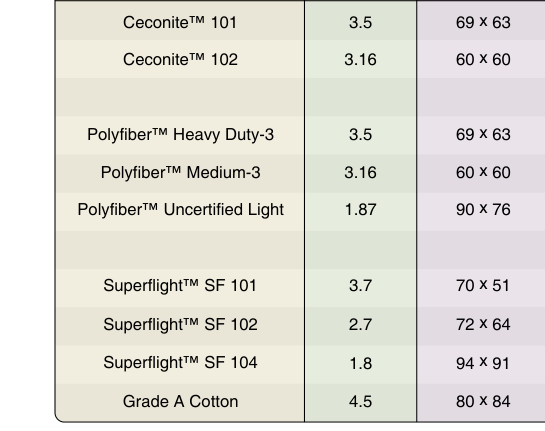
For decades, Grade A cotton fabric was the industry standard and remains an approved material for recovering aircraft today. Its specifications are rooted in military and early civil aviation standards that defined the thread count, tensile strength, and weave pattern required for airworthy covering. Grade A cotton must meet a minimum tensile strength of 80 pounds per inch of width when new. Because cotton is an organic fiber, it absorbs moisture, can mildew, and deteriorates over time — which is why fabric inspection using the FAA-accepted punch-test and tensile tester methods is so important during annual inspections.
Grade A cotton is typically used with nitrate or butyrate dope finishing systems. Nitrate dope is a strong adhesive and filler but is highly flammable; butyrate dope is less flammable and is the more common choice for final finishing coats. The cotton-and-dope system is well understood, well documented, and acceptable for recovering aircraft whose original type certificate called for fabric covering, provided the replacement fabric meets the Grade A specification.
Synthetic Fabric Alternatives and TSO Approval
Beginning in the latter half of the 20th century, synthetic polyester fabrics began replacing cotton in most practical recovering applications. Polyester does not absorb moisture, resists mildew, and — crucially — retains its strength over a much longer service life than cotton. However, because polyester is not the originally specified material for most older type-certificated aircraft, manufacturers of polyester covering systems had to obtain FAA approval before their products could be used legally on those aircraft.
The two primary FAA pathways for synthetic fabric approval are the Technical Standard Order (TSO) system and the Supplemental Type Certificate (STC) system.
TSO-C14 and Its Successors
TSO-C14 established the original FAA performance standard for aircraft fabric. It defined the minimum tensile strength and other physical requirements that a fabric must demonstrate to be approved for use on certificated aircraft. While TSO-C14 was written with cotton in mind, the framework it established became the benchmark against which synthetic fabrics are measured. A fabric approved under TSO-C14 (or an equivalent standard accepted by the FAA) carries an approval that makes it usable without further engineering documentation on aircraft whose maintenance manuals permit fabric replacement.
Synthetic fabrics are also evaluated against AMS (Aerospace Material Specifications) standards — industry consensus standards developed by SAE International and widely referenced by the FAA. These specifications define weave density, tensile breaking strength, elongation characteristics, and flammability requirements. An AMT should verify that the fabric being purchased references a recognized AMS or TSO number on its certification paperwork.
STC-Based Covering Systems
Many of the most popular modern fabric covering systems — such as Ceconite, Poly-Fiber, and Superflite — are approved through STCs. An STC is FAA approval for a specific modification to a type-certificated aircraft. In the fabric context, an STC holder has demonstrated to the FAA that their complete system (fabric, adhesives, coatings, and finishing products applied in a defined sequence) produces an airworthy result on specific aircraft makes and models.
This is a critical point: an STC covering system is a complete, integrated system. The AMT cannot legally mix and match components from different STC systems without additional approval. For example, using the fabric from one STC system with the finishing dopes from a different STC system is not covered by either STC and creates an unapproved installation. The technician must follow the STC holder's approved data — typically their Supplemental Type Certificate and associated instructions for continued airworthiness — precisely.
Physical Standards All Approved Fabrics Must Meet
Regardless of whether a fabric is approved via TSO, STC, or as original-equipment Grade A cotton, the FAA's underlying physical requirements are similar in purpose. Key standards include:
- Minimum tensile strength (new): Grade A cotton requires at least 80 lb/inch of width. Polyester fabrics approved for comparable applications typically meet or exceed this value, with many STC fabrics rating at 100 lb/inch or higher when new.
- Thread count and weave: A plain weave (also called tabby weave) with an appropriate thread count per inch ensures the fabric holds finishing coatings evenly and bonds properly to the airframe structure.
- Flammability: FAA standards require that approved aircraft fabrics self-extinguish or burn slowly within defined limits. This is why the choice of finishing coatings also matters — nitrate dope increases flammability, while butyrate dope reduces it.
- UV resistance and dimensional stability: Polyester fabrics are inherently more UV-stable than cotton, but both must maintain structural integrity throughout the expected service interval between inspections.
- Rejection strength threshold: Fabric on an aircraft must be replaced when its tested tensile strength falls below 70% of the new strength requirement — meaning Grade A cotton must be replaced when it tests below approximately 56 lb/inch of width. This threshold is established in AC 43.13-1 (Acceptable Methods, Techniques, and Practices — Aircraft Inspection and Repair).
Practical Fabric Selection in the Shop
When a technician begins a recovering project, the first step is to consult the aircraft's Type Certificate Data Sheet (TCDS) and the aircraft manufacturer's maintenance manual. These documents specify what the original covering was and what substitutions are acceptable. If the aircraft's TCDS allows fabric replacement per the STC holder's data, the technician selects an appropriate STC-approved system for that aircraft model and follows the STC's instructions exclusively.
The weight of the fabric also matters. Heavier-weight polyester fabric is used for high-performance aircraft or those with higher never-exceed speeds (Vne), while lighter-weight fabric is appropriate for slower, lighter aircraft. STC documentation will specify which fabric weight is approved for which aircraft category, so the technician does not have to guess.
Documentation is the final and non-negotiable element. The AMT must record the fabric type used, its certification basis (TSO number, STC number, or material specification), the lot or batch number if available, and the date of installation in the aircraft maintenance records. This traceability is required for continued airworthiness tracking and future inspections.
Common Test Traps
- Mixing STC system components is not approved. The FAA knowledge test may present a scenario where a technician uses one brand's fabric with another brand's dope. This creates an unapproved installation regardless of how good either product is individually.
- The 70% rule applies to rejection, not to the original specification. Students sometimes confuse the new-strength requirement (80 lb/inch for Grade A cotton) with the rejection threshold (70% of new = ~56 lb/inch). These are two different numbers with two different purposes.
- TSO approval is not the same as STC approval. A TSO-approved fabric meets a performance standard; an STC-approved system has been authorized for a specific installation on specific aircraft. Both pathways are valid but serve different functions.
- Original cotton is still legal. Some students assume synthetic polyester has replaced cotton as the only approved material. Grade A cotton meeting the original specification remains an approved recovering material.
- The complete finishing system matters, not just the fabric. The topcoat, adhesive, and finishing products are part of the approved data. An AMT who installs approved fabric but uses an incompatible finishing system has not made an airworthy repair.