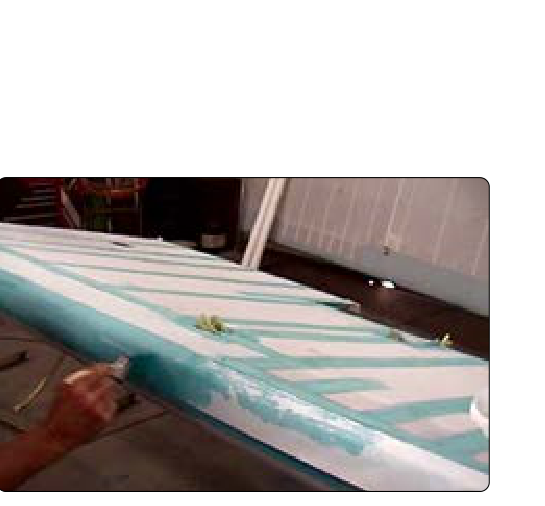
Aircraft fabric covering is one of the oldest construction techniques in aviation, and it remains a living, regulated craft today. Whether you are recovering a classic Piper Cub or maintaining a modern ultralight, the way fabric is attached to the airframe structure is not left to personal preference. The FAA and the accepted industry standards codified in Advisory Circular AC 43.13-1B prescribe exactly how fabric must be secured—using gluing (doping), machine or hand sewing, and finishing tapes—so that the covering can survive the aerodynamic loads, vibration, and environmental exposure of flight. Understanding each method, when it is used, and how they interact with one another is essential knowledge for any AMT Airframe candidate.
Why Fabric Attachment Is Safety-Critical
Fabric covering is a structural element of the aircraft's outer surface. It transmits aerodynamic loads to the underlying ribs, spars, and formers, and it maintains the airfoil shape that generates lift. A failure in attachment—whether a seam that separates, a glued lap that peels, or a tape that lifts—can quickly escalate from a cosmetic issue to a catastrophic loss of control. The airspeed limit for the fabric covering, often called VNE or the structural limit, is directly related to how securely the fabric is attached and how many rib-stitching points are used per unit length. FAA inspection requirements exist precisely because attachment failures are serious hazards.
Method One: Gluing (Doping)
Gluing in fabric covering does not mean ordinary adhesive. The term refers to the application of aircraft dope—a nitrocellulose or butyrate cellulose acetate lacquer product—to bond the fabric to itself and to structural components. Gluing is primarily used in two situations: securing fabric at attachment edges and bonding envelope-style coverings at their seams.
How Gluing Works
When dope is brushed onto the fabric, it penetrates the weave, becomes tacky, and bonds the fabric tightly to whatever it contacts. The first coat of dope is typically thinned (called a wash coat or dope and thinner mixture) so it penetrates deeply. Subsequent coats are progressively less thinned, building up the surface until the fabric is taut, smooth, and airtight. The dope also shrinks the fabric during curing, which is intentional—it tightens the covering over the airframe and creates the taut drum-like surface needed for correct aerodynamic performance.
When using dope as a bonding agent, the fabric must overlap the structure by at least one inch on each side of a seam when the glued-lap method is used. The overlap is coated with dope, the second layer of fabric is laid over it while the dope is still tacky, and additional dope coats seal the joint. For fabric bonded directly to wooden or metal structures, a layer of pinked-edge finishing tape is typically placed over the bond after doping to reinforce it and prevent peeling.
Approved Dope Types
Both nitrocellulose dope and butyrate dope are approved under AC 43.13-1B. Butyrate dope is more commonly used today because it is less flammable and more resistant to the environment. The two types must not be intermixed on the same aircraft because they have different chemical compatibility. Rejuvenator is a related product that can restore old, dried dope by reactivating the plasticizers—but it is not a substitute for proper dope coats and cannot repair structurally failed adhesion.
Method Two: Sewing
Sewing is used to join widths of fabric together to create a panel large enough to cover a wing or fuselage section, and also to secure the fabric to ribs once the covering is in place. There are two distinct sewing applications in aircraft fabric work: fabric seams and rib lacing (rib stitching).
Fabric Seams
When a single width of fabric is not wide enough to cover a wing panel, two or more widths must be joined. These joins are made with a sewing machine using either a plain overlap seam or a French fell seam (also called a folded-fell seam). The French fell seam is preferred because both raw edges are folded inside the seam, protecting them from fraying and providing a stronger, cleaner joint. The plain overlap seam is acceptable only where it will not experience high stress. Seams run parallel to the line of flight (spanwise) so the aerodynamic loads act across the seam rather than trying to separate it longitudinally. Thread used must be approved aircraft sewing thread that meets specific tensile strength requirements.
Rib Lacing (Rib Stitching)
Once the fabric envelope or blanket is placed over the wing, it must be attached securely to each rib cap strip. This is accomplished by rib lacing, also called rib stitching. A rib lacing needle is threaded with approved waxed linen cord or equivalent synthetic cord, and the cord is looped through the fabric and around the rib cap strip at regular intervals. Each stitch is locked so that if a single loop breaks, it does not cause a progressive failure down the rib.
The spacing of rib lacing stitches is determined by the aircraft's maximum airspeed and is specified in the aircraft's type certificate data sheet (TCDS) or the approved data. As a general guideline from AC 43.13-1B, rib stitch spacing decreases (stitches get closer together) as the maximum speed of the aircraft increases, because higher airspeed creates greater aerodynamic pressure trying to separate the fabric from the rib. On the leading-edge portion of the wing where the aerodynamic load is highest, stitch spacing is often cut in half compared to the trailing-edge portion. After the rib lacing is complete, reinforcing tape is placed over the lacing to protect the cord from abrasion and to maintain the correct stitch geometry.
Method Three: Finishing Tapes
Finishing tapes—also called surface tapes or anti-tear strips—are narrow strips of the same fabric used for the covering, pre-cut with pinked (zigzag) edges. They are not an independent attachment method on their own; rather, they work in combination with doping to protect, reinforce, and seal attachment points and seams.
Uses of Finishing Tapes
- Over rib lacing: A finishing tape is doped over each rib to protect the lacing cord from UV exposure, abrasion, and airflow. Without the tape, lacing cord would degrade rapidly.
- Over sewn seams: A finishing tape doped over a seam adds a second layer of strength and prevents the seam edges from lifting as the dope dries and shrinks.
- At leading and trailing edges: Finishing tapes wrap over the leading edge and along the trailing edge to seal those areas and provide a smooth, aerodynamic edge that resists tearing.
- On attachment borders: Where the fabric is glued to a structural member and then lapped, a finishing tape locks down the edge, preventing peeling under aerodynamic suction loads.
Applying Finishing Tapes Correctly
Finishing tapes must be applied with their pinked edges facing outward—not folded under—so the serrated edges feather smoothly into the underlying dope coats. The tape is brushed with thinned dope, pressed into position, smoothed to remove air bubbles, and then additional dope coats are applied over the tape to blend it into the surface. A minimum of two full dope coats over the tape is standard practice. The width of tape selected depends on the application: narrower tapes (typically 2–3 inches) are used over individual ribs, while wider tapes (4 inches or more) are used at leading edges and trailing edges.
Key Numbers and Rules
- Glued-lap seam minimum overlap: 1 inch on each side, per AC 43.13-1B.
- Preferred seam type for joining fabric widths: French fell (folded-fell) seam, run parallel to the line of flight.
- Rib stitch spacing varies with airspeed—closer spacing required at higher speeds and on the leading-edge half of the wing.
- Rib lacing cord must be approved, typically waxed linen or approved synthetic cord of equivalent tensile strength.
- Finishing tape edges must be pinked (zigzag cut) to prevent delamination under aerodynamic load.
- Butyrate and nitrocellulose dope must not be mixed on the same aircraft.
- A minimum of two dope coats are applied over finishing tapes after initial adhesion.
Common Test Traps
- Seam orientation: The FAA exam frequently tests whether seams run spanwise or chordwise. Seams run parallel to the line of flight (spanwise along the wing) so aerodynamic forces do not pry them apart.
- Tape edge type: Candidates confuse straight-cut tape with pinked-edge tape. Only pinked-edge tape is used as finishing tape; the serrated edge prevents lifting.
- Rib stitch spacing: Many students assume spacing is fixed. It is not—spacing is speed-dependent and is closer at the leading edge than the trailing edge.
- Dope compatibility: Mixing nitrocellulose and butyrate dope is a common wrong answer presented as acceptable on distractors. They are chemically incompatible and must not be intermixed.
- Rejuvenator vs. fresh dope: Rejuvenator restores flexibility to old dope but does not replace a dope coat and is not used to repair failed adhesion—the FAA tests this distinction.