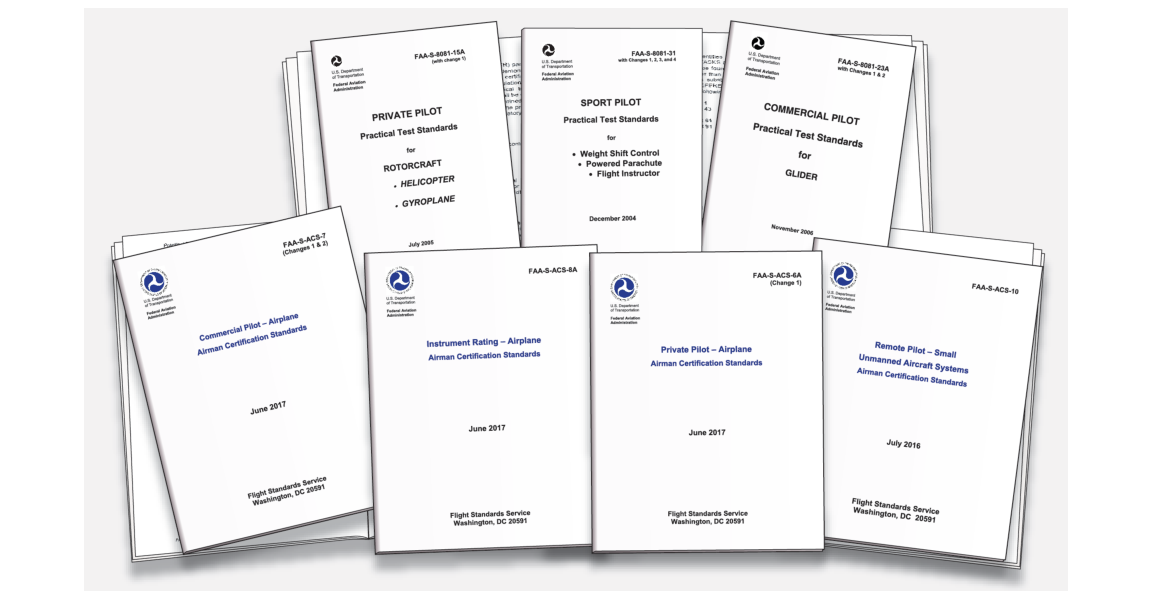
When you sit down to build a flight training curriculum from scratch, you do not need to invent a framework—the FAA has already built one for you. The Airman Certification Standards (ACS) is a free, publicly available document that simultaneously defines what a student must know, what risks a student must recognize, and what a student must physically demonstrate before earning a certificate or rating. Used correctly, the ACS functions as a complete architectural blueprint for course design: every lesson topic, every measurable objective, and every pass/fail standard is already embedded within it. Understanding how to extract and apply that structure is one of the most important skills a flight or ground instructor can develop.
The ACS and Its Relationship to the PTS
The ACS began replacing the older Practical Test Standards (PTS) around 2016, starting with the Private Pilot Airplane certificate. The PTS was a two-dimensional document: it described knowledge a student should have and skills a student should demonstrate, but it treated risk management and aeronautical decision-making as secondary considerations rather than formally evaluated elements. The ACS restructured that entirely by adding a third, required column—Risk Management—alongside Knowledge and Skills. This change was not cosmetic. An evaluator conducting a practical test under the ACS must probe each column; a student who can fly flawlessly but cannot articulate the relevant hazards or human factors may still be found unsatisfactory. That regulatory weight makes the risk management column equally important in your curriculum, not a soft supplement to the real training.
The Aviation Instructor's Handbook (FAA-H-8083-9) reinforces this point by emphasizing that effective instruction requires clearly stated, measurable objectives aligned to the evaluation standards students will ultimately face. The ACS hands an instructor those standards in explicit, task-by-task detail. The question is whether instructors actually use them that way—or whether they treat the ACS as a checkride checklist to be consulted only at the end of training.
Anatomy of an ACS Task
Every ACS task follows an identical structure, and understanding each component allows you to translate it directly into lesson plan language.
Task Codes and Areas of Operation
Each task carries a unique alphanumeric code. In the Private Pilot Airplane ACS, for example, PA.IV.B identifies Area of Operation IV (Takeoffs, Landings, and Go-Arounds) task B. Coding your syllabus lessons to these task codes creates a traceable matrix—sometimes called a curriculum map—that documents exactly which ACS tasks have been introduced, practiced, and evaluated. Under 14 CFR Part 141, an approved school must follow an FAA-approved training course outline; ACS-based mapping provides the audit trail that satisfies that requirement. Under 14 CFR Part 61, no formal syllabus is mandated, but the same mapping represents excellent practice and protects both student and instructor if training records are ever reviewed.
The Three Columns as Lesson Objectives
The most direct way to leverage the ACS is to treat each column as a separate category of lesson objective, matching the objective types described in the Aviation Instructor's Handbook.
- Knowledge items become your cognitive objectives. They tell you exactly what concepts, definitions, regulations, and procedures the student must be able to explain. For a lesson on steep turns, the ACS knowledge items point to load factor, the relationship between bank angle and stall speed, and the aerodynamics of coordinated flight. These become the substance of your ground briefing.
- Risk Management items become your judgment objectives. They describe the specific hazards and human factors the student must identify and mitigate—for steep turns, this includes spatial disorientation, fixation on the horizon or instruments, and loss of situational awareness while maneuvering. Planning these items into every lesson prevents the common error of treating aeronautical decision-making as an afterthought addressed only in the debrief.
- Skills items become your psychomotor and performance objectives. They include the specific, measurable tolerances against which performance will be judged: for steep turns in the Private Pilot ACS, the student must maintain altitude within ±100 feet, airspeed within ±10 knots, bank angle within ±5 degrees of the specified 45 degrees, and roll out on the entry heading within ±10 degrees. These numbers are not suggestions—they are the official pass/fail thresholds for the practical test, and your lesson completion standards should match or modestly exceed them so students arrive at the checkride already performing at standard.
Building the Curriculum Map
A practical approach is to create a simple matrix with ACS task codes in the rows and training lessons or flights in the columns. Each cell indicates whether the task is being introduced (I), practiced (P), or evaluated (E) during that lesson. This technique comes directly from instructional systems design principles discussed in the Aviation Instructor's Handbook and ensures that no task area is inadvertently skipped. The ACS covers every required area from preflight preparation and ground operations through navigation, emergency operations, and night flying. Systematically working through the task list closes the gaps that informal, experience-based syllabi sometimes leave open.
For Part 141 schools, the curriculum map also facilitates the stage-check and end-of-course check requirements. Stage checks can be designed to evaluate the specific ACS tasks introduced during that training block, so students experience an evaluation format that mirrors the eventual checkride structure rather than encountering it for the first time on check day.
Integrating the ACS Into Ground Lesson Design
Ground lessons are often the weakest link in ACS alignment. Many instructors plan ground sessions around textbook chapters rather than ACS task codes, which can result in thorough coverage of some topics and thin coverage of others. A better approach begins with the ACS knowledge and risk management items for the next scheduled flight lesson, then builds the ground briefing around those specific items. If the next lesson is crosswind takeoffs and landings (PA.IV.D), the ground briefing should cover the aerodynamics of crosswind correction, relevant regulations, and—critically—the risk management items the ACS specifies for that task, such as collision hazards during ground roll and the decision criteria for exceeding demonstrated crosswind components.
This approach has a secondary benefit: it directly prepares students for the oral examination portion of the practical test. FAA evaluators are expected to draw oral questions from the knowledge and risk management columns of the ACS. A student whose ground training was organized around those exact columns will not be surprised by the oral examination's scope or depth.
Key Rules and Numbers to Remember
- The ACS formally evaluates three columns—Knowledge, Risk Management, and Skills—all of which are required elements of the practical test.
- ACS task codes (e.g., PA.IV.B) provide a standardized labeling system for curriculum mapping and documentation.
- Lesson objectives must be specific and measurable per the Aviation Instructor's Handbook; ACS skill tolerances provide ready-made measurable standards.
- Part 141 training course outlines must align with the applicable ACS; Part 61 training is not required to follow a formal syllabus but best practice demands the same alignment.
- The risk management column is a separately evaluated element—not a subset of knowledge or skills—and must be planned into every lesson, not reserved for debriefs.
Common Test Traps
- Treating the ACS as a renamed PTS. The PTS did not formally incorporate risk management as a required evaluated element. The ACS added it as a distinct column with checkride-level standing. This is a genuinely new structure, not a cosmetic rename.
- Writing vague lesson objectives. The Aviation Instructor's Handbook is explicit that objectives must be specific, measurable, and tied to a standard. Objectives like