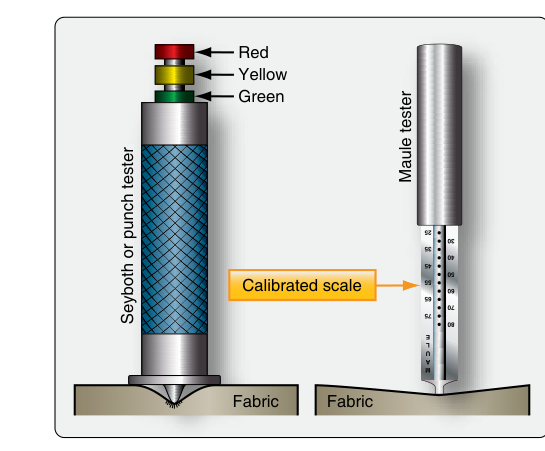
Aircraft fabric covering is a living system. From the day a new panel of Grade A cotton or polyester fabric is stitched and doped onto a wing, environmental exposure, UV radiation, flexing, and chemical degradation work to break down the fibers and the coatings that protect them. Over time, fabric that once met tensile-strength and porosity standards can become dangerously weak. Because visual inspection alone cannot reveal internal fiber degradation, airframe mechanics rely on objective porosity and strength tests to determine whether covering is still airworthy. The Seyboth test is the most widely recognized porosity test in U.S. aviation maintenance practice, but it is one of several accepted methods described in FAA guidance. Understanding all of them — what they measure, how they work, and what the results mean — is essential knowledge for any AMT seeking an airframe rating.
This article covers the physical basis of porosity testing, the specific procedures for each accepted method, the pass/fail criteria, and the practical context in which each test is used. It is grounded in FAA Advisory Circular AC 43.13-1B and the Aviation Maintenance Handbook — Airframe (FAA-H-8083-31), which are the primary technical references for fabric-covering maintenance.
What Porosity Means and Why It Matters
Porosity, in the context of aircraft fabric, refers to the rate at which air passes through the finished covering system — the fabric, filler coats, and finish coats together. A brand-new, properly finished fabric surface is essentially airtight; dope fills and seals the weave so that aerodynamic forces act on a continuous surface. As the covering ages, the dope and fabric fibers degrade. Microscopic cracks appear in the finish, the fibers themselves weaken and break, and air begins to pass through with increasing ease.
High porosity is significant for two reasons. First, it is a reliable proxy for tensile strength loss. When the fiber matrix has degraded enough to allow significant air passage, the fabric can no longer reliably carry the flight loads for which it was certificated. Second, on control surfaces especially, excessive porosity can alter pressure distribution and aerodynamic balance, potentially affecting control effectiveness and flutter margins. Porosity testing therefore serves as an early-warning system that condemns fabric before it fails catastrophically in flight.
The Seyboth Porosity Tester
The Seyboth tester is a hand-held, self-contained device that measures the time required for a fixed volume of air to pass through the fabric under a controlled pressure differential. The tool consists of a suction cup (typically about 1 inch in diameter) that is pressed firmly against the fabric surface, a small calibrated cylinder of air, and a timing mechanism or calibrated scale. The operator seals the cup against the fabric, draws the piston to a set starting position to create a measured air charge behind a reference pressure, and then allows air to flow through the fabric while timing how long the cylinder takes to discharge.
The result is expressed in seconds. A high number of seconds means air is passing through slowly — the fabric is relatively airtight and in good condition. A low number means air flows rapidly, indicating high porosity and degraded fabric. AC 43.13-1B does not establish a single fixed generic seconds threshold for the Seyboth tester; acceptable minimum readings are tester- and fabric-specific and must come from the fabric manufacturer's data, the aircraft manufacturer's service manual, or the aircraft's Type Certificate Data Sheet (TCDS). Mechanics must always cross-reference these sources, because minimum acceptable values vary by tester design and fabric type and cannot be reduced to one universal number.
How to Perform the Seyboth Test
- Select representative test locations. Test multiple areas on each surface — typically at least one location near the leading edge, mid-chord, and near the trailing edge. Avoid rib stitching and patches. Pay special attention to areas with maximum UV exposure and high-stress zones.
- Prepare the device. Verify the Seyboth tester is calibrated and the sealing cup is undamaged. A cracked or distorted cup rim will allow air to escape around the seal rather than through the fabric, producing falsely high (good) readings.
- Seat the cup firmly. Press the cup flat against the fabric surface, perpendicular to the surface, with even hand pressure. Do not tilt the cup.
- Charge and release. Draw the piston to the marked starting position and then release it, starting the timer simultaneously.
- Record the time. Note the number of seconds for the piston to reach the end stop (or for the pointer to travel to the discharge mark, depending on tester design).
- Compare to minimums. If any reading falls below the applicable minimum from the manufacturer's or TCDS data, the fabric on that panel is condemned regardless of how other locations test.
Other Accepted Porosity and Strength-Test Methods
The Seyboth tester is the most common, but FAA-acceptable maintenance practice recognizes several additional test methods, each with its own application and limitations.
The Maule Tester
The Maule fabric tester is a mechanical punch-test device that measures the resistance of the fabric to penetration by a calibrated pin under a standardized load. Rather than measuring air flow, it provides a direct indication of fabric tensile strength by correlating punch-through resistance with remaining fiber integrity. The Maule tester is pressed against the fabric and a spring-loaded plunger is released. The depth of penetration is read on a scale and compared to minimum values. Because the Maule tester physically contacts and slightly stresses the fabric, it should be used away from structural seams and rib stitching. Like the Seyboth test, results must be compared against the specific minimums in the applicable maintenance data.
The Cobb Tester
The Cobb tester operates on a principle similar to the Seyboth: it measures air permeability by timing the passage of air through the covering. Some versions use a slightly different cup geometry or pressure charge. The fundamental interpretation is the same — longer time equals lower porosity equals better condition. The Cobb tester was more common in earlier decades and is less frequently encountered today, but AMTs may encounter it on older aircraft or in older maintenance records.
The Gramophone-Needle Test (Gramophone or Phonograph Method)
This older field technique involves drawing a gramophone needle or similar blunt stylus lightly across the fabric surface. A well-conditioned, taut fabric gives a clear, musical resonance; degraded fabric produces a dull, flat sound. This test is not a substitute for porosity testing and is not accepted as a stand-alone airworthiness determination under AC 43.13-1B. It may be used as a quick field screening tool to identify areas that then warrant proper testing, but results cannot be recorded as a finding in maintenance records.
The Certified Laboratory Test
When field testers are unavailable or results are ambiguous — for example, when fabric shows borderline readings and a Go/No-Go decision has significant economic or operational consequences — a sample of the fabric can be cut from a non-structural location (typically a drain grommet area or a small patch location) and submitted to an FAA-approved laboratory for tensile strength testing per ASTM standards. Tensile strength is measured in pounds per inch of width. For Grade A cotton, the minimum acceptable tensile strength for continued airworthiness (as a percentage of the original certificated strength) is defined in AC 43.13-1B. Polyester fabric (such as Ceconite or Dacron) has its own strength criteria and typically retains strength longer than cotton under comparable conditions.
Key Numbers and Rules
- Seyboth minimum readings: AC 43.13-1B does not specify one fixed generic seconds threshold; acceptable minimum readings depend on the specific tester and fabric type and must be obtained from the fabric or aircraft manufacturer's data or the aircraft's TCDS.
- Grade A cotton original tensile strength: approximately 80 lb/in — must retain at least a defined percentage of original strength per AC 43.13-1B to remain airworthy.
- Polyester (Dacron) fabrics are generally more UV-resistant and retain strength longer than cotton, but must still be periodically porosity-tested.
- Frequency: Fabric covering must be inspected at each annual inspection (or 100-hour inspection for commercial operators) per 14 CFR Part 43 and the aircraft's maintenance schedule.
- One failing reading condemns the panel: A single below-minimum result anywhere on a surface is sufficient cause to require recovering, regardless of other passing locations on the same panel.
- Applicable data hierarchy: Aircraft TCDS → Aircraft manufacturer's service manual → Fabric manufacturer's data → AC 43.13-1B (used only when no other approved data applies).
Common Test Traps on FAA Exams
- High reading = good, low reading = bad. The Seyboth test is timed — a longer time means less air flow, which means better fabric condition. Students sometimes invert this, thinking a fast result is favorable.
- Porosity test ≠ strength test, but correlates with it. The Seyboth measures air permeability, not tensile strength directly. However, increased porosity is accepted as an indicator of overall fabric degradation, including loss of tensile strength.
- The phonograph/gramophone test is not a standalone determination. It is a screening tool only; it cannot be used as the sole basis for a return-to-service determination.
- AC 43.13-1B is not always the final word. If the aircraft manufacturer or fabric manufacturer provides specific test criteria, those data take precedence over AC 43.13-1B guidance.
- A cracked or worn tester cup produces false favorable readings. Air escaping around the cup seal, rather than through the fabric, will cause the tester to show a longer (better) time than the fabric actually merits — a dangerous false pass. Always inspect the tester before use.
Mastering fabric porosity testing is not just an exam topic — it is one of the most direct ways an airframe mechanic protects the lives of pilots and passengers. Fabric failures are silent and progressive; porosity testing turns an invisible hazard into a measurable, manageable maintenance item. Approach every annual inspection of fabric-covered aircraft with a calibrated tester, current AC data, and the understanding that the numbers you record may be the last line of defense before flight.