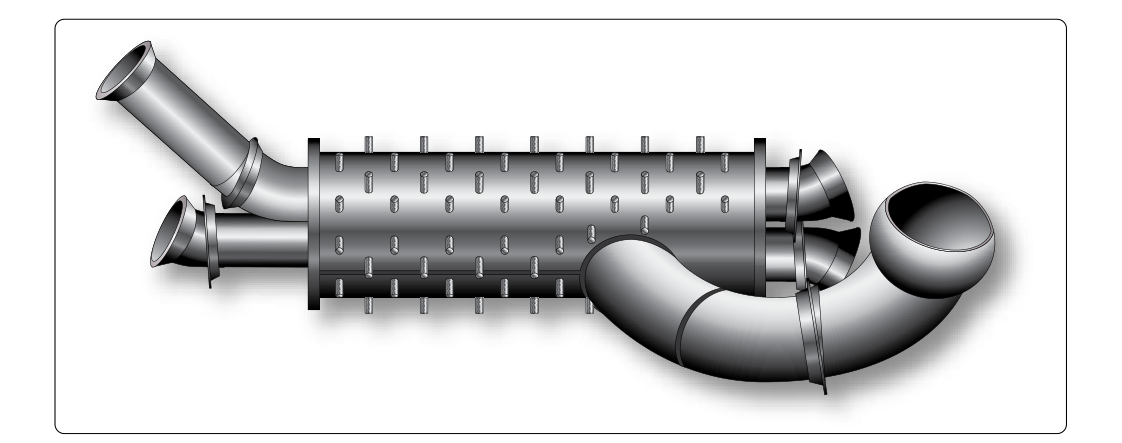
For most piston-engine light aircraft, the cabin heater is not a separate combustion unit — it is a metal shroud, called a heat muff or exhaust heat exchanger, that wraps around a section of the exhaust system. Ram air is ducted around the hot exhaust pipe, picks up heat through the metal walls, and is then routed into the cabin. The design is elegantly simple and adds almost no weight penalty, but it carries a serious safety implication: the same metal that heats the cabin air also separates that air from exhaust gases containing carbon monoxide (CO). A crack or pinhole in the muff wall can allow deadly, odorless CO to enter the cockpit without any warning. Understanding how this system works, how it fails, and how to inspect and maintain it is therefore one of the most safety-critical skills an aviation maintenance technician can develop.
This article covers the complete picture — system design, heat-transfer principles, airworthiness standards, inspection procedures, and the common exam traps that appear on the FAA AMT Powerplant knowledge test.
System Design and How It Works
The exhaust heat exchanger consists of a sheet-metal shroud or jacket fitted around a section of the exhaust stack, typically the portion just downstream of the cylinder exhaust port flanges or around a collector pipe. The shroud is sealed at both ends to the exhaust pipe with clamps or welded collars, creating an annular air passage between the shroud's outer wall and the exhaust pipe's outer surface. Outside air — usually ram air drawn from an inlet on the cowling — enters the annular passage, flows along the hot pipe surface, absorbs heat by convection and conduction through the pipe wall, and exits through a flexible duct that leads to a cockpit-mounted control valve. When the pilot opens the cabin heat control, this warmed air flows into the cabin.
The heat transfer process relies on the high temperature of exhaust gases inside the pipe — typically several hundred degrees Fahrenheit — heating the steel or stainless-steel pipe wall. The wall, in turn, heats the ambient air flowing around it. The two airstreams — cabin supply air on the outside and exhaust gas on the inside — never intentionally mix. The integrity of the pipe wall is the only barrier between breathable warm air and toxic combustion byproducts.
Most aircraft use a simple on/off or variable-flow control in the cockpit. Some designs incorporate a separate cabin air valve that blends fresh unheated ram air with the heated air to allow temperature regulation. Carbureted engines may also draw heated air from the heat muff region to warm induction air for carburetor heat — a separate circuit from the cabin heat supply, though the source of heat is the same exhaust system.
Materials and Construction
Exhaust systems in aircraft are manufactured from stainless steel, mild steel with heat-resistant coatings, or occasionally titanium alloys on high-performance aircraft. The heat muff shroud itself is usually fabricated from sheet stainless steel because it must withstand both the high temperatures radiated from the exhaust pipe and the thermal cycling that occurs every time the engine is started and shut down. Repeated expansion and contraction cause metal fatigue over time, which is why cracks are an expected, not rare, finding during routine inspections.
Joints between the shroud and the exhaust pipe — whether welded, riveted, or clamped — are common failure initiation sites. Welded joints can develop cracks in the heat-affected zone. Clamped connections can loosen or allow the shroud to shift, opening gaps. The AMT must understand that even a seemingly minor gap or hairline crack in the shroud or the exhaust pipe inside it creates a direct pathway for CO contamination of the cabin airstream.
Carbon Monoxide Hazard
Carbon monoxide is produced by incomplete combustion of aviation fuel. It is colorless, odorless, and tasteless, making it undetectable by human senses. CO binds to hemoglobin in the blood approximately 200 times more readily than oxygen, reducing the blood's oxygen-carrying capacity and causing hypoxia at the cellular level. Symptoms of CO poisoning include headache, dizziness, confusion, and eventually loss of consciousness — symptoms that can easily be mistaken for fatigue or other medical conditions, especially at altitude where baseline hypoxia may already be a factor.
Because of this hazard, many aircraft operators install CO detectors in the cockpit. These detectors do not eliminate the need for proper exhaust system maintenance, but they provide an early warning that allows the crew to close the cabin heat valve, open windows, and land as soon as practicable. From the AMT's perspective, the best defense is a thorough inspection that identifies cracks and failures before the aircraft flies.
Inspection Procedures
The FAA Airframe and Powerplant handbooks, along with aircraft manufacturer maintenance manuals, specify exhaust system inspection at every annual inspection and at the engine manufacturer's recommended intervals. Key inspection steps include:
- Visual inspection: Remove all cowling and heat shroud access panels. Inspect the entire exhaust system — pipes, mufflers, collector rings, and the heat muff shroud — for cracks, holes, dents, discoloration (indicating hot spots), and evidence of exhaust leakage such as sooty deposits or gray-white residue streaks at joints.
- Pressure or smoke test of the shroud: The most definitive check for muff integrity is to cap the air inlet and outlet of the shroud, pressurize the annular space with low-pressure shop air (typically a few pounds per square inch), and apply soapy water to all seams and the exhaust pipe surface inside the shroud. Bubbles indicate leakage. Alternatively, a smoke test uses colored smoke to reveal escape paths.
- Exhaust pipe internal inspection: Where the pipe runs inside the shroud and cannot be directly seen, a borescope allows the technician to view the inner surface of the pipe for cracks or burn-through without disassembling the muffler or removing the shroud.
- Tap test: Lightly tapping the exhaust pipe and muffler walls with a small hammer and listening for a dull, flat sound (versus a ringing tone) can reveal delamination or cracks in muffler baffles inside a muffler canister.
- Functional ground test: After reassembly, run the engine at a fast idle or cruise power setting with the cabin heat selected ON. Check the cockpit for CO using a detector, and verify that warm air is flowing normally. Inspect all connections and the shroud exterior for signs of leakage under operating temperature and pressure.
Airworthiness Standards and Regulatory Requirements
Under 14 CFR Part 23 (airworthiness standards for normal category aircraft), the exhaust system must be designed and constructed to prevent exhaust gases from entering the cabin. The regulations specifically require that heat exchangers used for cabin or cockpit heating be designed so that no exhaust gases can contaminate the ventilating air, and that failure of any component will not allow dangerous concentrations of CO to enter the occupied areas of the aircraft. Aircraft certified under earlier standards are held to the requirements in effect at the time of type certification, but the fundamental safety principle is identical.
Under 14 CFR Part 43, the exhaust system inspection is a required element of the annual inspection checklist found in Appendix D. An AMT who signs off an aircraft with a cracked or leaking heat muff as airworthy has violated both the letter and spirit of the regulations. If a CO-related incident occurs afterward, the maintenance record becomes a critical piece of the investigation.
Key Numbers and Rules
- Exhaust system inspection is required at every annual inspection per 14 CFR Part 43, Appendix D.
- The heat muff shroud separates cabin supply air from exhaust gas — the only barrier is the pipe wall and shroud integrity.
- CO detectors should be checked for functionality at each inspection; the chemical-dot type has a finite service life and must be replaced per manufacturer guidance.
- Even a pinhole-sized crack in an exhaust pipe inside the muff can produce dangerous CO concentrations in the cabin airstream because the exhaust gas pressure is higher than the surrounding cabin air pressure at cruise power.
- Discoloration or sooty streaks at any exhaust joint are cause for immediate, more thorough investigation before returning the aircraft to service.
- The cabin heat valve should be closed any time a CO detector alarm sounds or CO poisoning is suspected; fresh air is the immediate countermeasure.
Memory Aid
When inspecting the exhaust heat exchanger system, experienced technicians use the phrase SLIPS to remember the key inspection categories:
- S — Sooty streaks at joints or seams indicating exhaust leakage
- L — Leaks confirmed by pressure/smoke test of the shroud annulus
- I — Internal pipe cracks viewed by borescope inside the muffler or muff
- P — Pipe discoloration or hot spots indicating localized overheating
- S — Seals and clamps at shroud-to-pipe connections for security and condition
A leaking exhaust system that passes all five SLIPS checks is extremely unlikely — making this a reliable pre-return-to-service mental checklist.
Common Test Traps
- Assuming CO is detectable by smell: A favorite distractor on the knowledge test describes CO as having a smell or taste. CO is entirely odorless and tasteless — any perceived odor from an exhaust leak is from other combustion byproducts, not CO itself. Never assume the absence of smell means safety.
- Confusing carburetor heat with cabin heat air source: Both draw heat from the exhaust system, but they are separate circuits with separate valves and ducts. Carburetor heat air is routed to the induction system, not the cabin. Do not describe them as the same system on the exam.
- Underestimating small cracks: Test questions may present a small or hairline crack as an acceptable defect requiring only monitoring. Any crack in an exhaust heat exchanger or the exhaust pipe within it is an airworthiness discrepancy that must be corrected before further flight.
- Pressure test confusion: Students sometimes reverse the pressure test — thinking the exhaust pipe is pressurized during the test. The annular shroud space (the cabin air side) is pressurized with shop air. If you pressurized the exhaust pipe itself to locate shroud leaks, you would be working backward and the test would not reveal cracks opening inward under exhaust pressure.
- Skipping the functional ground test: Replacing or repairing the muff and then failing to run the engine and verify CO-free operation is an incomplete maintenance action. The exam expects the technician to know that a functional test with a CO detector is part of the return-to-service process.